
The best drum machines for home studios make it easier to build grooves, sketch arrangements, and add character without relying entirely on a computer. The right choice depends on whether you prioritize analog sound, sampling, sequencing, portability, or deep performance control.
We compared 10 options across sound design, workflow, connectivity, onboard features, and value to help you find a beat-making setup that fits your space and creative process.
Best 10 Drum Machines for Home Studios Picks for 2026
Best for Hybrid Drum Design

- Circuit-modeled TR sounds from several classic Roland machines
- Imports custom mono or stereo samples via SD card
- Stores detailed effects settings with each kit
Best For: Producers blending classic drum tones with modern samples
Best All-in-One Production Hub

- Creates beats and full arrangements without a computer
- Includes 16 pads, touchscreen control, and expanded processing
- Connects to computers, MIDI gear, and modular systems via USB-C and MIDI
Best For: Producers wanting a standalone studio centerpiece
Best for Punchy Analog Patterns

- Offers separate accent control for every drum
- Chains patterns with Song mode
- Adds Color sound-shaping to most instruments
Best For: Hands-on analog-style pattern programming
Best Portable Sampler

- Runs on battery with a speaker, microphone, and microSD storage
- Includes fast chopping, timestretch, repitch, and resampling tools
- Provides onboard effects plus USB-C audio and MIDI
Best For: Portable sample-based beatmaking and DAWless creation
Studio Classic

- 500 sounds with built-in effects
- Complete MIDI connectivity
- Pattern Play and portable power
Best For: Home-studio producers needing a versatile standalone drum machine
Portable Pad Performer

- 16 touch-sensitive finger pads
- 48 kits and 100 preset patterns
- USB-C or battery power with foot pedal
Best For: Portable beat-making, practice, and hands-free performance
Proven Studio Workhorse
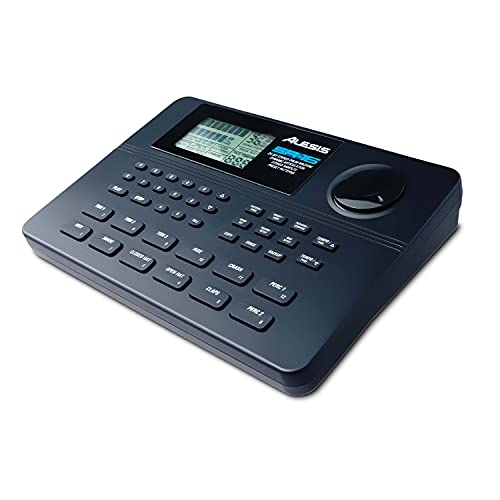
- 233 sounds and 100 total preset/user kits
- Velocity-sensitive pads and step editing
- MIDI, stereo outputs, and footswitch inputs
Best For: Songwriters wanting flexible sequencing and studio connectivity
Portable Beat Lab
teenage engineering EP-133 K.O. II
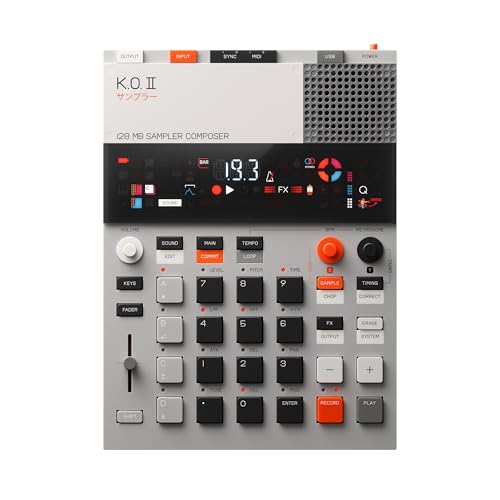
- 128MB sampler with 999 sample slots
- Pattern sequencer with performance effects
- Battery or USB-C portable operation
Best For: Portable beat making, sampling, and live performance
Instant Rhythm Sketchpad

- Four drum kits and four bass sounds
- Records layers and multiple patterns
- Compact, battery-powered design
Best For: Simple beat sketches and beginner-friendly rhythm making
DAW Pad Production Hub
Donner STARRYPAD MIDI Pad Controller

- 16 pads with three assignable banks
- Faders, knobs, and MIDI connectivity
- Requires DAW software to make sound
Best For: Triggering drums, samples, and virtual instruments in a DAW
Best for Hybrid Drum Design – Roland TR-8S Rhythm Performer
For home studios that need classic drum-machine character alongside modern sampling, the Roland TR-8S offers a flexible production setup. It combines circuit-modeled TR sounds with imported samples, hands-on sound shaping, and per-kit effects storage.
Best For: Producers who want authentic Roland drum sounds, sample import, and performance-ready kits in one machine.
Pros:
- Includes circuit-modeled 808, 606, 909, 707, and 727 sounds.
- Supports mono and stereo sample import through an SD card.
- Offers adjustable decay, tuning, sample start points, speed, and direction.
- Saves instrument and master effect settings with each kit.
Cons:
- Its broad sound-design and effects features may take time to learn.
- Sample transfer requires an SD card.
The TR-8S is a strong choice among drum machines for home studios when flexibility matters as much as recognizable vintage drum-machine tones. The free TR-EDITOR can also make kit organization and visual control easier.
Best All-in-One Production Hub – Akai MPC One G2
The Akai MPC One G2 is designed for home studios that want to make beats, sample, sequence, and arrange songs without relying on a computer. Its standalone MPC3 workflow combines a touchscreen, pressure-sensitive pads, expanded processing, and extensive connectivity in a compact desktop unit.
Best For: Beatmakers and producers building complete tracks, controlling external gear, or moving between standalone and computer-based workflows.
Pros:
- Runs standalone with sampling, sequencing, arranging, and audio-track support.
- Provides 16 velocity- and pressure-sensitive RGB pads and a 7-inch touchscreen.
- Supports up to 16 stereo audio tracks and 32 plugin instruments per project.
- USB-C offers multichannel audio streaming, expanded MIDI, and host/device support.
Cons:
- Its many production, plugin, and routing features may feel extensive for simple beatmaking.
- It is a larger commitment than a basic drum-focused machine.
With bundled content, Ableton Live Control Mode, and project import and export, the MPC One G2 suits producers who want one central device for both standalone creation and hybrid studio work.
Best for Punchy Analog Patterns – Arturia DrumBrute Impact
The Arturia DrumBrute Impact is a focused analog drum machine for home studios centered on pattern creation and hands-on sound shaping. Separate accents, song mode, and Color controls provide practical ways to add movement and character to programmed rhythms.
Best For: Producers who prefer direct control over analog-style drum patterns and want a straightforward performance-oriented workflow.
Pros:
- Provides separate accent control for each drum.
- Song mode allows patterns to be chained.
- Color sound-shaping is available across the instruments except cowbell.
- Metal construction provides a durable physical format.
Cons:
- Color shaping is not available on the cowbell.
- Its feature set is more focused than an all-in-one sampler or production center.
The DrumBrute Impact makes sense for musicians seeking direct pattern programming and performance controls rather than a broad sampling workstation. It is a focused option among drum machines for home studios.
Best Portable Sampler – Akai MPC Sample
The Akai MPC Sample brings sampling and beatmaking into a compact, battery-powered format that works well in a home studio or away from one. Its built-in speaker, microphone, rechargeable battery, pads, effects, and storage support quick idea capture without a computer.
Best For: Beginners, finger drummers, sample-based producers, and DAWless creators who want a portable MPC workflow.
Pros:
- Operates standalone with a rechargeable battery, speaker, microphone, and microSD storage.
- Includes 16 pads, Instant Sample Chop Mode, timestretch, repitch, and resampling.
- Offers four internal effects processors and 60 effect types.
- Provides USB-C audio/MIDI, line connections, headphones, and MIDI connectivity.
Cons:
- The MIDI DIN adapter is not included.
- Its 2.4-inch display is smaller than the MPC One G2’s touchscreen.
- It is more sample-focused than a full standalone arrangement workstation.
For home studios that value immediacy and portability, the MPC Sample is an approachable entry into drum machines and hardware sampling. Its built-in microphone and speaker make it especially useful for capturing ideas wherever they occur.
Studio Classic – Alesis SR-18
The Alesis SR-18 is a versatile choice among drum machines for home studios, combining a large onboard sound library with hands-on performance controls. Its MIDI support, effects, battery option, and pattern-focused workflow make it practical for songwriting, beat programming, and live use.
Best For: Home-studio producers and songwriters who want a standalone drum machine with extensive sounds, MIDI connectivity, and portable power.
Pros:
- Includes 500 professional sounds with built-in effects and Dynamic Articulation.
- Supports MIDI connection to keyboards, computers, DAWs, and electronic drum kits.
- Offers Pattern Play, programmable Drum Roll, tap tempo, and wall or battery power.
Cons:
- Six AA batteries are required for battery operation and are not included.
- Its plastic construction may feel less substantial than larger studio hardware.
The SR-18 stands out when sound variety and flexible performance options matter. It is a strong all-purpose pick for building beats independently or integrating a dedicated rhythm source into a DAW-based setup.
Portable Pad Performer – Medeli MR101S
The Medeli MR101S is a compact option for drum machines for home studios, with touch-sensitive pads, preset kits, and hands-free control. USB-C or battery power adds flexibility for practice, sketching rhythms, and portable beat-making.
Best For: Beginners, mobile musicians, and home-studio users who want touch-sensitive pads, preset patterns, and foot-pedal control.
Pros:
- Provides 16 touch-sensitive finger pads for hands-on playing.
- Includes 48 drum kits and 100 preset drum patterns.
- Supports USB-C or battery power and includes a foot pedal for hands-free flexibility.
Cons:
- The supplied notes do not specify MIDI, audio-output, or DAW connectivity.
- Its preset-focused design may offer less sound detail and editing depth than more advanced machines.
The MR101S is appealing when portability and immediate playability take priority. Its included foot pedal and touch-sensitive pads make it a straightforward rhythm tool for quick ideas and practice.
Proven Studio Workhorse – Alesis SR-16
The Alesis SR-16 remains a practical pick among drum machines for home studios, pairing velocity-sensitive pads with sound stacking, step editing, effects, and MIDI. Its stereo outputs and footswitch connections also support songwriting, recording, and live performance workflows.
Best For: Songwriters and home-studio musicians who want a proven standalone machine with MIDI, editable kits, and multiple performance connections.
Pros:
- Includes 233 sounds, 50 preset kits, and 50 user drum kits.
- Offers 12 velocity-sensitive pads with Dynamic Articulation, sound stacking, and step editing.
- Provides MIDI I/O, four stereo-pair outputs, built-in effects, and two-function footswitch jacks.
Cons:
- Its sound library is smaller than the SR-18’s 500 included sounds.
- The supplied notes do not indicate USB connectivity.
- At 2.5 pounds, it is heavier than the SR-18 for portable use.
The SR-16 is a strong choice for users who value established sequencing features and broad connection options. It offers enough editing and performance control to serve as both a songwriting companion and a dedicated studio rhythm source.
Portable Beat Lab – teenage engineering EP-133 K.O. II
The teenage engineering EP-133 K.O. II is a compact sampler, drum machine, and sequencer for home studios that prioritizes fast beat creation and hands-on performance. It combines sampling, built-in effects, pattern-based sequencing, and battery power in a portable package.
Best For: Home-studio musicians who want a portable sampler and drum machine for beat making, resampling, and live performance.
Pros:
- 128MB of memory, 999 sample slots, and a built-in microphone support flexible sampling.
- Four groups with 99 patterns each make it easy to build variations and combine parts.
- Includes six master effects, 12 punch-in effects, a multifunctional fader, and MIDI and sync connections.
- Runs on four AAA batteries or USB-C and includes a built-in speaker for portable use.
Cons:
- Its plastic body and compact controls may not suit users seeking a larger, traditional drum-machine layout.
- The built-in microphone and speaker are convenient, but serious monitoring still requires external connections.
With its sampling workflow, extensive pattern storage, and performance-focused effects, the K.O. II is one of the more capable portable options here. It is especially appealing if your home-studio setup also needs a flexible sketchpad for travel and live ideas.
Instant Rhythm Sketchpad – Stylophone BEAT
The Stylophone BEAT is a straightforward compact drum machine for home studios, offering four drum kits, four bass sounds, and pattern recording in a small battery-powered unit. Its stylus interface and built-in speaker make it suited to quick rhythm ideas without a complex setup.
Best For: Beginners and casual beat makers who want a simple, portable rhythm machine with layering and pattern features.
Pros:
- Provides four drum kits and four bass sounds in a compact format.
- Supports multiple layers, sound muting, and recording multiple patterns.
- Click track and tempo lock help keep performances in time.
- Works with wired headphones and includes a built-in speaker with volume control.
Cons:
- Its sound selection is more limited than that of larger samplers and drum machines.
- Three AA batteries are required and are not included.
- The unit uses a plastic body and offers a relatively focused feature set.
The BEAT keeps the emphasis on accessible rhythm creation rather than deep sound design. For a small home studio, it can be a convenient way to sketch grooves, layer parts, and practice timing without relying on a computer.
DAW Pad Production Hub – Donner STARRYPAD MIDI Pad Controller
The Donner STARRYPAD is a USB MIDI pad controller for home studios that need hands-on triggering inside a DAW. It offers 16 backlit pads, three pad banks for 48 assignable pad positions, faders, knobs, and MIDI connectivity, but it requires DAW software to produce sound.
Best For: DAW-based producers who want a configurable pad controller for drums, samples, effects, and virtual instruments.
Pros:
- Sixteen velocity-sensitive pads expand to 48 assignable pads across three banks.
- Two faders, two knobs, three buttons, and Shift-layer controls add hands-on parameter control.
- Works with Mac, Windows, Android, and iOS devices, with USB-C and included MIDI connectivity.
- Includes Melodics courses and a Cubase LE software kit.
Cons:
- It does not produce sound on its own and requires DAW software.
- The editor controls pad configuration but does not record or arrange music.
- Connecting to an iPhone or iPad requires an Apple Lightning to USB Adapter where applicable.
The STARRYPAD is best viewed as a control surface rather than a standalone drum machine. If your home-studio workflow already centers on a computer or mobile DAW, its pad banks and extra controls provide a flexible way to trigger and shape software instruments.
How We Picked the Best Drum Machines for Home Studios
We evaluated these drum machines based on the features that matter most in a compact studio: sound quality, sequencing flexibility, hands-on control, sample support, connectivity, portability, and ease of use. We also considered whether each model works well as a standalone instrument, a MIDI controller, or a computer-integrated production tool.
Because home studios vary widely, the list includes analog drum machines, sample-based production centers, portable samplers, traditional rhythm boxes, and beginner-friendly beat makers. That range makes it easier to match your equipment to your workflow rather than choosing solely by price or feature count.
Quick Comparison
- Best for flexible performance: Roland TR-8S Rhythm Performer
- Best for standalone production: Akai MPC One G2
- Best analog character: Arturia DrumBrute Impact
- Best for portable sampling: Akai MPC Sample or teenage engineering EP–133 K.O. II
- Best traditional studio value: Alesis SR-18 or SR-16
- Best compact and affordable options: Medeli MR101S, Stylophone BEAT, or Donner MIDI Pad Beat Maker
Key Buying Factors for Drum Machines for Home Studios
Sound Engine and Library
Analog units typically deliver distinctive, immediate tones, while sample-based machines offer more variety and room for experimentation. If you need realistic acoustic kits, broad genre coverage, or the ability to load your own sounds, check the included library and sample-storage options carefully.
Sequencing and Performance Controls
Look for features such as step sequencing, pattern chaining, swing, fills, parameter locks, mute controls, and real-time recording. Large pads and dedicated knobs can make spontaneous performance easier, while deeper sequencing tools are valuable for arranging complete tracks without a computer.
Connectivity and Integration
Confirm the available audio outputs, MIDI connections, USB features, and synchronization options. A machine with multiple outputs can simplify mixing, while MIDI and USB make it easier to combine hardware with a DAW, keyboard, or other grooveboxes.
Size, Power, and Workflow
Small units are convenient for limited desks and mobile sessions, but compact designs may sacrifice pads, displays, or connection options. Consider whether you want an instrument that stays permanently connected in your studio or one you can use anywhere.
Effects and Expansion
Built-in effects can reduce the need for additional gear and help you shape sounds quickly. If you expect your setup to grow, prioritize flexible MIDI control, sample import, expandable storage, or broad software compatibility.
Who Should Buy Which Drum Machines for Home Studios?
Choose the Roland TR-8S if live pattern manipulation and modern performance control are your priorities. Choose the MPC One G2 if you want a central standalone workstation for sampling, sequencing, and arranging.
Choose the DrumBrute Impact for tactile analog programming and punchy character. Choose the MPC Sample or EP–133 K.O. II if portability and sample-based experimentation matter most.
Choose the Alesis SR-18 or SR-16 for straightforward rhythm programming with broad preset coverage. The Medeli, Stylophone, and Donner models are better suited to beginners, casual beat makers, compact setups, or shoppers who want an accessible way to start creating rhythms.