
The best drum machines for live performance make it easier to keep a consistent groove, trigger transitions, and shape your sound without relying on a computer. The right choice depends on your setup, playing style, and how much hands-on control you need onstage.
This roundup compares compact pedals, classic analog machines, samplers, and full-featured performance workstations so you can find a dependable rhythm solution for rehearsals, gigs, and electronic live sets.
Best 10 Drum Machines for Live Performance Picks for 2026
Best Hybrid Performer

- Classic modeled TR-808, 909, 707, 727, 606, and CR-78 sounds
- Imports mono or stereo samples via SD card
- Stores effects and kit settings for performance use
Best For: Live performers needing classic Roland tones plus modern sampling
Best Compact Pattern Tool

- Portable design with built-in speaker
- Six-part DSP engine with waveguide resonator
- Active Step, Slice, accent, choke, and randomize functions
Best For: Portable live sets and experimental rhythmic pattern creation
Best Songwriter-Friendly Workhorse

- Includes 500 sounds and built-in digital effects
- Pattern Play and programmable Drum Roll support live use
- Works with MIDI devices, DAWs, and electronic drum kits
Best For: Songwriters and performers needing ready-to-use drum sounds
Best Analog Sequencer
Behringer RD-8 Rhythm Designer

- 16 analog drum sounds with vintage-style character
- 64-step sequencer includes repeat, mute, solo, and real-time triggering
- 11 independent analog outputs support external processing
Best For: Live performers wanting analog drums and extensive routing
Best Hands-Free Pedal

- Hands-free foot control for beats, fills, and transitions
- Includes 200 songs across multiple genres
- Compact 10.6-ounce pedalboard-friendly design
Best For: Guitarists and solo performers needing foot-controlled rhythms
Best Classic Analog-Style Option

- 15 classic analog drum sounds
- 34 rhythm presets for fast setup
- 16-step sequencer in a compact, durable body
Best For: Live performers wanting simple preset rhythms and analog-style sounds
Best Advanced Live Mixer

- Hybrid analog, digital, and multi-engine sound design
- 11-part, 64-step sequencer with Loop and Chain functions
- Dedicated part mixing and flexible audio/MIDI connectivity
Best For: Electronic performers needing hands-on mixing and advanced routing
Most Versatile
EP-133 K.O. II Sampler Drum Machine
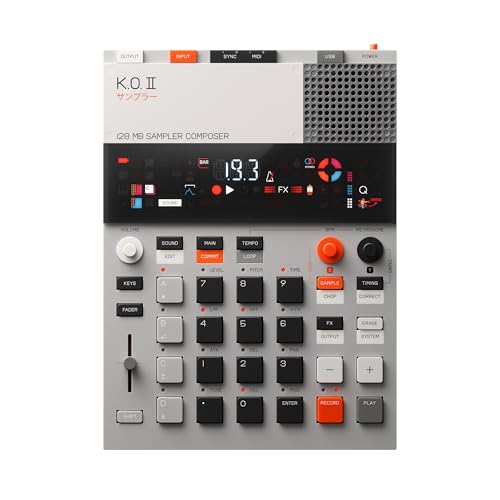
- Portable, battery-powered design with built-in microphone
- 128MB memory and 999 sample slots
- Hands-on effects and real-time pattern switching
Best For: Portable live sets and sample-based beat performance
Hybrid Pick
Behringer LM Hybrid Drum Machine
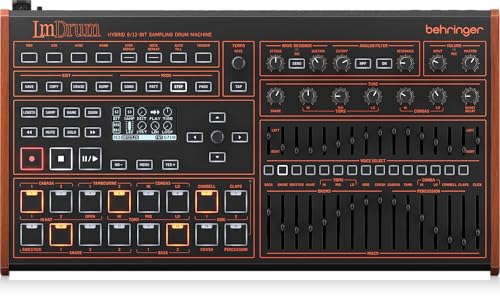
- Hybrid sampling drum-machine design
- Large, substantial bass-wood body
- Polished black finish
Best For: Rhythm-focused setups using a hybrid sampling instrument
Classic Analog Choice
Behringer RD-6 Analog Drum Machine

- Eight drum voices with analog drum-machine design
- 16-step sequencer for direct pattern programming
- USB/MIDI and two trigger outputs
Best For: Hands-on analog rhythms in integrated live rigs
Best Hybrid Performer – Roland TR-8S Rhythm Performer
For musicians seeking drum machines for live performance, the Roland TR-8S combines classic Roland sounds with flexible modern sampling and effects. Its kit-based workflow, performance-ready settings, and detailed TR drum models make it well suited to hands-on electronic sets.
Best For: Performers who want authentic TR-808, TR-909, TR-707, TR-727, TR-606, and CR-78 sounds alongside samples and deep effects control.
Pros:
- Includes circuit-modeled classic TR drum sounds.
- Supports mono or stereo sample import through an SD card.
- Saves instrument and master effect settings with each kit.
- Offers extensive sound shaping, including tuning, decay, filters, delay, and reverb.
Cons:
- Its broad sound-design and effects options may take time to master.
- The plastic body may be less rugged than a metal enclosure.
The TR-8S is a strong all-around choice when a live setup needs recognizable vintage drum tones, sample flexibility, and repeatable kit-based control.
Best Compact Pattern Tool – Korg Volca Drum
Korg Volca Drum Digital Percussion Synthesizer w/ 16-step Sequencer and Active Step
Check Price On AmazonThe Korg Volca Drum is a compact option for drum machines for live performance, with a built-in speaker and an intuitive 16-step sequencer. Its digital percussion engine, active step tools, slicing, and randomization functions support quick pattern changes and experimental rhythms.
Best For: Portable live rigs and performers who want hands-on sequencing, unusual digital percussion, and fast pattern variation.
Pros:
- Small, portable design includes a built-in speaker.
- Six-part DSP synthesis and a waveguide resonator provide varied percussion sounds.
- Active Step, Slice, and randomize functions encourage rhythmic variation.
- Accent and choke functions add performance control.
Cons:
- The 16-step sequencer is less extensive than the 64-step sequencer on the RD-8.
- Its auxiliary connector may offer less connection flexibility than larger machines.
The Volca Drum is appealing when portability and immediate pattern manipulation matter more than a large sound library or extensive external connectivity.
Best Songwriter-Friendly Workhorse – Alesis SR-18 Drum Machine
The Alesis SR-18 is a practical choice among drum machines for live performance, especially for songwriters and players who need ready-made sounds and straightforward triggering. It includes 500 sounds, built-in effects, MIDI support, and performance features such as Pattern Play and programmable drum rolls.
Best For: Songwriters, live performers, and remix engineers who want a standalone rhythm unit with a broad preset library and flexible power options.
Pros:
- Provides 500 professional sounds and built-in digital effects.
- Pattern Play Mode lets performers trigger patterns directly from the pads.
- Offers MIDI support for keyboards, computers, DAWs, and electronic drum kits.
- Runs from an included wall adapter or six AA batteries.
Cons:
- Six AA batteries are not included.
- The supplied notes do not specify onboard sample import capability.
The SR-18 favors dependable accompaniment and accessible performance controls, making it a sensible option for players who prefer an established sound library over deep synthesis.
Best Analog Sequencer – Behringer RD-8 Rhythm Designer
The Behringer RD-8 is designed for players who want classic analog character in a live setup. With 16 analog drum sounds, a 64-step sequencer, performance-oriented repeat and triggering functions, and 11 independent analog outputs, it provides substantial control for hands-on rhythm performance and external processing.
Best For: Performers and producers seeking warm vintage-style analog drums, longer pattern sequencing, and multitrack output options.
Pros:
- Uses an analog sound engine with 16 drum sounds.
- 64-step sequencer supports polymeter, step-repeat, note-repeat, mutes, solos, and real-time triggering.
- Includes wave designer and dual-mode filter features.
- Provides 11 independent analog outputs for processing or multitrack recording.
Cons:
- At 3.98 kg, it is less portable than the Volca Drum or SR-18.
- The supplied notes identify a USB connector but do not detail broader connectivity.
The RD-8 is a compelling pick for live performers who prioritize analog punch, extended sequencing, and routing individual drum sounds to external equipment.
Best Hands-Free Pedal – BeatBuddy MINI 2
If you want drum machines for live performance without taking your hands off your instrument, the BeatBuddy MINI 2 is designed around foot control. This compact pedal lets you trigger beats, fills, transitions, and stops while playing, making it especially practical for guitarists.
Best For: Guitarists and solo performers who want hands-free rhythm control on a pedalboard.
Pros:
- Oversized footswitch supports creative, hands-free control, including fills and transitions.
- Includes 200 songs across a broad range of genres, with multiple parts and intros/outros.
- Compact, lightweight design measures approximately 4.5 x 2.5 x 2.7 inches and weighs 10.6 ounces.
- Visual metronome helps with timing, practice, and learning new time signatures.
Cons:
- Its pedal-oriented design is primarily suited to instrument players seeking foot control.
- The supplied notes do not indicate extensive sequencing or sound-editing features.
The MINI 2 is a focused live-performance tool rather than a deep studio sequencer. Its large switch, ready-to-use song library, and small footprint make it a strong choice when immediate, hands-free operation matters most.
Best Classic Analog-Style Option – Behringer RD-78
The Behringer RD-78 is a straightforward choice among drum machines for live performance, combining 15 analog drum sounds with 34 rhythm presets and a 16-step sequencer. Its simple interface is intended for quick use in both studio and stage settings.
Best For: Performers who want classic drum sounds, preset rhythms, and hands-on step sequencing.
Pros:
- Provides 15 classic analog drum sounds for varied production and performance styles.
- Offers 34 rhythm presets for quickly starting a beat during live sets.
- 16-step sequencer supports programmed and more intricate rhythmic patterns.
- Compact, durable alloy-steel construction is designed for regular studio and live use.
Cons:
- The 16-step sequencer is less expansive than the longer sequencing architecture found on some larger machines.
- The supplied notes do not list battery operation or detailed output connectivity beyond USB.
With its preset-driven workflow and clear controls, the RD-78 favors immediacy over feature-heavy complexity. It is a practical fit for players who want recognizable analog-style rhythms and quick pattern programming on stage.
Best Advanced Live Mixer – KORG drumlogue
The KORG drumlogue stands out among drum machines for live performance with a hybrid analog, digital, and multi-engine architecture. Dedicated part-volume controls, flexible outputs, onboard effects, and an 11-part, 64-step sequencer give performers substantial control over evolving live arrangements.
Best For: Electronic performers who need hands-on mixing, flexible routing, and deep sequencing.
Pros:
- Combines analog, digital, and multi-engine sound generation, including open-source user oscillator and effects support.
- Dedicated volume knobs for each part support hands-on live mixing.
- 11 parts and 64 steps provide room for detailed sequences, with Loop and Chain functions for song creation.
- Offers reverb and delay per part, master effects, stereo and four assignable outputs, MIDI, USB-C, and audio input.
Cons:
- Its broader feature set and 1.4 kg weight may be more than a performer seeking a minimal live setup needs.
- The supplied notes do not specify included samples or a built-in battery.
The drumlogue is the most routing- and sequencing-focused option in this group. It makes the most sense for performers who will actively shape parts, effects, and connections during a set rather than rely mainly on fixed presets.
Most Versatile – EP-133 K.O. II Sampler Drum Machine
For performers who want sampling, sequencing, and effects in one portable unit, the teenage engineering EP-133 K.O. II is a flexible choice among drum machines for live performance. Its four-track sequencer, real-time pattern switching, punch-in effects, built-in microphone, and battery power support quick setup and hands-on beat manipulation.
Best For: Portable live sets, beat makers, and performers who want sampling and effects alongside drum sequencing.
Pros:
- Portable design with built-in speaker, line-out, sync, MIDI, USB-C, and four AAA battery power.
- 128MB memory, 999 sample slots, built-in microphone, and line-in sampling.
- Real-time pattern changes, a multifunctional fader, six master effects, and 12 punch-in effects.
Cons:
- Its plastic body and compact controls may not suit users seeking a larger, traditional drum-machine layout.
- The four-track sequencer may be limiting for arrangements requiring more independent tracks.
The K.O. II stands out when portability and live experimentation matter more than a conventional drum-machine workflow. It offers unusually broad sampling and performance features for a compact unit.
Hybrid Pick – Behringer LM Hybrid Drum Machine
The Behringer LM is a straightforward hybrid sampling drum machine to consider when comparing drum machines for live performance. Its hybrid format may appeal to performers who want a dedicated rhythm-focused instrument rather than a sampler with a broader feature set.
Best For: Performers seeking a dedicated hybrid sampling drum machine for rhythm-focused setups.
Pros:
- Hybrid sampling design supports a flexible approach to drum-machine sounds.
- Large, substantial enclosure measuring 18.86 by 10.39 by 2.87 inches.
- Polished black finish and bass-wood body construction.
Cons:
- The supplied specifications do not identify its sequencing, connectivity, or performance-control features.
- At 3,240 grams, it is less convenient for highly portable setups.
The LM is best evaluated as a dedicated hybrid option, but the available specifications provide less detail about live control and integration than the other products here. Confirm the controls and connections before buying for a complex performance rig.
Classic Analog Choice – Behringer RD-6 Analog Drum Machine
The Behringer RD-6 is a focused analog option for performers comparing drum machines for live performance. It combines eight drum voices with a 16-step sequencer, distortion effects, USB/MIDI connectivity, and two trigger outputs for integrating rhythmic patterns into a broader setup.
Best For: Live performers who want hands-on analog drum sounds, compact sequencing, and external trigger connectivity.
Pros:
- Eight drum voices provide a dedicated set of core rhythm sounds.
- 16-step sequencer supports direct pattern programming.
- USB/MIDI connectivity, two trigger outputs, and built-in distortion effects expand integration options.
Cons:
- The 16-step sequencer is less expansive than the EP-133 K.O. II’s 4-group, 99-pattern workflow.
- It does not list sampling or a built-in microphone in the supplied specifications.
The RD-6 makes sense for players who value a dedicated analog-style rhythm section and straightforward sequencing. Its trigger outputs and MIDI/USB connections also make it practical as part of a larger live rig.
How We Picked the Best Drum Machines for Live Performance
We focused on the features that matter most onstage: reliable timing, fast pattern access, useful hands-on controls, practical connectivity, and the ability to perform without a laptop. We also considered workflow differences between dedicated drum machines, hybrid instruments, samplers, and foot-controlled units.
Sound variety matters, but it is not the only priority. A machine with fewer sounds can be a better live choice if it is quick to operate and easy to integrate with a mixer, pedalboard, MIDI rig, or other instruments.
Quick Comparison
| Best for | Look for |
|---|---|
| Maximum live control | Large performance pads, mutes, fills, pattern chaining, and assignable controls |
| Guitarists and solo performers | Footswitch operation, simple song navigation, and dependable audio outputs |
| Analog drum sounds | Dedicated synthesis controls, distortion, filtering, and punchy kick and snare voices |
| Electronic improvisation | Motion sequencing, sampling, effects, and flexible pattern manipulation |
| Compact setups | Small footprint, straightforward power requirements, and minimal menu navigation |
Key Buying Factors for Drum Machines for Live Performance
Workflow and Pattern Control
Check how quickly you can start, stop, mute, change patterns, trigger fills, and create transitions. Step sequencers are excellent for repeatable arrangements, while pads and performance buttons are better for spontaneous changes.
Sound Engine and Editing
Analog machines typically deliver focused, characterful drum voices. Digital units and samplers often provide greater range, layering, and sound-design flexibility. Consider whether you need realistic acoustic kits, classic electronic tones, or editable synthesized percussion.
Connectivity and Synchronization
Review the main and individual outputs, MIDI connections, USB, sync options, and footswitch support. MIDI clock and compatible sync connections are especially important when the drum machine must follow a looper, DAW, synthesizer, or other sequencer.
Reliability Onstage
Prioritize clear controls, sturdy construction, readable displays, stable power, and a layout you can operate under low stage lighting. Avoid choosing a feature-heavy unit if its key functions require distracting menu dives during a performance.
Who Should Buy Which Drum Machines for Live Performance?
Choose a full-featured performance workstation if you want one central hub for patterns, fills, effects, and live sound shaping. A compact analog model suits performers who value immediate controls and classic drum-machine character. Hybrid machines are a strong middle ground for players who want analog punch alongside digital flexibility.
Guitarists, singers, and solo entertainers should consider a hands-free pedal-style unit, particularly when both hands are occupied. A sampler-based machine is better for performers who want to incorporate recorded hits, vocal snippets, and unconventional percussion. Finally, beginners should favor a simple, clearly laid-out sequencer that encourages fast rehearsal rather than an instrument whose advanced features may remain unused.