
The best drum machines for church musicians make it easier to add consistent rhythm, build arrangements, and support worship sets without relying on a full drum kit. The right choice depends on your playing style, venue, sound system, and how much control you need during a service.
We compare 10 options ranging from compact sequencers and sample-based units to dedicated performance machines and a drum machine pedal designed for hands-free use.
Best 10 Drum Machines for Church Musicians Picks for 2026
Classic All-Rounder

- 500 sounds with effects and Dynamic Articulation
- Pattern Play, Drum Roll, and tap tempo controls
- MIDI support plus wall or battery power
Best For: Portable worship accompaniment and MIDI-connected setups
Vintage Groove Specialist

- Compact recreation of the classic TR-808
- Hands-on tone, level, tuning, and decay controls
- Step and Tap pattern-writing modes
Best For: Adding distinctive 808-style electronic grooves
Portable Sampling Hub

- Battery-powered standalone sampler with speaker and microphone
- 16 pads, 100-plus factory kits, and sample chopping
- Four FX processors with 60 effect types
Best For: Custom sample-based worship grooves away from a computer
Performance-Ready Hybrid

- Classic modeled TR sounds from 808 through 606 families
- Combines samples with customizable drum kits
- Stores effects settings with 128 performance kits
Best For: Live worship rigs needing deep kit and sample control
Portable Pattern Builder

- Six-part digital percussion synthesis
- 16-step sequencing with Active Step and Slice
- Built-in speaker and portable design
Best For: Mobile rehearsal, songwriting, and synthesized percussion patterns
Hands-On Analog Impact

- Separate accent control per drum
- Song mode for chaining patterns
- Color sound-shaping on most instruments
Best For: Expressive live pattern performance and arranged rhythmic sequences
Sample-Based Worship Sketchpad
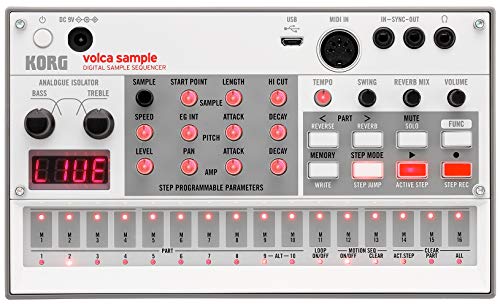
- 8-voice sample-based sequencing
- Pattern chain mode and expanded memory
- Battery, speaker, headphone, and USB support
Best For: Portable sample sequencing and computer-assisted rhythm production
Best Live Pedal

- Hands-free footswitch control
- 200+ songs and 13 HD drum kits
- Visual metronome for live timing
Best For: Worship guitarists, solo performers, and live loopers
Best Analog Sound

- 16 classic analog drum sounds
- 64-step sequencer with live triggering
- 11 outputs for multitrack processing
Best For: Worship production and hands-on analog sequencing
Best Portable Sampler
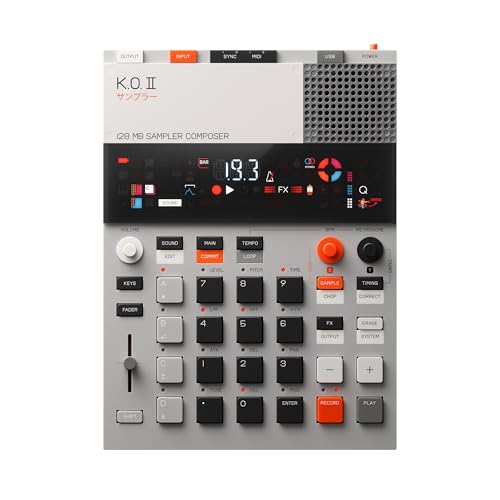
- Sample through the mic or line input
- Four groups with 99 patterns each
- Battery-powered with built-in effects
Best For: Mobile worship songwriting and creative electronic performance
Classic All-Rounder – Alesis SR-18
The Alesis SR-18 is a practical choice for church musicians who want a standalone rhythm source for rehearsals, songwriting, live performance, or worship arrangements. Its 500 onboard sounds, pattern triggering, tap tempo, MIDI support, and battery operation make it flexible for both fixed setups and portable use.
Best For: Church musicians needing versatile accompaniment patterns, MIDI connectivity, and a compact unit for rehearsal or performance.
Pros:
- Includes 500 professional sounds with built-in effects and Dynamic Articulation.
- Pattern Play Mode, programmable Drum Roll, and tap tempo support hands-on performance.
- Supports MIDI connection to keyboards, computers, DAWs, and electronic drum kits.
- Runs from the included wall adapter or six AA batteries.
Cons:
- Six AA batteries are not included.
- Its plastic construction may feel less substantial than larger performance instruments.
For drum machines for church musicians, the SR-18 offers a balanced mix of sounds, sequencing controls, effects, and connectivity. It is especially appealing when you need one compact device that can move between worship practice, live use, and basic production.
Vintage Groove Specialist – Roland TR-08
The Roland TR-08 is suited to church musicians who want the distinctive character and workflow of the classic TR-808 in a compact format. Its hands-on controls and programmable Step and Tap modes make it useful for building steady electronic grooves and adding vintage rhythmic color to modern worship arrangements.
Best For: Musicians seeking authentic TR-808-style sounds and direct, hands-on pattern programming.
Pros:
- Recreates the sound, character, and interface of the legendary TR-808.
- Provides hands-on control over tone, level, tuning, and decay.
- Adds compressor, gain, tune, and pan controls for selected instruments.
- Supports both classic Step and Tap write modes.
Cons:
- Its focused 808 design is less versatile than a sampler or broad sound-library drum machine.
- The supplied notes identify MIDI connectivity but do not specify broader audio or output details.
The TR-08 is a focused option rather than an all-purpose accompaniment box. Choose it when the familiar 808 sound and tactile programming style are central to your church music setup.
Portable Sampling Hub – Akai MPC Sample
The Akai Professional MPC Sample gives church musicians a portable way to sample, sequence, and shape rhythmic material without a computer. Its rechargeable battery, built-in speaker and microphone, 16 pads, factory kits, and onboard effects support quick idea capture, rehearsal experimentation, and live DAWless performance.
Best For: Church musicians who want to create custom grooves from samples and work away from a computer.
Pros:
- Standalone operation includes a rechargeable battery, speaker, microphone, and microSD storage.
- Offers 16 responsive MPC pads and a 2.4-inch full-color display.
- Includes over 100 factory kits, sample chopping, timestretching, repitching, and resampling.
- Provides four internal FX processors with 60 effect types.
Cons:
- The MIDI DIN adapter is not included.
- Its sample-focused workflow may require more preparation than a preset-only drum machine.
- The supplied dimensions and notes are truncated, so some specifications are not fully available.
Among drum machines for church musicians, the MPC Sample stands out for custom sample work and portability. It is a strong fit when you want to capture sounds, build personalized worship textures, and perform without relying on a DAW.
Performance-Ready Hybrid – Roland TR-8S
The Roland TR-8S is designed for church musicians who need detailed live control over both classic drum-machine sounds and their own samples. With modeled TR instruments, sample import, per-instrument effects, and storage for 128 kits, it can support repeatable worship setups while leaving room for creative sound design.
Best For: Live worship performers and producers who need deep kit design, sample integration, and saved effects settings.
Pros:
- Includes modeled sounds from the TR-808, 909, 707, 727, 606, and CR-78 families.
- Combines TR sounds with imported mono or stereo samples.
- Offers detailed controls for decay, tuning, sample start, speed, and direction.
- Saves instrument and master effects settings with each kit for performance readiness.
Cons:
- Its advanced sound-design and kit features may be more than a beginner needs.
- Sample importing requires using the SD card slot.
- The supplied notes do not specify a built-in speaker or battery operation.
The TR-8S is one of the more comprehensive choices for drum machines for church musicians who perform with prepared kits. Its combination of classic sounds, custom samples, and saved effects makes it well suited to organized live rigs and evolving worship productions.
Portable Pattern Builder – Korg Volca Drum
Korg Volca Drum Digital Percussion Synthesizer w/ 16-step Sequencer and Active Step
Check Price On AmazonFor church musicians seeking compact drum machines for church musicians, the Korg Volca Drum offers a portable way to build original percussion patterns. Its six-part DSP synth engine, 16-step sequencer, and built-in speaker make it practical for rehearsal spaces, songwriting, and small live setups.
Best For: Portable pattern creation, rehearsal, and musicians who want synthesized percussion rather than sample playback.
Pros:
- Compact, lightweight design with a built-in speaker for mobile use.
- Six-part DSP synth engine provides a broad range of drum sounds.
- Active Step, Slice, accent, and randomize functions support varied rhythms and dynamic patterns.
- Choke grouping and waveguide resonance add useful sound-shaping flexibility.
Cons:
- The 16-step sequencer may feel limiting for musicians needing longer arrangements within the unit.
- It is focused on synthesized percussion rather than loading custom samples.
The Volca Drum is a strong choice when portability and hands-on pattern experimentation matter. Its compact format suits practice and smaller setups, while the sequencing tools provide enough variation for developing rhythmic parts.
Hands-On Analog Impact – Arturia DrumBrute Impact
The Arturia DrumBrute Impact is a practical option for church musicians comparing drum machines for church musicians and wanting tactile analog-style control. Dedicated accents, Song mode, and optional Color sound-shaping give performers useful tools for building and chaining rhythmic patterns.
Best For: Performers who prioritize hands-on pattern control, analog drum character, and chained song arrangements.
Pros:
- Separate accent control is available for each drum.
- Song mode supports chaining patterns into longer sequences.
- Optional Color sound-shaping is available across the instruments except Cowbell.
- Metal and alloy-steel construction offer a sturdy physical design.
Cons:
- Color sound-shaping is not available on the Cowbell.
- At 2.4 kg, it is less lightweight than the compact Volca options in this roundup.
Choose the DrumBrute Impact if live interaction and pattern organization are more important than an ultra-portable footprint. Separate accents and Song mode make it particularly useful for musicians who want more expressive, structured performances.
Sample-Based Worship Sketchpad – Korg Volca Sample 2
Korg Volca Sample 2 Digital Sample Sequencer Drum Machine w/Pattern Chain Mode and 16-step Sequencer
Check Price On AmazonThe Korg Volca Sample 2 gives church musicians a lightweight way to work with recorded sounds when evaluating drum machines for church musicians. Its 16-step sequencer, pattern chain mode, expanded memory, and computer connectivity make it useful for arranging sample-based rhythms during practice or production.
Best For: Musicians who want portable sample sequencing, pattern chaining, and computer-based sample management.
Pros:
- Sample-based engine provides 8-voice polyphony and double the previous model’s memory.
- Pattern chain mode and start delay support more advanced sequencing.
- Dedicated Librarian software helps manage samples and patterns on Mac and PC.
- Built-in speaker, headphone output, battery operation, and USB connectivity support flexible use.
Cons:
- Sample management requires computer connectivity and Librarian software for the dedicated workflow.
- The 16-step sequencer may not replace a full-length arrangement system for complex services.
The Volca Sample 2 is a good fit for musicians who want to bring sample-based textures into rehearsal and production. Its low weight, standalone playback options, and pattern chaining make it flexible, while USB support simplifies managing material from a computer.
Best Live Pedal – BeatBuddy 2
For church musicians who need hands-free accompaniment, the BeatBuddy 2 is a practical drum machine for church musicians, especially guitarists and solo performers. Its footswitch control lets you trigger song parts, fills, and transitions in real time while playing.
Best For: Live worship performers, guitarists, solo musicians, and loopers who want natural-sounding drums without operating a tabletop unit.
Pros:
- Foot-controlled operation supports hands-free live performance.
- Includes 200+ songs across 23 genres and 13 HD drum kits.
- LCD visual metronome helps with timing and complex time signatures.
- Compact 1.4-pound pedal uses a standard 9V power supply and 100mA.
Cons:
- Its pedal-based format may be less suitable for detailed pattern programming than a tabletop sequencer.
- Warranty information requires contacting the seller or checking the manufacturer’s website.
The BeatBuddy 2 stands out when immediate control and realistic drum accompaniment matter more than deep studio sequencing. Its large content library and expandable customization make it a flexible choice for worship sets, practice, and live looping.
Best Analog Sound – Behringer RD-8
The Behringer RD-8 is a strong option for church musicians who want warm, vintage-style analog drums and hands-on sequencing. Its 64-step sequencer supports real-time triggering, pattern manipulation, mutes, solos, and polyrhythmic work.
Best For: Worship production teams, keyboardists, and musicians who want classic analog drum tones with extensive sequencing and routing options.
Pros:
- Provides 16 analog drum sounds with global accent capability.
- 64-step sequencer supports polymeter, step-repeat, note-repeat, and real-time triggering.
- Eleven independent analog outputs allow multitrack recording or external processing.
- Metal, plastic, and rubber construction gives it a substantial hardware feel.
Cons:
- At 3.98 kg, it is less portable than compact pedal or battery-powered options.
- Its vintage analog sound profile may not suit teams seeking acoustic-style drum realism.
The RD-8 is best suited to church setups with room for dedicated music hardware and a musician comfortable with step sequencing. Its independent outputs are particularly useful when drums need separate processing or multitrack recording.
Best Portable Sampler – teenage engineering K.O. II
The teenage engineering EP-133 K.O. II is a flexible drum machine for church musicians who want to sample, arrange, and perform from a compact battery-powered device. It combines drum sounds, melodic samples, effects, a microphone, and a redesigned sequencer for developing worship ideas on the go.
Best For: Mobile songwriters, electronic worship musicians, and creative performers who want sampling, pattern building, and live effects in one portable unit.
Pros:
- Built-in microphone and line input support quick sampling and resampling.
- Four groups with 99 patterns provide flexible beat and arrangement building.
- Includes six master effects and 12 punch-in effects controlled by a multifunctional fader.
- Runs on four AAA batteries or USB-C and includes MIDI and sync connectivity.
Cons:
- Its plastic body and compact design may feel less substantial than larger dedicated drum machines.
- Four-track sequencing may be limiting for complex full-band arrangements.
The K.O. II is a creative and portable choice rather than a straightforward accompaniment pedal. Its sampling workflow, built-in effects, speaker, and battery operation make it useful for composing, rehearsing, and adding electronic textures to worship music.
How We Picked the Best Drum Machines for Church Musicians
We focused on features that matter in real worship settings: dependable timing, usable drum sounds, practical pattern control, live transitions, connectivity, and setup complexity. We also considered whether each unit works best as a hands-on performance instrument, a rehearsal tool, a pedal-controlled accompaniment source, or a studio and production centerpiece.
Because churches vary widely in size and style, this list includes analog, digital, sample-based, and hybrid approaches. A compact device may suit a solo worship leader, while a larger performance unit may be better for a band, worship director, or production team.
Quick Comparison
| Best For | What to Look For |
|---|---|
| Hands-free worship accompaniment | Foot control, song memory, reliable transitions, and balanced built-in sounds |
| Live electronic worship | Pattern launching, mute controls, effects, and accessible performance pads |
| Traditional drum-machine operation | Clear step sequencing, dedicated controls, and predictable pattern editing |
| Modern sample-based arrangements | Sample import, resampling, effects, and flexible sequencing |
| Budget-conscious setups | Core rhythm sounds, straightforward outputs, and minimal menu navigation |
Key Buying Factors for Drum Machines for Church Musicians
Live Control and Song Structure
Choose a unit that matches how you perform. Dedicated pads and pattern controls help musicians trigger sections in real time, while song modes and chained patterns are useful for verse, chorus, bridge, and ending arrangements. If you play guitar or keyboard simultaneously, simpler controls—or a pedal-based workflow—can be more practical than a feature-heavy interface.
Sound Quality and Musical Style
Consider whether you need acoustic-style kits, electronic percussion, analog tones, or the ability to load your own samples. For contemporary worship, sample flexibility and effects can be valuable; for pop, gospel, or rock-oriented sets, punchy kick, snare, and percussion sounds may be the priority.
Outputs, Sync, and Integration
Check the available outputs and connectivity before buying. Separate outputs can help a sound engineer process kick, snare, and percussion independently, while MIDI, USB, or clock sync can connect the machine to a keyboard rig, DAW, or other hardware. Also confirm that the unit’s output level and connections suit your mixer or audio interface.
Reliability and Setup
A worship device should be quick to recall, easy to monitor, and stable throughout a service. Look for clear controls, dependable pattern storage, strong power options, and a workflow your team can operate confidently under pressure.
Who Should Buy Which Drum Machines for Church Musicians?
Solo worship leaders and guitarists: Prioritize straightforward accompaniment, hands-free operation, and easy song changes. A pedal-style solution or compact sequencer can reduce distraction.
Electronic worship performers: Choose a performance-focused machine with pattern launching, effects, mute controls, and responsive pads. These features support dynamic builds and transitions.
Producers and worship directors: Look for sample loading, deeper sequencing, multiple outputs, and MIDI or USB integration. More advanced machines offer room to create custom arrangements and rehearsal tracks.
Churches on a budget: A focused drum machine with solid core sounds and simple programming may deliver better value than a larger unit filled with features your team will not use. Before purchasing, map your typical set structure, test the control layout, and confirm that the device can fit your mixer, monitoring, and power setup.