
A stereo microscope with a camera lets you inspect three-dimensional details while recording images or sharing live video on a monitor. That combination is especially useful for PCB repair, soldering, jewelry work, quality control, and teaching.
This roundup compares 10 trinocular and digital stereo microscope setups across magnification, camera resolution, stand design, lighting, and included accessories. Use the guide below to match the right system to your workspace and budget.
Best 10 Stereo Microscopes with Cameras Picks for 2026
Best Ergonomic 4K Option

- 4K camera with 0.4X interface
- 7X-50X adjustable zoom
- Large 500 x 380mm work plate
Best For: PCB repair and detailed electronics bench work
Best Long-Working-Distance Choice

- 5MP USB camera with reduction lens
- 7X-45X continuous zoom range
- 8-inch working distance and boom stand
Best For: Large specimens, circuit boards, and computer-connected viewing
Best External-Display Repair Setup
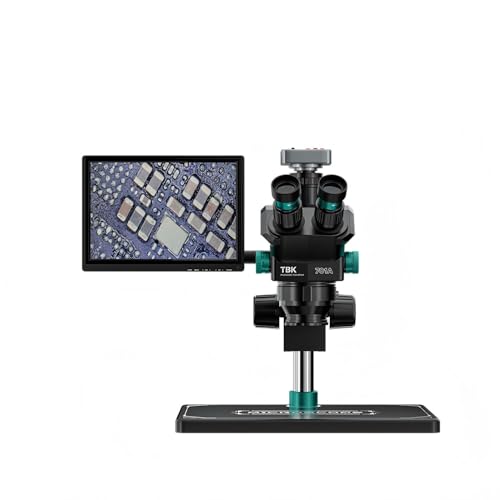
- 48MP camera with HD display support
- 7X-60X continuous zoom
- Heavy-duty base for electronics repair
Best For: PCB, motherboard, and mobile-phone repair stations
Best High-Magnification Range

- 3.5X-90X super-wide-field zoom
- 18MP USB 3.0 camera
- 144-LED dimmable ring light
Best For: High-detail inspection on a dedicated workbench
Maximum Range Pick
ZTEEERS 3.5X-90X Trinocular Stereo Microscope

- 3.5X-90X magnification with auxiliary lenses
- Two camera or eyepiece adapter configurations
- Heavy-duty boom stand with dimmable LED ring light
Best For: Flexible inspection and future camera upgrades
Complete Imaging Setup
AmScope SM-4T-80S-M with 1.3MP Camera

- Includes a 1.3MP camera and USB 2.0 output
- 7X-45X continuous zoom range
- Double-arm boom stand for large workpieces
Best For: Computer-connected inspection without buying a separate camera
Versatile Workbench Choice
SWIFT S7 7X-45X Trinocular Microscope
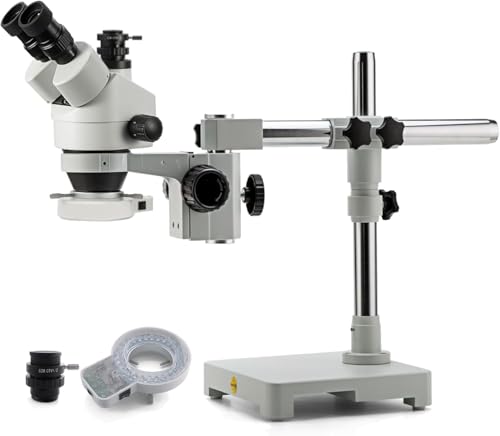
- 7X-45X continuous zoom for surface inspection
- Includes a 0.5X C-mount camera adapter
- 56-bulb LED ring light and single-arm boom stand
Best For: Electronics, gemology, engraving, and repair with an added camera
Best High-Range Zoom
AmScope SM-4T Trinocular Microscope

- 3.5X-90X zoom range
- Included 5MP USB camera
- Dual-arm boom stand with 8-inch working distance
Best For: Demanding inspection and camera-based documentation
Best Compact Setup
ZTEEERS 6X-45X Trinocular Microscope

- 6X-45X continuous zoom
- 56-bulb LED ring light
- 0.5X CTV adapter included
Best For: Routine bench-top observation and camera attachment
Best Versatile Optics
SWIFT S7 Trinocular Stereo Microscope
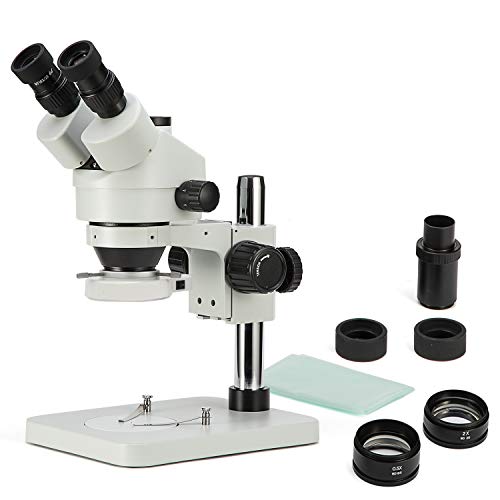
- Expanded 3.5X-90X magnification
- 0.5X and 2.0X objectives included
- Rotating 45-degree trinocular head
Best For: Gemology, electronics, engraving, and precision inspection
Best Ergonomic 4K Option – Kaisi TX-350S Plus
For shoppers comparing stereo microscopes with cameras for PCB repair, the Kaisi TX-350S Plus combines a 4K camera with a simul-focal trinocular design. Its adjustable 7X-50X zoom, angled viewing head, and large work plate make it suited to detailed bench work.
Best For: PCB repair and electronics work that benefits from 4K imaging, broad workspace, and reduced viewing strain.
Pros:
- 4K video camera with a 0.4X interface for detailed capture.
- Adjustable 7X-50X zoom supports precise inspection.
- Large 500 x 380mm bottom plate accommodates complex PCB work.
- 45-degree tilt and ergonomic design can improve comfort during extended use.
Cons:
- Its listed 7X-50X range is narrower than some competing models.
- The supplied notes identify this as Package 1, so included accessories should be checked carefully.
This is a practical choice when image quality and a spacious repair surface matter more than maximum magnification. The 4K camera and ergonomic setup give it a strong focus for electronics inspection.
Best Long-Working-Distance Choice – AmScope SM-3T-54S-5M
The AmScope SM-3T-54S-5M is one of the more flexible stereo microscopes with cameras for users handling large items or circuit boards. It pairs a 5MP USB camera with a boom stand, continuous zoom, and an adjustable LED ring light.
Best For: Circuit boards, dental appliances, and other large specimens requiring generous working distance and computer-connected imaging.
Pros:
- 5MP camera includes a reduction lens and USB 2.0 output.
- 0.7X-4.5X objective provides continuous zoom with a 7X-45X listed magnification range.
- Long working distance includes an 8-inch vertical distance and adjustable 16-inch boom arm.
- Rheostat-controlled 54-bulb LED ring light offers adjustable illumination.
Cons:
- USB 2.0 is less current than the USB 3.0 connection on some alternatives.
- The included camera is 5MP rather than the higher-resolution options in this roundup.
Choose this model when workspace flexibility is a priority. Its boom stand and long working distance are especially useful for manipulating larger objects while keeping camera output available on a computer or projector.
Best External-Display Repair Setup – TBK-701A
For repair technicians seeking stereo microscopes with cameras, the TBK-701A stands out with a 48MP camera and included HD display. Its 7X-60X continuous zoom and stereo eyepieces are designed for close inspection of PCBs, BGA components, and IC chips.
Best For: Mobile-phone repair, motherboard maintenance, PCB soldering, and workstations that benefit from a built-in external viewing screen.
Pros:
- 48MP industrial camera supports ultra-high-resolution imaging.
- Included HD display enables real-time viewing without relying solely on eyepieces.
- 7X-60X continuous zoom covers overview and micro-level inspection.
- Heavy-duty metal base, adjustable column, and LED ring light support stable bench work.
Cons:
- The one-year warranty is shorter than the five-year warranties listed for the AmScope models.
- Its design is specifically oriented toward repair and inspection rather than general specimen viewing.
This model is a strong fit for electronics workstations where camera viewing and high magnification are central requirements. The display, 48MP camera, and stable base create a repair-focused package.
Best High-Magnification Range – AmScope SM-4TPZ-144-18M3
The AmScope SM-4TPZ-144-18M3 is a high-range option among stereo microscopes with cameras, offering simul-focal viewing through both the eyepieces and trinocular port. It combines 3.5X-90X zoom, an 18MP USB 3.0 camera, and a 144-LED ring light.
Best For: Detailed inspection requiring a wide magnification range, long working distance, and simultaneous camera and eyepiece viewing.
Pros:
- 3.5X-90X super-wide-field stereo zoom provides the broadest listed magnification range here.
- 18MP camera uses USB 3.0 and includes editing and measuring software for Windows.
- Up to 8-inch working distance and up to 2.5-inch super-wide field support hands-on inspection.
- 144-LED ring light includes a dimmer for adjustable illumination.
Cons:
- Its listed 65-pound weight makes it a substantial, less portable setup.
- The camera software is specified for Windows XP through Windows 10, so compatibility with newer systems should be verified.
This is the most compelling pick when magnification range and camera resolution take priority. Its heavy boom-stand configuration is better suited to a dedicated inspection bench than a portable workspace.
Maximum Range Pick – ZTEEERS 3.5X-90X Trinocular Stereo Microscope
For shoppers comparing stereo microscopes with cameras, this ZTEEERS model stands out for its unusually broad 3.5X-90X range and trinocular design. It includes two adapter configurations for connecting electronic eyepieces or digital cameras, along with a boom stand and adjustable ring light.
Best For: Detailed inspection tasks that benefit from a wide magnification range, long working distance, and flexible camera connectivity.
Pros:
- 3.5X-90X range using the 0.7X-4.5X zoom objective with included 0.5X and 2X auxiliary lenses
- Trinocular head supports electronic eyepiece and digital camera connections
- Heavy-duty steel base and flexible single-arm boom stand
- 56S LED ring light provides dimmable, shadow-free illumination
Cons:
- Camera is not included; the adapters support separately selected imaging equipment
- The broad accessory and magnification setup may be more than basic users need
Choose this model if maximum optical flexibility is more important than an included camera. Its stable stand, ergonomic head, and adjustable illumination make it a strong platform for adding imaging hardware over time.
Complete Imaging Setup – AmScope SM-4T-80S-M with 1.3MP Camera
If you want stereo microscopes with cameras in one package, the AmScope SM-4T-80S-M includes a 1.3MP camera, reduction lens, and USB 2.0 output. Its 7X-45X zoom range and long-working-distance boom stand suit work on circuit boards, dental appliances, and other larger items.
Best For: Users who want to capture or display microscope images on a computer or projector without sourcing a camera separately.
Pros:
- Included 1.3MP CMOS camera with USB 2.0 computer connectivity
- 0.5X reduction lens helps support image capture and a wider view
- 7X-45X continuous zoom with long working distance
- Double-arm boom stand supports X, Y, and Z positioning
Cons:
- Its maximum magnification is 45X, lower than some broader-range alternatives
- At 59.2 pounds, the complete setup is relatively heavy
The included camera makes this the most turnkey choice of the three for basic digital documentation and display. Its substantial stand is advantageous for larger workpieces, though it requires a dedicated workspace.
Versatile Workbench Choice – SWIFT S7 7X-45X Trinocular Microscope
The SWIFT S7 is a practical option among stereo microscopes with cameras when you already have, or plan to choose, a compatible C-mount camera. Its trinocular port, included 0.5X C-mount adapter, 7X-45X zoom, and 56-bulb LED ring light create a capable platform for electronics, gemology, engraving, and repair work.
Best For: Hobbyists and professionals who need ergonomic surface magnification with the flexibility to add a C-mount camera.
Pros:
- Continuous 7X-45X magnification through the 0.7X-4.5X zoom objective
- Included 0.5X C-mount adapter supports a separately selected camera
- 56-bulb LED ring light provides bright, shadow-free illumination
- Single-arm boom stand accommodates larger objects
Cons:
- Camera is not included
- Its 45X maximum magnification is less extensive than the ZTEEERS model
- Requires a compatible C-mount camera for digital imaging
This is a well-balanced choice for users who value a sturdy, ergonomic inspection microscope and want to select their own imaging system. The included adapter reduces the setup work, but the camera cost must be considered separately.
Best High-Range Zoom – AmScope SM-4T Trinocular Microscope
For buyers seeking stereo microscopes with cameras for demanding inspection and documentation, the AmScope SM-4T combines an unusually broad 3.5X-90X zoom range with a trinocular head and included 5MP USB camera. Its dual-arm boom stand and long working distance also suit larger or awkwardly positioned specimens.
Best For: Detailed inspection, electronics work, specimen documentation, and users who need flexible head positioning.
Pros:
- Very broad 3.5X-90X zoom magnification range.
- Wide 2.5-inch field of view and 8-inch working distance.
- Includes a 5MP USB 2.0 camera with editing and measuring software for Windows.
- Dual-arm 3D boom stand and powerful 30W fiber-optic LED illumination.
Cons:
- At 65 pounds, it is substantially heavier than the other listed options.
- The included camera software is specified for Windows XP through Windows 10.
This is the most capability-focused option of the group, particularly for users who value maximum zoom, working distance, and included imaging hardware. Its heavy boom-stand design is best suited to a dedicated workbench rather than frequent relocation.
Best Compact Setup – ZTEEERS 6X-45X Trinocular Microscope
The ZTEEERS 6045 is a practical choice among stereo microscopes with cameras when you want a trinocular port without stepping up to a larger boom-stand system. It pairs 6X-45X zoom magnification with a 56-bulb LED ring light and a 0.5X CTV adapter for a broader viewing field.
Best For: Bench-top observation, routine documentation, and buyers who prefer a relatively compact aluminum-alloy microscope.
Pros:
- 6X-45X continuous zoom magnification.
- Trinocular head supports binocular viewing and camera attachment.
- 56-bulb LED ring light provides bright, uniform illumination.
- 0.5X CTV adapter is included for a larger, clearer field of view.
Cons:
- No camera is listed as included, so imaging hardware may need to be purchased separately.
- Its 45X maximum magnification is lower than the AmScope and SWIFT options.
With its straightforward pillar stand, ring illumination, and camera-ready trinocular design, this model emphasizes convenient everyday observation. Confirm camera compatibility and mounting requirements before ordering if image capture is central to your setup.
Best Versatile Optics – SWIFT S7 Trinocular Stereo Microscope
The SWIFT S7 is a versatile pick among stereo microscopes with cameras, offering a trinocular port, 56-bulb LED ring light, and expanded 3.5X-90X magnification range when its additional objectives are used. Its angled, rotating head is designed for comfortable viewing during extended precision work.
Best For: Gemology, engraving, electronics, collecting, and laboratory tasks requiring flexible magnification.
Pros:
- Additional 0.5X and 2.0X objectives expand magnification from 3.5X to 90X.
- Trinocular port supports camera attachment and image documentation.
- 45-degree, 360-degree-rotating head helps reduce viewing strain.
- Cool, shadow-free 56-bulb LED ring illumination.
Cons:
- The listed magnification description varies between the base 7X-45X range and expanded 3.5X-90X setup.
- No camera is listed as included.
- The supplied voltage specification is 230 volts, so buyers should verify electrical compatibility.
This model stands out for adaptability: the included objectives support both broad viewing and high magnification, while the ergonomic head suits detailed work. It is a strong fit for users who already have, or plan to select, a compatible camera.
How We Picked the Best Stereo Microscopes with Cameras
We compared these 10 systems by examining their optical design, usable magnification range, camera specifications, stand stability, illumination, working distance, and included accessories. Trinocular models received particular attention because they allow simultaneous viewing through the eyepieces and camera port—an important advantage for detailed repair and inspection.
Camera megapixels matter, but they are not the only measure of usefulness. Sensor quality, software compatibility, frame rate, display options, and the microscope’s optical clarity can have a greater effect on the live viewing experience. We also considered whether each setup is better suited to a compact bench, a boom-arm workstation, classroom use, or demanding professional work.
Quick Comparison
| Best For | What to Prioritize | Recommended Type |
|---|---|---|
| PCB repair and soldering | Long working distance, smooth zoom, stable stand | Trinocular zoom system with ring or fiber-optic lighting |
| Large components or assemblies | Boom-arm reach and adjustable positioning | Dual-arm or single-arm boom stand |
| Sharing images or live demonstrations | High-resolution camera and external display support | Digital model with HDMI or monitor connectivity |
| Routine inspection | Clear optics, practical magnification, easy controls | Midrange trinocular stereo microscope |
Key Buying Factors for Stereo Microscopes with Cameras
Magnification and Working Distance
Most stereo zoom systems in this group cover ranges from roughly 3.5X or 7X up to 45X, 60X, 90X, or more with auxiliary lenses. Higher magnification is useful for tiny solder joints and fine defects, but it usually narrows the field of view. For hands-on repair, prioritize a comfortable working distance so tools can move beneath the objective without repeatedly bumping the sample.
Camera Resolution and Connectivity
A 1.3MP or 5MP camera can be adequate for documentation and basic live viewing, while 18MP, 48MP, and 4K-capable systems are better for detailed still images and larger displays. Check whether the camera uses USB, HDMI, or another output, and confirm that its software works with your computer’s operating system. External-display compatibility is valuable when several people need to view the work at once.
Stand, Lighting, and Ergonomics
A rigid stand reduces vibration and keeps the image steady. Boom stands provide more positioning flexibility, especially for larger boards and assemblies, while compact bases save bench space. Ring lights offer even illumination; dual gooseneck or fiber-optic lights provide more directional control. Look for adjustable intensity and enough clearance for the objects you inspect.
Optical Configuration
Trinocular designs are generally the most versatile because the camera has its own optical path. Confirm whether the listed camera, eyepieces, C-mount adapter, auxiliary lenses, and lighting are included—package contents vary considerably between otherwise similar listings.
Who Should Buy Which Stereo Microscopes with Cameras?
Choose a high-resolution camera system if you regularly document repairs, inspect defects on a large monitor, or create training content. Choose a boom-arm model if your samples vary in size or you need to position the microscope over broad work areas. Choose a midrange 7X–45X or 3.5X–90X trinocular setup for general electronics, hobby repair, jewelry, and classroom use. Choose a compact, lower-resolution configuration when live observation and occasional snapshots matter more than highly detailed image capture.