
The best portable stereo microscopes make close-up inspection easier when you need more flexibility than a full-size laboratory microscope can provide. This roundup compares binocular, digital, handheld, and pocket-friendly options for hobbies, education, electronics, collecting, and field use.
Consider magnification carefully: extremely high digital ratings do not always produce more useful detail. Ergonomics, lighting, working distance, image quality, and power options often matter more for practical viewing.
Best 10 Portable Stereo Microscopes Picks for 2026
Best Classroom Pick
AmScope SE100-LED Portable Stereo Microscope

- 20x binocular viewing
- Battery-powered upper LED illumination
- Reversible contrast stage with clips
Best For: Elementary classrooms and larger specimens
Best Wireless Digital Option
Jiusion 4K WiFi Handheld Microscope

- 4K wireless or wired viewing
- Compatible with phones, tablets, and computers
- Includes LED lighting and metal stand
Best For: Digital inspection and on-the-go exploration
Best Specimen Kit
AOMEKIE 20x/50x Portable Stereo Microscope

- 20x and 50x binocular magnification
- Includes slides, insects, and minerals
- Battery-powered LED illumination
Best For: Beginner science activities and specimen exploration
Best for Coins and Electronics

- 7-inch LCD with 1080P recording
- Stable metal stand and base
- Includes adjustable lighting and 16GB storage
Best For: Coin inspection, soldering, and detailed digital viewing
Professional Choice
ZTEEERS Trinocular Stereo Zoom Microscope

- 3.5X-90X magnification with auxiliary lenses
- Trinocular camera-ready viewing head
- Heavy steel base and adjustable LED ring light
Best For: Detailed inspection, repair work, and camera-supported observation
Best All-in-One Portable
APEXEL 800X Handheld Digital Microscope

- Built-in 2-inch LCD screen
- Lightweight rechargeable handheld design
- Photo, video, USB, and adjustable LED functions
Best For: Portable digital viewing of everyday specimens and small objects
Best for STEM Travel
Carson MicroFlip MP-250 Pocket Microscope
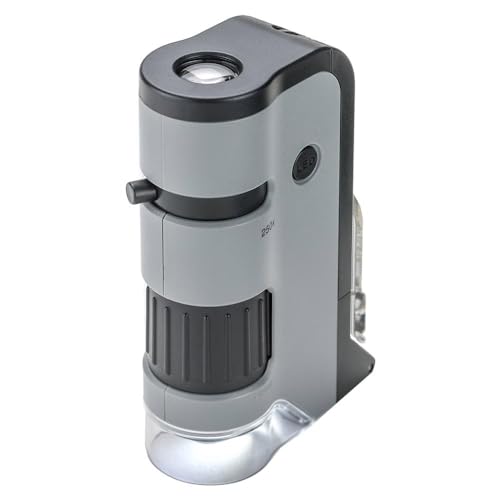
- Pocket-sized 100X-250X magnification
- LED and UV illumination
- Smartphone clip and wrist strap included
Best For: Students and educators conducting portable STEM exploration
Best Wireless Pick
Skybasic Portable Digital Microscope

- WiFi and USB connectivity
- Eight adjustable LED lights
- Captures photos and video
Best For: Mobile-connected field observation and casual learning
Best Pocket Option

- 60x-120x optical magnification
- Bright built-in LED illumination
- Weighs only 2.08 ounces
Best For: Portable student science kits and field observations
Best Binocular Design
ESSLNB Mounted Stereo Microscope

- 30x binocular magnification
- Dual LED illumination
- 45-degree adjustable viewing head
Best For: Home or lab work with larger manipulable specimens
Best Classroom Pick – AmScope SE100-LED Portable Stereo Microscope
AmScope SE100-LED Portable Binocular Stereo Microscope, 20X Magnification | LED Ring Light
Check Price On AmazonFor shoppers comparing portable stereo microscopes for basic specimen work, the AmScope SE100-LED offers straightforward binocular viewing, 20x magnification, and battery-powered upper illumination. Its low-power 2x objective leaves a longer working distance for handling larger items.
Best For: Elementary classrooms, home science activities, and hobbyists examining rocks, stamps, jewelry, biological specimens, and other larger objects.
Pros:
- Binocular head with adjustable interpupillary distance supports comfortable shared use.
- Battery-powered 1W LED provides reflected light without a power cord.
- Reversible black-and-white stage plate helps provide contrast.
- Stage clips secure specimens during inspection.
Cons:
- Maximum magnification is limited to 20x.
- The viewing head has a fixed vertical inclination.
- Batteries are required for illumination.
This is a simple, portable option when ease of use and working distance matter more than high magnification or digital imaging. It is best suited to introductory observation rather than detailed microscopic work.
Best Wireless Digital Option – Jiusion 4K WiFi Handheld Microscope
Among portable stereo microscopes and digital alternatives, the Jiusion 4K model stands out for wireless phone viewing and wired computer connectivity. Its handheld design, built-in LEDs, and included metal stand make it flexible for examining coins, circuit boards, jewelry, insects, and other small objects.
Best For: Students, hobbyists, engineers, and families who want to view magnified subjects on a smartphone, tablet, or computer.
Pros:
- Supports 4K 3840x2160P video transfer when fully charged.
- Works wirelessly with iOS and Android devices and connects by wire to computers.
- Eight built-in LED lights provide adjustable illumination.
- Includes a stable metal stand for hands-free viewing.
Cons:
- Listed zoom controls work on phones and tablets, not computers.
- Plastic construction may be less rugged than a metal optical microscope.
- Battery charging is needed for wireless operation.
This is a strong choice for digital sharing and casual inspection, especially when portability and device compatibility are priorities. Buyers seeking traditional binocular depth perception should consider an optical stereo model instead.
Best Specimen Kit – AOMEKIE 20x/50x Portable Stereo Microscope
The AOMEKIE is one of the more complete portable stereo microscopes for beginners because it combines binocular viewing with 20x and 50x magnification and a substantial specimen assortment. Battery-powered LED lighting also makes it convenient for classroom or home use away from a power cord.
Best For: Children, families, and introductory users who want to start examining insects, slides, minerals, rocks, stamps, jewelry, and small components.
Pros:
- Includes WF10x and WF25x eyepieces for 20x and 50x magnification.
- Adjustable 65mm-102mm working range accommodates larger specimens.
- Includes insect specimens, 10 slides, and 12 mineral specimens.
- Adjustable interpupillary distance supports different users.
Cons:
- Two AA batteries are required and are not included.
- It is intended as an elementary microscope rather than a high-magnification research instrument.
- The included kit adds bulk compared with a bare microscope.
With two magnification levels and ready-to-use samples, this model is particularly practical as an educational gift or starter science station. Its longer working range also helps when specimens need to be manipulated under the lens.
Best for Coins and Electronics – TOMLOV DM9 Digital Microscope
Although it is a digital microscope rather than a binocular optical stereo model, the TOMLOV DM9 is worth considering alongside portable stereo microscopes for detailed close-up inspection. Its 7-inch screen, adjustable stand, built-in lighting, and recording functions are geared toward coins, soldering tasks, jewelry, and small electronics.
Best For: Coin collectors, electronics hobbyists, DIY users, and anyone who wants a stable, screen-based inspection setup.
Pros:
- 7-inch LCD screen provides a comfortable direct viewing area.
- Metal base and adjustable stand help reduce shaking during inspection.
- 12MP camera captures photos and records 1080P video.
- Includes adjustable LEDs, flexible gooseneck lights, and a 16GB memory card.
Cons:
- It does not provide binocular optical viewing.
- The stand-based design is less handheld than compact portable microscopes.
- Its stated 1200x magnification depends on positioning and focusing conditions.
The DM9 is the better fit when a large shared display, image capture, and a steady work platform are more important than traditional stereo viewing. Its metal base and lighting arrangement also make it useful for close-up bench work.
Professional Choice – ZTEEERS Trinocular Stereo Zoom Microscope
For buyers seeking portable stereo microscopes with serious inspection capability, this ZTEEERS model offers a broad zoom range, interchangeable auxiliary lenses, and a flexible boom stand. Its substantial steel base makes it better suited to moving between work areas occasionally than carrying around continuously.
Best For: Detailed inspection, repair work, and users who need camera-ready trinocular viewing.
Pros:
- Trinocular head supports digital camera and electronic-eyepiece adapters.
- 3.5X-90X range with included 0.5X and 2.0X auxiliary lenses.
- Solid 18-pound base, adjustable LED ring light, and flexible boom stand.
Cons:
- Its 19.5-inch dimensions and heavy base limit true pocket portability.
- More setup and equipment than casual users may need.
This is the most capable option here for a dedicated bench or mobile work station. Choose it when stability, working distance, illumination control, and camera observation matter more than lightweight travel.
Best All-in-One Portable – APEXEL 800X Handheld Digital Microscope
The APEXEL is a practical pick among portable stereo microscopes for users who want a self-contained digital viewing device. Its built-in 2-inch screen, rechargeable battery, adjustable lighting, and lightweight body make it easy to carry for quick observations at home, school, or outdoors.
Best For: Portable digital viewing of coins, plants, insects, electronics, and craft details.
Pros:
- Compact 135-gram design with a 75-degree adjustable screen.
- 400X-800X magnification and six adjustable LED lights.
- Captures photos and video, with USB connection for PC viewing.
Cons:
- SD card is required for storage but is not included.
- Its plastic enclosure may be less robust than a full-size inspection microscope.
With a claimed runtime of more than three hours and five sample slides included, this model is convenient for informal exploration and demonstrations. It is a stronger travel choice than a traditional stand microscope, especially when a built-in display is preferred.
Best for STEM Travel – Carson MicroFlip MP-250 Pocket Microscope
Carson MicroFlip 100x-250x, LED UV Pocket Microscope with Smartphone Clip, STEM Education (MP-250)
Check Price On AmazonThe Carson MicroFlip is a compact choice for anyone comparing portable stereo microscopes for field learning and quick magnified observations. Its pocket-sized body, wrist strap, LED/UV illumination, and included smartphone clip support hands-on exploration without the bulk of a conventional microscope.
Best For: Students, educators, and children exploring prepared slides and outdoor specimens.
Pros:
- Lightweight 2.56-ounce design with wrist strap for on-the-go use.
- 100X-250X variable magnification with LED and UV illumination.
- Included smartphone clip makes documenting findings convenient.
Cons:
- Maximum 250X magnification is lower than the other digital handheld option.
- Includes one starter slide, so additional specimens may require separate supplies.
This is a simple, travel-friendly educational microscope rather than a high-capacity digital imaging system. Its distortion-reducing lens design and smartphone compatibility make it particularly appealing for introductory microbiology and STEM activities.
Best Wireless Pick – Skybasic Portable Digital Microscope
For shoppers comparing portable stereo microscopes, the Skybasic stands out as a lightweight digital option that connects wirelessly to Android and iOS devices or by USB to Windows and Mac computers. Its 50x-1000x stated magnification range, adjustable lighting, and image capture make it convenient for casual inspection and outdoor exploration.
Best For: Students, children, hobbyists, and anyone who wants a handheld microscope with smartphone viewing and photo or video capture.
Pros:
- WiFi connectivity for Android and iOS devices, plus USB support for Windows and Mac.
- Eight adjustable LED lights and a 2MP HD CMOS sensor support detailed viewing.
- One-button photo and video capture through the device or app.
- Small, lightweight design is convenient for travel and outdoor activities.
Cons:
- It is a fixed-focus magnifying device rather than a traditional microscope for serious biology work.
- Sharp viewing requires a 3-60 mm distance from the lens to the subject.
- Computer and mobile setup may require software downloads and camera-permission changes.
This is a practical choice when portability and digital sharing matter more than traditional optical microscopy. Its app and connection requirements are worth considering before purchase.
Best Pocket Option – Carson MicroBrite Plus
Among portable stereo microscopes, the Carson MicroBrite Plus is one of the easiest to carry, weighing just 2.08 ounces and measuring 3.5 inches high. Its 60x-120x optical magnification, built-in LED illumination, and battery power suit quick observations at home, school, or in the field.
Best For: Students and beginners who want a compact educational microscope for slides, specimens, and everyday objects.
Pros:
- Compact pocket design is convenient for field use and classroom kits.
- Provides 60x to 120x optical magnification with a stated maximum of 120x.
- Built-in LED lighting helps illuminate specimens evenly.
- Includes a limited lifetime warranty.
Cons:
- Battery-powered operation requires a 1.5-volt battery.
- Its small handheld format may be less suitable for extended, hands-free viewing.
- It is designed as an educational pocket microscope rather than a full-size binocular instrument.
The MicroBrite Plus is a straightforward pick for portability and basic optical viewing. Choose it when a pocket-sized STEM tool is more important than digital imaging or binocular comfort.
Best Binocular Design – ESSLNB Mounted Stereo Microscope
For buyers seeking portable stereo microscopes with a more traditional viewing experience, the ESSLNB uses a mounted binocular head, 10x wide-field eyepieces, and a 3x objective for 30x magnification. Its dual LED illumination supports both surface and specimen viewing, while the 45-degree viewing angle is intended to make observation more comfortable.
Best For: Hobbyists and home or laboratory users examining rocks, stamps, jewelry, biological specimens, and larger objects that require handling.
Pros:
- Binocular viewing can reduce fatigue during longer observation sessions.
- Dual LED lighting supports viewing from above and below.
- Adjustable interpupillary distance helps accommodate different users.
- Useful for specimens and larger objects that need manipulation.
Cons:
- Its 30x magnification is lower than the digital and pocket models in this roundup.
- At a listed 10 kg, it is substantially less convenient to transport than handheld options.
- It provides traditional visual observation rather than built-in digital photo or video capture.
This model prioritizes binocular comfort, working access, and dual illumination over extreme portability. It is the better fit for a stable home or lab workspace than frequent travel.
How We Picked These Portable Stereo Microscopes
We selected models across several use cases rather than treating maximum magnification as the deciding factor. The list includes binocular stereo microscopes for comfortable three-dimensional viewing, digital models with screens or wireless connectivity, and compact pocket microscopes for quick inspections. We also considered lighting, focusing controls, stand stability, portability, included accessories, and the type of work each microscope is designed to handle.
Because specifications vary widely between optical and digital products, compare the intended application and usable image quality—not just the largest number printed on the box.
Quick Comparison
| Best For | Look For | Most Suitable Type |
|---|---|---|
| Electronics and soldering | Stable stand, working distance, adjustable illumination | Digital or trinocular stereo microscope |
| Coins, stamps, and small collectibles | Even lighting, clear detail, easy focusing | Digital handheld or binocular model |
| Classroom and STEM activities | Simple controls, portability, included accessories | Pocket or entry-level digital microscope |
| Field inspection | Battery or USB power, compact design, quick setup | Handheld or pocket microscope |
| Dissection and specimen work | True stereo viewing, comfortable eyepieces, adequate clearance | Binocular stereo microscope |
Key Buying Factors for Portable Stereo Microscopes
Optical Versus Digital Magnification
Optical magnification usually provides a more dependable view for depth, texture, and manipulation. Digital magnification can be useful for displaying, photographing, or recording specimens, but very high advertised ranges may enlarge pixels rather than reveal new detail.
Working Distance and Stability
Choose enough space beneath the lens for the object and your tools. A heavy base, adjustable stand, or articulated support helps prevent vibration during soldering, repairs, and specimen handling. Handheld models trade stability for convenience and are better for quick scans.
Lighting and Viewing Comfort
Adjustable LED lighting is valuable for reflective coins, dark components, and uneven specimens. Binocular eyepieces are generally more comfortable for extended observation, while an LCD screen can be easier for group viewing. Check whether the illumination is transmitted, reflected, or both.
Connectivity and Power
USB, Wi-Fi, and HDMI-style outputs can simplify image capture, but compatibility varies by device and operating system. For field use, confirm whether the microscope has an internal battery, runs from USB, or requires a nearby outlet.
Who Should Buy Which Portable Stereo Microscopes?
Choose a binocular stereo model if you prioritize natural depth perception, comfortable observation, and hands-on work. A trinocular design makes more sense for users who need simultaneous eyepiece viewing and camera output. Digital screen models suit soldering, demonstrations, and shared viewing, while Wi-Fi handheld units are convenient for phones and tablets. Pocket microscopes are the easiest to carry and affordable for students, quick inspections, and casual collecting, but they provide less stability and control than mounted systems.