
The best drum machines for producers make it easier to build grooves, audition sounds, and finish ideas without relying entirely on a computer. The right choice depends on whether you prioritize hands-on sequencing, deep sampling, analog character, portability, or reliable studio performance.
Our roundup covers standalone workstations, performance-focused rhythm machines, MIDI controllers, compact samplers, and beginner-friendly beat makers. Use the guide below to narrow the field by workflow, connectivity, sound design, and budget.
Best 10 Drum Machines for Producers Picks for 2026
Classic Precision

- Modeled 808, 606, 909, 707, 727, and CR-78 sounds
- Mixes TR sounds with imported mono or stereo samples
- Per-instrument effects and performance-ready kit storage
Best For: Authentic Roland sounds and flexible hybrid drum kits
Standalone Studio Hub

- Creates beats and full arrangements without a laptop
- Supports 16 stereo audio tracks and 32 plugin instruments
- USB-C provides multichannel audio and expanded MIDI
Best For: Standalone sampling, sequencing, and complete song production
Portable Beat Sketchpad
teenage engineering EP-133 K.O. II
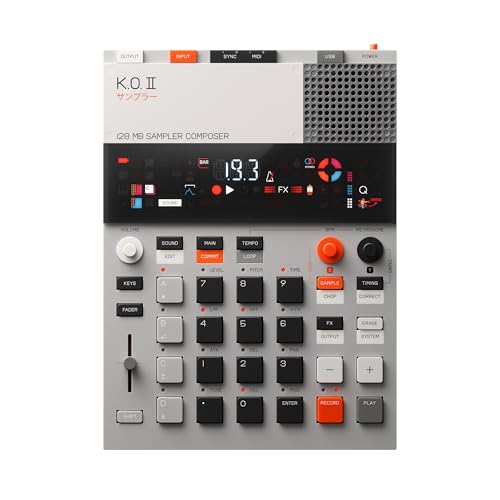
- Built-in microphone and line input for quick sampling
- Four groups of 99 patterns with punch-in effects
- Battery-powered design with 128MB memory and 999 sample slots
Best For: Portable beatmaking, sampling, and live pattern performance
Budget Pad Control
Akai MPD218 USB MIDI Pad Controller

- 16 velocity-sensitive MPC pads with three banks
- 48 assignable pads plus 18 assignable knobs
- Includes MPC Beats, Ableton Live Lite, and Drum Synth 500
Best For: Affordable DAW-based drum triggering and beat programming
Impact Analog Power

- Separate accent per drum
- Song mode for chaining patterns
- Color sound-shaping on most instruments
Best For: Hands-on analog rhythm programming and live pattern performance
Portable Sampling Hub

- Battery-powered standalone operation
- 16 MPC pads and built-in microphone
- Sampling, sequencing, and onboard effects
Best For: Portable beatmaking, sampling, and DAWless production
Classic Production Workhorse

- 500 onboard professional sounds
- Full MIDI connectivity
- Pattern Play and programmable Drum Roll
Best For: Songwriting, live performance, and MIDI-based studio production
Hybrid Production Pick
Behringer LM Hybrid Drum Machine
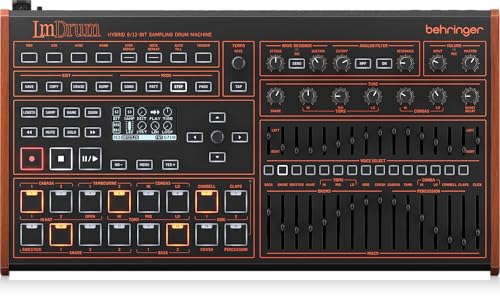
- Hybrid sampling design
- Bass wood body
- Polished black finish
Best For: Producers seeking a dedicated hybrid sampling drum machine
Classic Studio Workhorse
Alesis SR-16 Standalone Drum Machine
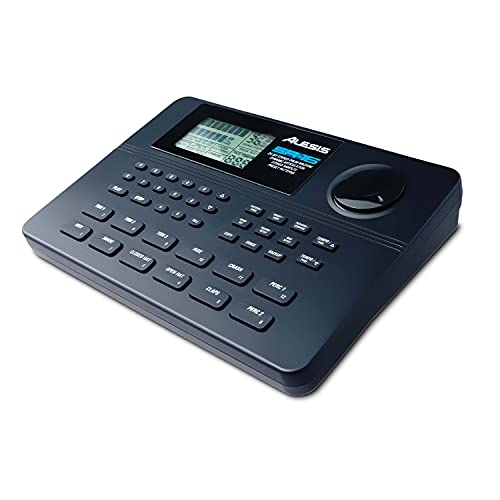
- 233 sounds and 50 kits
- Velocity-sensitive performance pads
- MIDI and stereo outputs
Best For: Songwriters, live performers, and MIDI-based producers
Portable Beat Maker
Stylophone BEAT Compact Drum Machine

- Four drum kits and bass sounds
- Layer and mute patterns
- Battery-powered compact design
Best For: Portable beat sketches and stylus-based rhythm making
Classic Precision – Roland TR-8S Rhythm Performer
The Roland TR-8S is a strong choice for producers who want classic drum-machine character with modern sampling and performance controls. It includes modeled TR-808, 606, 909, 707, 727, and CR-78 sounds, while allowing you to import mono or stereo samples and customize effects.
Best For: Producers seeking authentic Roland drum sounds, flexible hybrid kits, and performance-ready hardware.
Pros:
- Includes detailed circuit-modeled sounds from several classic TR machines.
- Combines built-in drum sounds with imported samples in the same kits.
- Offers per-instrument effects, sample manipulation, and kit-level effect storage.
- TR-EDITOR software adds visual controls and organization tools.
Cons:
- Its extensive sound-design and effects options may take time to master.
- Sample import relies on the SD card slot.
For drum machines for producers, the TR-8S stands out when recognizable Roland sounds and hands-on performance control matter more than an all-in-one song-production workflow.
Standalone Studio Hub – Akai MPC One G2
The Akai MPC One G2 is designed for producers who want to sample, sequence, arrange, and perform without depending on a laptop. Its MPC3 OS, 7-inch touchscreen, 16 velocity- and pressure-sensitive pads, and expanded processing support full standalone beatmaking and hybrid studio setups.
Best For: Beatmakers who want an all-in-one production center for sampling, sequencing, arranging, and external-gear control.
Pros:
- Supports standalone production without a computer.
- Provides up to 16 stereo audio tracks and 32 plugin instruments per project.
- USB-C handles multichannel audio, expanded MIDI, and host or device connectivity.
- Includes over 20GB of factory content, plugins, and Splice access.
Cons:
- Its broad production feature set may feel more involved than a dedicated drum machine.
- Some workflow advantages depend on familiarity with MPC3 and related software.
Among drum machines for producers, the MPC One G2 is the most complete option here for building entire tracks, especially if you want sampling, arrangement, audio recording, and external-device integration in one compact unit.
Portable Beat Sketchpad – teenage engineering EP-133 K.O. II
The teenage engineering EP-133 K.O. II is a compact sampler, drum machine, and sequencer for producers who value quick ideas and portable performance. It includes a built-in microphone, 128MB of memory, 999 sample slots, punch-in effects, and battery operation for making beats away from the studio.
Best For: Mobile beatmaking, live pattern experimentation, casual sampling, and producers who prefer an immediate hands-on workflow.
Pros:
- Samples through its built-in microphone or line input.
- Offers four groups with 99 patterns each for fast beat variations.
- Includes six master effects and 12 punch-in effects controlled by a multifunctional fader.
- Runs on four AAA batteries or USB-C and includes built-in speaker and MIDI connectivity.
Cons:
- Its 128MB memory is more limited than larger standalone production systems.
- The four-track sequencer is less suited to complex full-song arrangements than an MPC-style workstation.
The EP-133 K.O. II is a compelling pick among drum machines for producers who want a lightweight idea generator with sampling, effects, and performance controls rather than a full desktop production center.
Budget Pad Control – Akai MPD218 USB MIDI Pad Controller
The Akai MPD218 is a USB MIDI pad controller for producers who already use a computer or iOS setup and want tactile drum triggering. It supplies 16 velocity-sensitive MPC pads, three pad banks for 48 assignable pads, note repeat, and assignable knobs for controlling software instruments and effects.
Best For: Computer-based beatmakers who need an affordable, portable controller for drums, samples, and software instruments.
Pros:
- Provides 16 thick, velocity-sensitive MPC pads with three banks.
- Offers 48 assignable pad locations and 18 assignable knobs across three banks.
- Includes note repeat and full-level controls for expressive beat performance.
- Comes with MPC Beats, Ableton Live Lite, and Drum Synth 500 software.
Cons:
- It is a controller rather than a standalone drum machine, so it requires compatible software or hardware.
- It has no built-in sounds or internal sequencing described in the supplied specifications.
- iOS use requires a separately sold Camera Connection Kit.
For drum machines for producers, the MPD218 is best understood as a low-cost control surface: a practical way to add MPC-style pads to a DAW-based setup without paying for standalone sampling hardware.
Impact Analog Power – Arturia DrumBrute Impact
The Arturia DrumBrute Impact is a focused analog option for producers seeking hands-on rhythm programming and immediate sound shaping. Its separate accent controls, Song mode, and Color controls support both live pattern performance and chained arrangements.
Best For: Producers who want an analog drum machine with tactile performance controls and pattern-chaining features.
Pros:
- Separate accent control for each drum adds dynamic expression.
- Song mode allows patterns to be chained into longer arrangements.
- Optional Color sound-shaping is available across the instruments except Cowbell.
- Metal construction with a 2-year manufacturer warranty.
Cons:
- Color sound-shaping does not apply to the Cowbell.
- Its listed 1/4-inch TRS connector may require additional connectivity planning in some setups.
For producers prioritizing analog character and performance-oriented control, the DrumBrute Impact offers a streamlined workflow with useful arrangement and sound-shaping tools.
Portable Sampling Hub – Akai MPC Sample
The Akai Professional MPC Sample is a versatile choice for producers who want drum machines for producers workflows centered on sampling, sequencing, and beatmaking. Its battery-powered standalone design includes pads, a speaker, microphone, storage, effects, and computer-free operation.
Best For: Beatmakers, DAWless creators, finger drummers, and producers who want portable sampling and sequencing.
Pros:
- Standalone operation includes a rechargeable battery, speaker, microphone, and microSD storage.
- Sixteen responsive MPC pads and a 2.4-inch color display support hands-on beatmaking.
- Includes over 100 factory kits, sample chopping, timestretching, repitching, and resampling with effects.
- Offers four internal FX processors with 60 effect types.
Cons:
- The MIDI input and output require a 1/8-inch-to-MIDI DIN adapter, which is not included.
- The included warranty is limited to one year.
With its portable hardware design and broad sampling toolkit, MPC Sample is especially compelling when you want to capture ideas and build grooves away from a computer.
Classic Production Workhorse – Alesis SR-18 Drum Machine
The Alesis SR-18 is a practical pick for producers who need drum machines for producers setups with a substantial preset library and straightforward performance features. It combines 500 sounds, built-in effects, MIDI connectivity, and flexible power options for studio or live use.
Best For: Songwriters, live performers, remix engineers, and producers who want a proven standalone drum machine with extensive built-in sounds.
Pros:
- Includes 500 professional sounds with built-in digital effects.
- Dynamic Articulation is designed to add realism to its sounds.
- Full MIDI support connects it with keyboards, computers, DAWs, and electronic drum kits.
- Pattern Play, programmable Drum Roll, and tap tempo support live-oriented workflows.
Cons:
- Battery operation requires six AA batteries, which are not included.
- The warranty is limited to one year.
The SR-18 remains a flexible option for producers who value a large onboard sound set, MIDI integration, and quick pattern triggering over a newer, highly visual interface.
Hybrid Production Pick – Behringer LM Hybrid Drum Machine
The Behringer LM is a hybrid sampling drum machine for producers who want a dedicated rhythm-focused instrument. Its polished black finish and bass wood body give it a substantial desktop presence, while its hybrid sampling design suits beat-building and sound experimentation.
Best For: Producers looking for a dedicated hybrid sampling drum machine.
Pros:
- Hybrid sampling drum machine design
- Solid bass wood body and construction
- Polished black finish
Cons:
- The supplied notes do not specify included sounds, sequencing features, or connectivity
- Its 18.86-inch width may require dedicated workspace
The LM is best considered when its hybrid sampling approach and physical construction matter more than a detailed feature list. Confirm the available workflow and connections before choosing it for a specific studio setup.
Classic Studio Workhorse – Alesis SR-16 Standalone Drum Machine
The Alesis SR-16 remains a practical choice for producers who need established sounds, hands-on pads, and straightforward MIDI integration. It includes 233 sounds, 50 preset and 50 user kits, built-in effects, stereo outputs, and 12 velocity-sensitive pads for studio or live use.
Best For: Songwriters, live performers, remix engineers, and producers needing MIDI-compatible drum production.
Pros:
- 233 professional sounds and 50 preset/user drum kits
- 12 velocity-sensitive pads with Dynamic Articulation
- Complete MIDI support and stereo outputs
- Built-in effects, sound stacking, and step editing
Cons:
- Uses a plastic body
- Its dated standalone design may be less immediate than newer grooveboxes
The SR-16 is a well-rounded option among drum machines for producers who value dependable sounds, MIDI connectivity, and dedicated performance controls. Its combination of kits, effects, and editing features supports both songwriting and live applications.
Portable Beat Maker – Stylophone BEAT Compact Drum Machine
The Stylophone BEAT is a compact rhythm machine for producers who want a portable way to sketch beats and bass parts. It provides four drum kits, four bass sounds, pattern recording, layering, muting, a click track, tempo lock, and a built-in speaker in a small battery-powered format.
Best For: Portable beat-making, quick pattern sketches, and producers who enjoy stylus-based control.
Pros:
- Compact 7.09-by-4.8-inch design
- Includes four drum kits and four bass sounds
- Supports layered patterns, muting, click track, and tempo lock
- Built-in speaker and wired headphone support
Cons:
- Limited to four drum kits and four bass sounds
- Requires three AA batteries, which are not included
- Plastic construction
The BEAT is a convenient creative companion rather than a full-featured studio centerpiece. Its portability and pattern-focused workflow make it appealing for idea capture, while producers needing extensive sounds or deeper production controls should look elsewhere.
How We Picked the Best Drum Machines for Producers
We evaluated these drum machines and related production tools by looking at how well they support beat creation in real studio, live, and portable setups. Key considerations included sequencing flexibility, pad and control layout, built-in sounds, sampling capabilities, effects, connectivity, portability, and how quickly each unit can turn an idea into a usable rhythm.
The list includes both dedicated drum machines and closely related samplers or controllers. That matters because producers often build beats with a hybrid setup rather than a single device. A MIDI pad controller may be the best option for someone already working in a DAW, while a standalone sampler or workstation can serve as the center of a computer-free production rig.
Quick Comparison
- Best for deep standalone production: Choose a full workstation-style unit with sequencing, sampling, effects, and multiple connectivity options.
- Best for live performance: Look for hands-on pattern control, reliable triggering, quick muting, and performance-friendly outputs.
- Best for analog-style sound: Consider an analog or hybrid drum machine with dedicated controls and characterful synthesis.
- Best for DAW users: A USB MIDI pad controller can provide expressive hands-on input without duplicating software features.
- Best for portability: Compact samplers and battery-friendly beat makers are easier to use while traveling or sketching away from the studio.
Key Buying Factors for Drum Machines for Producers
Workflow and Sequencing
Decide whether you want step sequencing, real-time recording, pattern chaining, song-mode arrangement, or clip-style performance. A simple pattern workflow can be faster for beat sketches, while deeper arrangement tools are valuable for completing full tracks on the device.
Sound Engine and Sampling
Preset libraries are useful for immediate results, but sampling expands the available palette. Check whether the unit supports external sampling, sample trimming, layering, synthesis controls, or only playback. Producers who work across genres may benefit more from flexible sampling than from a specialized sound set.
Controls, Pads, and Performance
Large velocity-sensitive pads and dedicated knobs improve expression and speed. If you perform live, prioritize accessible mute, fill, pattern, and effect controls. If you mainly program beats, a compact interface may offer better value and save space.
Connectivity and Integration
Check for USB MIDI, traditional MIDI ports, audio inputs, individual outputs, headphone output, and computer integration. These features determine whether the machine can control other gear, record external sources, or fit smoothly into your existing DAW setup.
Portability and Power
Consider size, weight, power requirements, and durability. A compact device may encourage more frequent use, while a larger workstation can provide better access to controls and more complete production features.
Who Should Buy Which Drum Machines for Producers?
Choose a full standalone workstation if you want to sequence, sample, arrange, and perform without a computer. Choose a dedicated performance drum machine if live pattern manipulation and immediate tactile control matter most. Choose an analog or hybrid model if you want distinctive drum tones and hands-on synthesis.
Choose a portable sampler if you make beats on the move or prefer building tracks from recorded material. Choose a MIDI pad controller if your DAW already provides the sounds and sequencing features you need. Choose a compact beginner-oriented beat maker if affordability, simplicity, and quick experimentation are more important than advanced arrangement capabilities.