
Sharp night-sky images depend on more than the camera and lens. The right mount compensates for Earth’s rotation, helping mirrorless photographers capture longer exposures with cleaner stars and more detail.
This roundup compares 10 options, including portable star trackers, GoTo equatorial mounts, tripods, dovetail hardware, and camera-support accessories. Use the guide below to match capacity, portability, and tracking features to your shooting style.
Best 10 Astrophotography Mounts for Mirrorless Cameras Picks for 2026
Best Portable GoTo Mount

- GoTo and built-in Wi-Fi
- Tripod, pier, and counterweight included
- Illuminated polar scope
Best For: Portable mirrorless-camera astrophotography with automated control
Best Sony E-Mount Adapter

- Fits Sony E-mount bodies
- 42mm thread for Celestron T-adapters
- Two-year US warranty
Best For: Connecting Sony mirrorless cameras to compatible Celestron adapters
Best Lightweight Camera Tracker

- Up to 11-pound balanced capacity
- 2.2-pound mount body
- Up to 20-hour internal battery
Best For: Portable camera-and-lens astrophotography setups
Best Balancing Plate
80mm Vixen-Style Dovetail Rail

- Vixen-style saddle compatibility
- 1/4-inch and 3/8-inch screws
- 52mm adjustment slot and scale
Best For: Positioning lightweight cameras on compatible Vixen saddles
Best Portable Tracker
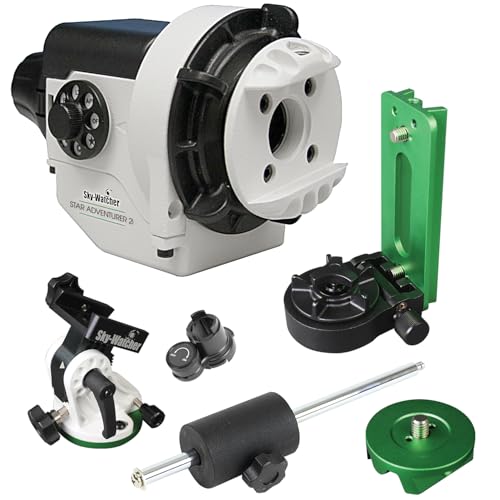
- Motorized platform for wide-field nightscapes
- Wi-Fi smartphone control via SAM Console
- Equatorial base supports polar alignment
Best For: Portable Milky Way, eclipse, and time-lapse photography
Best GoTo Control

- Eight-CPU PMC-Eight control system
- ExploreStars app with Wi-Fi and Bluetooth
- Clutched dual-axis equatorial design
Best For: App-controlled celestial navigation and equatorial setups
Best Budget Support

- Lightweight 2.53-pound aluminum design
- 360-degree ball head with 17.6-pound capacity
- Folds to 15.5 inches for travel
Best For: Stationary nightscapes and portable camera support
Open-Source Versatility
TeSeek Equatorial Star Tracker

- Stellar, moon, and custom speeds
- Northern and southern hemisphere support
- App-free USB-C power-bank operation
Best For: Portable astrophotography and time-lapse setups
Heavy-Duty Balance
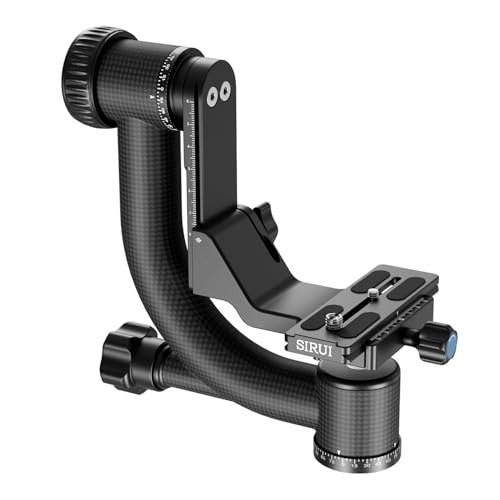
- 20 kg maximum load rating
- 360-degree panoramic rotation
- Arca-compatible quick-release plate
Best For: Balanced support for heavy camera and telephoto setups
Portable GoTo Tracking
Sky-Watcher Star Adventurer GTi

- Full GoTo equatorial tracking
- Built-in Wi-Fi and illuminated polar scope
- Includes counterweight bar and 5 lb weight
Best For: Portable, automated DSLR and mirrorless astrophotography
Best Portable GoTo Mount – Star Adventurer GTi Mount Kit
For photographers comparing astrophotography mounts for mirrorless cameras, the Sky-Watcher Star Adventurer GTi offers a portable equatorial tracking setup with GoTo functionality, built-in Wi-Fi, and a supplied tripod. Its included pier extension and counterweight help create a more complete field-ready package.
Best For: Portable mirrorless-camera astrophotography setups that benefit from GoTo control and guided polar alignment.
Pros:
- Includes mount head, tripod, pier extension, counterweight bar, and 5-pound counterweight.
- Built-in Wi-Fi and GoTo functionality support convenient operation.
- Illuminated built-in polar scope helps with polar alignment.
- Offers multiple tracking rates in a portable design.
Cons:
- At 26 pounds, the complete kit is less lightweight than the mount head alone.
- It is not water resistant.
- The supplied specifications list a maximum shutter speed of 30 seconds.
This is a strong all-in-one choice when portability matters but you still want automated positioning and tracking features. Its included accessories reduce the need to assemble a kit from separate components.
Best Sony E-Mount Adapter – Celestron Sony E T-Ring
A T-ring is an essential connection piece when building astrophotography mounts for mirrorless cameras around a telescope. This Celestron model is made specifically for Sony E-mount camera bodies and connects to compatible Celestron T-adapters with a 42mm female diameter thread.
Best For: Sony E-mount mirrorless owners connecting their camera to a compatible Celestron telescope T-adapter.
Pros:
- Designed for Sony E-mount mirrorless camera bodies.
- Works with Celestron T-adapters using a 42mm female diameter thread.
- Sturdy bayonet flange is designed for a secure fit.
- Includes a two-year US warranty and access to US-based support.
Cons:
- This is a T-ring rather than a tracking mount or complete camera-mounting system.
- Compatibility is specifically described for Sony E-mount bodies and Celestron T-adapters.
- A separate compatible T-adapter is required for telescope connection.
Choose this accessory when your main requirement is a dependable Sony E-mount-to-telescope interface. Confirm the camera body and Celestron adapter compatibility before purchasing.
Best Lightweight Camera Tracker – iOptron SkyGuider Pro
The iOptron SkyGuider Pro is a compact option for photographers evaluating astrophotography mounts for mirrorless cameras. Its 2.2-pound mount body supports up to 11 pounds when balanced, while the illuminated polar scope, adjustable base, and internal rechargeable battery are aimed at practical field use.
Best For: Mobile astrophotographers who need a compact camera tracker for balanced camera-and-lens combinations.
Pros:
- Supports up to 11 pounds when properly balanced.
- Compact 2.2-pound mount design is easy to carry.
- Illuminated AccuAlign polar scope assists with polar alignment.
- Internal rechargeable battery is rated for up to 20 hours at 20°C.
Cons:
- The package specifications list a total item weight of 10.1 pounds, so the complete setup may be heavier than the mount body.
- A tripod is not identified among the supplied components in the notes.
- It is not water resistant.
This tracker balances portability with a comparatively high stated payload, making it suitable for a range of mirrorless cameras and lenses. Plan for a separate support solution if your setup does not already include one.
Best Balancing Plate – 80mm Vixen-Style Dovetail Rail
This 80mm Vixen-style rail is a mounting accessory for astrophotography mounts for mirrorless cameras, rather than a tracking mount itself. Its long slot, reference scale, and 1/4-inch and 3/8-inch camera screws help position and balance compatible cameras or other threaded devices on a Vixen-style saddle.
Best For: Adding adjustable camera mounting and balance control to a setup with a Vixen-style dovetail saddle.
Pros:
- Designed for Vixen-style dovetail saddles.
- Includes 1/4-inch and 3/8-inch D-ring mounting screws.
- 52mm long slot allows positioning for balance.
- Reference scales, anti-slip pads, and a safety stop screw support secure adjustments.
Cons:
- It is a mounting plate, not a motorized tracking mount.
- Requires a compatible Vixen-style saddle or base.
- The listed maximum weight recommendation is 76 grams.
This plate can help fine-tune camera placement on a compatible equatorial setup, especially when alignment and balance need small adjustments. Check the low stated weight recommendation carefully against your camera and accessories.
Best Portable Tracker – Star Adventurer 2i Pro Pack
For photographers comparing astrophotography mounts for mirrorless cameras, the Sky-Watcher Star Adventurer 2i Pro Pack is a portable motorized tracking platform for wide-field nightscapes. Its modular design works with existing photographic tripods and adds Wi-Fi smartphone control through the SAM Console app.
Best For: Portable Milky Way, eclipse, time-lapse, and wide-field astrophotography setups.
Pros:
- Motorized tracking helps capture detailed astronomical subjects.
- Modular design supports integration with photographic tripods.
- Wi-Fi enables smartphone control through the free SAM Console app.
- Deluxe equatorial base assists with positioning for polar alignment.
Cons:
- Its 7-pound weight is less travel-friendly than a basic camera tripod.
- The product is primarily a wide-field tracking platform rather than a complete telescope mount.
The Star Adventurer 2i is a strong choice when portability and wide-field tracking matter most. The included equatorial base and wireless control make it more capable than a simple tripod, while its modular format leaves room for a flexible camera setup.
Best GoTo Control – iEXOS-100-2 PMC-Eight Mount
The Explore Scientific iEXOS-100-2 PMC-Eight is a GoTo equatorial mount and tripod for photographers seeking astrophotography mounts for mirrorless cameras with app-based control. Its eight-CPU PMC-Eight system, dual-axis drives, and ExploreStars app are designed for responsive navigation and precise repositioning.
Best For: Users who want app-controlled equatorial tracking and GoTo access to a large catalog of celestial objects.
Pros:
- Eight independent CPUs assign processing to defined functions.
- Wi-Fi and Bluetooth support ExploreStars app control on Apple, Android, and Windows tablets.
- Clutched RA and declination axes allow smooth balancing and repositioning.
- Precision stepper motor belt drives are designed for quiet operation.
Cons:
- The supplied notes identify tablet compatibility, not direct camera-control compatibility.
- It requires polar alignment, using the RA-axis sight hole and altitude adjustment.
- Its equatorial-mount design may be less convenient than a compact tracker for lightweight travel setups.
This mount makes the most sense for a more structured astrophotography workflow. The app-based GoTo system and independent processing architecture offer useful control, while the clutched axes simplify balancing and manual repositioning.
Best Budget Support – K&F Concept Travel Tripod
Although it is not a motorized tracker, the K&F Concept 64-inch travel tripod is a practical support option for photographers building a simple setup around astrophotography mounts for mirrorless cameras. It combines a 2.53-pound aluminum frame, a 36mm ball head, and a compact folded size for easier transport.
Best For: Stationary nightscape photography and lightweight travel camera setups that need a portable tripod.
Pros:
- Folds to 15.5 inches and weighs 2.53 pounds with the ball head.
- 36mm ball head rotates 360 degrees and supports up to 17.6 pounds.
- Height adjusts from 20.4 to 64.1 inches.
- Includes a quick-release plate, phone holder, wrench, and carrying bag.
Cons:
- It has no motorized tracking or equatorial mount mechanism.
- The supplied notes list a maximum shutter speed of 30 seconds, limiting long-exposure tracking applications.
- It is not water resistant.
Choose this tripod as a lightweight foundation rather than a replacement for a star tracker. Its portability, adjustable height, and substantial stated load capacity make it useful for stationary nightscapes or for supporting compatible equipment in a broader astrophotography kit.
Open-Source Versatility – TeSeek Equatorial Star Tracker
For photographers comparing astrophotography mounts for mirrorless cameras, this TeSeek equatorial mount offers a compact, app-free setup with selectable tracking modes. Its 1/4-inch output requires a separate ball head, and a USB-A-to-C cable is required for power.
Best For: Mirrorless camera users who want a portable, customizable tracker for basic astrophotography and time-lapse work.
Pros:
- Supports stellar, moon, and custom rotation speeds.
- Switches between northern and southern hemisphere use.
- Can operate from a power bank and needs no app.
- Can also function as a gimbal head for time-lapse photography.
Cons:
- Ball head is required for camera connection.
- A 1/4-to-3/8-inch screw sleeve may be needed for many ball heads.
- USB-C-to-USB-C power cables are not permitted.
The open-source design and customizable speeds make this a flexible option, but buyers should budget for the required ball head and confirm their power-cable setup before shooting.
Heavy-Duty Balance – Sirui PH-20 Gimbal Head
Although it is a gimbal head rather than a tracking mount, the Sirui PH-20 can be useful alongside astrophotography mounts for mirrorless cameras when smooth positioning and balanced support are priorities. It is designed for camera and telephoto-lens setups, with a stated 20 kg maximum load.
Best For: Photographers needing a robust, smoothly balancing gimbal head for heavy camera or telephoto-lens combinations.
Pros:
- Supports up to 20 kg according to the supplied specifications.
- Offers 360-degree panoramic rotation.
- Provides tilt adjustment from +150 to -60 degrees.
- Includes scales for tilt, rotation, and height adjustments.
Cons:
- Weighs about 1.1 kg in the feature list and 1.3 kg in the item details.
- It is not described as an equatorial tracking mount.
- It is not water resistant.
The carbon-fiber and forged-aluminum construction should appeal to users who value support and balance, but this head does not provide the celestial tracking functions of a dedicated equatorial mount.
Portable GoTo Tracking – Sky-Watcher Star Adventurer GTi
The Sky-Watcher Star Adventurer GTi is a full GoTo equatorial mount head for photographers seeking more automated astrophotography mounts for mirrorless cameras. It includes built-in Wi-Fi, a polar scope with illuminator, and a counterweight system, while the dovetail for mounting a DSLR or mirrorless camera is not included.
Best For: Portable astrophotographers who want GoTo functionality and built-in alignment features in a compact mount package.
Pros:
- Provides full GoTo performance in a compact package.
- Includes built-in Wi-Fi for control connectivity.
- Has a built-in polar scope with illuminator.
- Includes a counterweight bar and 5 lb counterweight.
Cons:
- Dovetail for mounting a DSLR or mirrorless camera is not included.
- At 6.9 kg, it is heavier than an ultra-light tracker.
- Requires batteries or external power.
This is the most feature-rich tracking option in the group, especially for users who want GoTo operation and Wi-Fi, but the missing dovetail should be included in the setup budget.
How We Picked These Astrophotography Mounts for Mirrorless Cameras
We selected products that address the main parts of a portable astrophotography setup: sidereal tracking, camera mounting, balance, support, and optional computer-controlled positioning. The list includes complete kits as well as accessories that may be useful when building or adapting a system. We considered portability, payload potential, setup complexity, power requirements, compatibility, and value for mirrorless-camera users.
Before buying, confirm whether a listing is a complete tracking mount or only a rail, tripod, ball head, or camera adapter. Those components can be valuable, but they do not replace an equatorial tracker by themselves.
Quick Comparison
- Best for a ready-to-use portable system: Star Adventurer GTi kits with tripod, counterweight, and pier-extension components.
- Best for simple wide-field tracking: Sky-Watcher Star Adventurer 2i Pro Pack or iOptron SkyGuider Pro.
- Best for GoTo expansion: Explore Scientific iEXOS-100-2 PMC-Eight.
- Best for adapting camera gear: Sony E T-ring, Vixen-style dovetail plate, and compatible mounting hardware.
- Best for general support: A sturdy travel tripod, gimbal head, or ball-head tracker accessory where appropriate.
Key Buying Factors for Astrophotography Mounts for Mirrorless Cameras
Payload and Balance
Check the mount’s stated payload and leave headroom for the camera, lens, intervalometer, battery, plate, and counterweights. A balanced setup tracks more smoothly than one operating near its limit. Long or heavy telephoto lenses also place more leverage on the mount than their weight alone suggests.
Tracking Accuracy and Controls
Basic star trackers are suited to wide-field lenses and shorter focal lengths. GoTo equatorial mounts add automated alignment and target positioning, but they require more setup and usually benefit from a careful polar alignment. For longer exposures or larger lenses, look for compatibility with guiding equipment and fine adjustment controls.
Portability, Power, and Setup
Travel photographers should compare packed size, tripod stability, counterweight requirements, battery life, and available power options. A lightweight tripod is convenient, but excessive flex or vibration can undermine tracking. Pier extensions can improve camera clearance and reduce interference with the tripod.
Camera and Mounting Compatibility
Verify the camera mount, lens clearance, plate standard, and thread sizes before purchasing. A Sony E T-ring is a camera-specific adapter, while a Vixen-style dovetail plate is mounting hardware; neither necessarily provides tracking on its own.
Who Should Buy Which Astrophotography Mounts for Mirrorless Cameras?
Beginners and travelers should prioritize a complete star-tracker kit with a stable tripod and straightforward controls. Mirrorless users shooting wide landscapes can often choose a compact tracker such as the Star Adventurer 2i or SkyGuider Pro. Photographers using heavier lenses or planning to add a telescope should consider a GoTo equatorial mount with greater capacity and expansion options. DIY builders may prefer separate rails, adapters, and support heads so they can tailor the rig to existing camera equipment.
Whichever system you choose, budget for a solid tripod, accurate polar alignment, and a reliable power source. Those practical details often matter as much as the mount’s headline specifications.