
Choosing the right mount can make a lightweight telescope far more capable for astrophotography. The best options balance accurate tracking, payload capacity, portability, and a stable setup without adding unnecessary bulk.
We compare 10 compact equatorial mounts, star trackers, latitude bases, and alt-azimuth platforms to help you match your telescope, camera, and observing style with the right support system.
Best 10 Astrophotography Mounts for Lightweight Telescopes Picks for 2026
Best Portable GoTo EQ Mount

- GoTo EQ tracking with built-in Wi-Fi
- Illuminated polar scope and multiple tracking rates
- Includes tripod, pier extension, and counterweight
Best For: Portable astrophotographers wanting an all-in-one GoTo EQ kit
Best Lightweight Manual Alt-Az Mount
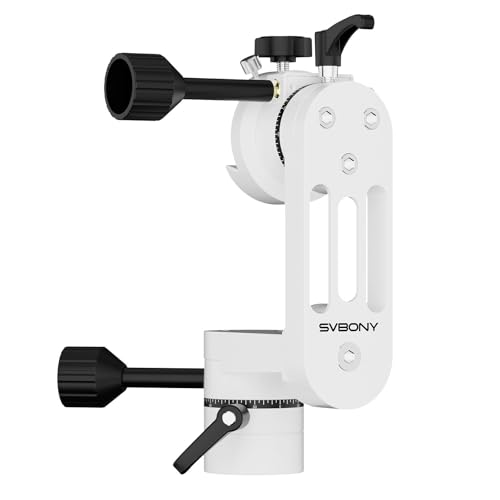
- 5kg stated load capacity in a 1.5kg mount
- Dual-axis fine adjustment with backlash-free design
- 360-degree azimuth and broad tilt adjustment
Best For: Beginners and portable users with compatible lightweight gear
Best App-Controlled EQ Mount
Explore Scientific iEXOS-100-2

- PMC-Eight system with eight independent CPUs
- ExploreStars app control for major tablet platforms
- Clutched axes and belt-driven stepper motors
Best For: Tablet-oriented astrophotographers seeking GoTo EQ control
Best EQ Upgrade Base
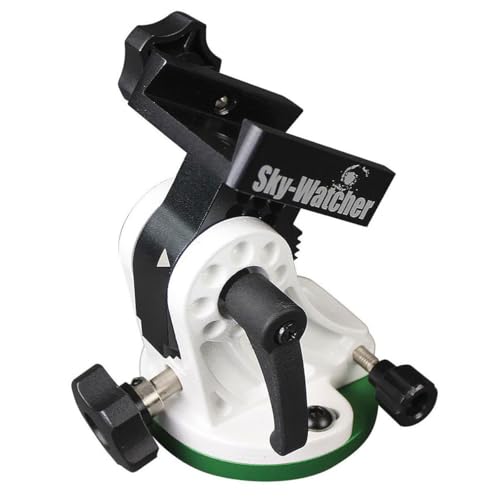
- Latitude adjustment with locking control
- Micro-adjustment knobs for finer alignment
- Compact aluminum accessory weighing 1.7 pounds
Best For: Star Adventurer users seeking improved portable EQ alignment
Stable Alt-Az Support

- 11-pound equipment capacity
- Altitude and azimuth slow-motion controls
- Adjustable 32- to 45-inch height
Best For: Small telescopes, spotting scopes, cameras, and visual night-sky observing
Portable GoTo Tracking
Sky-Watcher Star Adventurer GTi

- Full GoTo equatorial performance
- Built-in Wi-Fi and illuminated polar scope
- Includes counterweight bar and 5-pound counterweight
Best For: Portable astrophotography with compatible cameras or lightweight optical setups
Adjustable Latitude Base
Portable Equatorial Tripod Seat

- 0- to 90-degree angle adjustment
- 3/8-inch tripod mounting thread
- Lightweight 1.61-pound aluminum alloy construction
Best For: Portable DIY setups using a standard photography tripod and compatible tracker
Best Plug-and-Play Tracker
Lightweight Equatorial Star Tracker

- Stellar, lunar, and custom rotation speeds
- Northern and southern hemisphere switching
- USB-C power-bank operation without an app
Best For: Portable astrophotography and time-lapse setups
Best Adjustable Tripod Base

- 90-degree horizontal-to-vertical adjustment
- Standard 3/8-inch tripod thread
- Lightweight aluminum alloy construction
Best For: Portable tripod-based telescope and tracker setups
Best for Low Latitudes

- Adjustment range designed for low latitudes
- CNC-machined aluminum platform
- Stable, vibration-reducing SkyGuider Pro connection
Best For: Low-latitude SkyGuider Pro astrophotography
Best Portable GoTo EQ Mount – Star Adventurer GTi Kit
For photographers comparing astrophotography mounts for lightweight telescopes, the Sky-Watcher Star Adventurer GTi offers a portable equatorial setup with GoTo control, built-in Wi-Fi, and a supplied tripod, pier extension, and counterweight system. Its illuminated polar scope supports alignment, while multiple tracking rates add flexibility for different observing and imaging needs.
Best For: Portable astrophotographers who want an all-in-one GoTo EQ kit for lightweight telescope and camera setups.
Pros:
- Includes mount head, tripod, pier extension, counterweight bar, and 5-pound counterweight.
- GoTo functionality and built-in Wi-Fi support convenient operation.
- Illuminated polar scope helps with polar alignment.
- Portable design with a listed 26-pound item weight.
Cons:
- It is not water resistant.
- The supplied kit is relatively substantial compared with a simple tracker head.
The Star Adventurer GTi is a practical choice when portability matters but you still want automated pointing and equatorial tracking features in one package.
Best Lightweight Manual Alt-Az Mount – SVBONY SV225 Mini
The SVBONY SV225 Mini is a compact manual option among astrophotography mounts for lightweight telescopes. It combines dual-axis fine adjustment, a 5kg stated capacity, and a CNC-machined hollow structure in a 1.5kg mount, making it easy to carry while retaining smooth control for visual observation and basic camera-assisted work.
Best For: Beginners and portable observers using compatible lightweight telescopes, cameras, or accessories.
Pros:
- Supports up to 5kg according to the supplied specifications.
- Offers 360-degree azimuth rotation and -60 to 60-degree tilt adjustment.
- Backlash-free design and dual-axis gear fine adjustment support precise positioning.
- Lightweight 1.5kg CNC hollow construction is easy to transport.
Cons:
- Manual alt-azimuth operation does not provide GoTo control.
- Its usefulness depends on compatibility with the telescope and tripod used.
Choose the SV225 when low weight, simple setup, and hands-on target control are more important than automated equatorial tracking.
Best App-Controlled EQ Mount – Explore Scientific iEXOS-100-2
The Explore Scientific iEXOS-100-2 is an equatorial mount and tripod designed for users who want app-based GoTo control in a lightweight astrophotography setup. Its PMC-Eight system uses eight independent CPUs, while belt-driven stepper motors, clutched axes, and ExploreStars compatibility provide a feature-rich approach to alignment, navigation, and telescope positioning.
Best For: Astrophotographers who prefer tablet-based GoTo operation and a responsive equatorial control system.
Pros:
- PMC-Eight architecture uses eight independent CPUs for defined control functions.
- ExploreStars app works with Apple, Android, and Windows tablets.
- Clutched RA and declination axes support smooth balancing and repositioning.
- Includes quiet precision stepper motors with belt drives.
Cons:
- Polar alignment uses an RA-axis sight hole rather than a polar scope.
- Tablet compatibility is central to the advertised app-based operation.
The iEXOS-100-2 stands out for its software-driven workflow and dual-axis equatorial design, making it a strong candidate for users comfortable aligning and controlling equipment from a tablet.
Best EQ Upgrade Base – Star Adventurer Latitude Base
Sky Watcher S20530 Star Adventurer Latitude (EQ) Base, Telescope Accessory, Black
Check Price On AmazonThe Sky-Watcher Star Adventurer Latitude Base is an accessory rather than a complete telescope mount, but it can be useful when building astrophotography mounts for lightweight telescopes around a Star Adventurer system. Its latitude adjustment, micro-adjustment knobs, V-style dovetail plate, and 1.7-pound aluminum construction are aimed at improving alignment and setup control.
Best For: Star Adventurer owners who need a compact latitude-adjustment accessory for equatorial alignment.
Pros:
- Provides latitude adjustment with a dedicated lock.
- Micro-adjustment knobs support finer positioning.
- Includes a V-style dovetail plate and mounting block.
- Compact 5.5-inch dimensions and 1.7-pound weight suit portable setups.
Cons:
- It is an accessory base, not a complete tracking or GoTo mount.
- Its compatibility is specifically oriented toward the Star Adventurer system.
This base makes the most sense as a focused alignment upgrade for an existing Star Adventurer rig, not as a standalone solution for mounting a telescope.
Stable Alt-Az Support – Heavy-Duty Celestron Tripod
For users comparing astrophotography mounts for lightweight telescopes, this Celestron tripod offers a straightforward alt-azimuth platform for small to medium-sized optical setups. Its adjustable aluminum legs, accessory tray, and slow-motion controls prioritize stable, convenient visual tracking.
Best For: Small telescopes, spotting scopes, binoculars, and cameras used for extended viewing or basic night-sky observing.
Pros:
- Supports compatible equipment weighing up to 11 pounds.
- Altitude and azimuth slow-motion controls help with precise tracking.
- Adjustable 32- to 45-inch height, center brace, and metal accessory tray improve usability.
- Slotted 1/4-inch-20 mounting plate allows forward and aft balance adjustment.
Cons:
- Alt-azimuth design is less suited to long-exposure equatorial astrophotography.
- It weighs 7.8 pounds, so it is not the lightest portable option.
- Tripod-only package; a telescope or camera is not included.
This is a practical choice when stability and smooth manual tracking matter more than automated GoTo control or long-exposure equatorial tracking. Confirm your optical tube stays within the 11-pound limit.
Portable GoTo Tracking – Sky-Watcher Star Adventurer GTi
Among astrophotography mounts for lightweight telescopes, the Sky-Watcher Star Adventurer GTi stands out as a compact equatorial tracking mount with full GoTo functionality. Built-in Wi-Fi, an illuminated polar scope, and a counterweight system make it oriented toward portable imaging setups.
Best For: Portable astrophotographers using a compatible camera or lightweight optical setup who want GoTo control and equatorial tracking features.
Pros:
- Provides full GoTo performance in a compact package.
- Built-in Wi-Fi supports convenient control connectivity.
- Includes a polar scope with illuminator for alignment.
- Includes a counterweight bar and 5-pound counterweight.
Cons:
- The supplied notes do not specify a payload capacity.
- A DSLR or mirrorless camera dovetail is not included.
- At 6.9 kg, the mount head kit is less ultralight than some travel-oriented options.
This is the most feature-rich option here for portable equatorial imaging, especially if you value GoTo and Wi-Fi. Verify payload requirements and plan for the separately noted camera dovetail if needed.
Adjustable Latitude Base – Portable Equatorial Tripod Seat
This adjustable equatorial base is a useful building block when assembling astrophotography mounts for lightweight telescopes. It adds 0- to 90-degree latitude adjustment and a 3/8-inch threaded base, allowing compatible trackers or telescope equipment to use a standard photography tripod.
Best For: DIY portable astronomy and astrophotography setups that need an adjustable latitude interface between a tracker or telescope and a standard tripod.
Pros:
- Adjustable angle from 0 degrees horizontal to 90 degrees.
- 3/8-inch threaded base fits most standard photography tripods.
- Aluminum alloy construction is intended for portable outdoor use.
- Compact 1.61-pound design is convenient for travel and field setups.
Cons:
- This is a latitude base rather than a complete tracking or GoTo mount.
- Compatibility with a specific tracker, telescope, or tripod should be confirmed before purchase.
- The supplied notes do not provide a payload capacity.
Choose this accessory when you already have a compatible tripod and tracking equipment and need adjustable equatorial positioning. It can improve setup flexibility, but it does not replace the motorized mount or tracker itself.
Best Plug-and-Play Tracker – Lightweight Equatorial Star Tracker
For shoppers comparing astrophotography mounts for lightweight telescopes and camera-based setups, this compact equatorial tracker emphasizes portability and simple operation. Its PETG and carbon-fiber shell supports stellar, lunar, and custom rotation speeds, with north/south hemisphere switching and USB-C power from a power bank.
Best For: Portable astrophotography, time-lapse photography, and users who want a ready-to-use tracker without an app.
Pros:
- Supports stellar, moon, and customizable rotation speeds.
- Switches between northern and southern hemisphere operation.
- Compact 3.54-by-3.54-by-3.15-inch design with PETG and carbon-fiber construction.
- Can also function as a gimbal head for time-lapse photography.
Cons:
- Does not include a built-in battery.
- Requires a USB-A-to-USB-C cable; USB-C-to-USB-C power is prohibited.
- A ball head and possibly a 1/4-to-3/8-inch adapter sleeve may be needed for camera connection.
This is a practical choice when low setup friction matters more than a full-size telescope mount. Check the connection hardware and power requirements before buying, especially if you plan to use a lightweight telescope rather than a camera.
Best Adjustable Tripod Base – 90-Degree EQ Latitude Base
This adjustable aluminum base is worth considering among astrophotography mounts for lightweight telescopes when tripod compatibility and latitude positioning are priorities. Its ergonomic adjustment knob provides 90 degrees of tuning from horizontal to vertical, while the standard 3/8-inch base thread supports many photography tripods.
Best For: Portable telescope, camera, celestial-tracker, nightscape, panorama, and time-lapse setups that need flexible angle adjustment.
Pros:
- Offers precise adjustment across a 90-degree range.
- Standard 3/8-inch thread integrates with most photography tripods.
- Lightweight aluminum alloy construction balances portability and durability.
- Supports cameras, telescopes, mirrorless systems, and celestial trackers when plate dimensions align.
Cons:
- It is a latitude/EQ base rather than a complete tracking mount.
- Compatibility depends on matching mounting-plate dimensions.
- Listed as not water resistant.
Choose this base if you already have a compatible tracker or telescope setup and need a portable alignment platform. Its value is in angle control and tripod integration, not in providing standalone motorized tracking.
Best for Low Latitudes – SkyGuider Pro CNC Base Mount
For astrophotography mounts for lightweight telescopes used near the equator or in southern regions, this low-latitude base is designed to make polar alignment more practical. The CNC-machined aluminum platform is intended for iOptron SkyGuider Pro systems and provides a rigid, vibration-reducing connection between the tracker and tripod.
Best For: Low-latitude astrophotographers using SkyGuider Pro systems for wide-field stars, star trails, Milky Way images, or longer exposures.
Pros:
- Provides an adjustment range suited to low-latitude locations.
- CNC-machined aluminum construction is rigid while remaining lightweight.
- Designed for secure, wobble-free SkyGuider Pro and tripod connections.
- Vibration-reduction design supports steadier long-exposure imaging.
Cons:
- Its compatibility is specifically centered on iOptron SkyGuider Pro systems.
- It is a base mount, not a complete star tracker or telescope mount.
- Users outside low-latitude regions may not benefit as much from its specialized adjustment range.
This is the most specialized option in the group. It makes sense for SkyGuider Pro owners who need a stable low-latitude alignment platform, but shoppers should confirm both tracker compatibility and regional latitude requirements before purchasing.
How We Picked the Best Astrophotography Mounts for Lightweight Telescopes
We focused on mounts and accessories suited to portable imaging setups, including GoTo equatorial mounts, star trackers, latitude bases, and compact alt-azimuth systems. Our evaluation criteria include tracking design, stated payload capability, adjustment range, tripod or base stability, portability, setup complexity, and compatibility with common telescope and camera hardware.
For astrophotography, equatorial tracking generally receives priority because it follows the sky’s rotation more naturally and helps reduce star trailing during longer exposures. Alt-azimuth mounts can still be useful for visual observing, short exposures, and lightweight spotting-scope setups.
Quick Comparison
| Mount type | Best suited for | Main advantage | Potential limitation |
|---|---|---|---|
| GoTo EQ mount | Guided imaging and mixed observing | Automated tracking and object finding | Heavier and more setup-sensitive |
| Star tracker | Wide-field cameras and small scopes | Portable, simple tracking | Limited payload and framing flexibility |
| Latitude or EQ base | Improving polar alignment | Compact and easy to pair with a tracker | Usually not a complete mount by itself |
| Alt-azimuth mount | Visual observing and short exposures | Fast, intuitive operation | Field rotation limits long exposures |
Key Buying Factors for Astrophotography Mounts for Lightweight Telescopes
Payload Capacity and Balance
Check the mount’s payload rating and leave headroom for the telescope, camera, finder, diagonal, guide scope, cables, and mounting hardware. A mount operating near its limit can vibrate more easily and track less consistently. Balance the optical tube carefully, particularly on an equatorial mount.
Tracking and Polar Alignment
Look for smooth sidereal tracking and, when possible, GoTo or guiding support. A latitude base or adjustable polar platform can make alignment easier and more repeatable. For northern or southern locations, confirm that the adjustment range suits your observing latitude.
Portability and Stability
Lightweight equipment is easier to transport, but an overly light tripod may compromise stability. Favor rigid legs, secure locks, a solid spreader, and a low-vibration setup. A counterweight system can improve balance, though it adds carrying weight.
Compatibility and Power
Verify the dovetail standard, tripod thread, counterweight-shaft arrangement, camera or ball-head attachment, and required power source. Also check whether the package includes the tripod, pier extension, counterweight, or latitude base shown in the listing.
Who Should Buy Which Astrophotography Mounts for Lightweight Telescopes?
Choose a GoTo equatorial mount if you want automated object locating, tracking, and room to grow into guided imaging. A compact star tracker is a better fit for wide-field cameras and very small telescopes where low weight and fast setup matter most.
Buy a latitude or EQ base when you already own a compatible tracker or tripod and need more precise polar alignment. Choose an alt-azimuth mount for visual astronomy, spotting scopes, and short exposures rather than long deep-sky imaging. In every case, prioritize a stable tripod, conservative payload loading, and compatibility with your existing optical tube and camera.