
Capturing sharp stars with a DSLR depends on more than camera settings. The right tracking mount can compensate for Earth’s rotation, extend exposure times, and help you record more detail without obvious star trails.
This roundup includes complete equatorial tracking mounts alongside camera plates, dovetail accessories, and adapters that can help build or expand a DSLR astrophotography system.
Best 10 Astrophotography Mounts for Dslr Cameras Picks for 2026
Best All-in-One Portable Mount

- Full GoTo equatorial tracking
- Tripod, pier extension, and counterweight included
- Built-in Wi-Fi and illuminated polar scope
Best For: Photographers wanting a complete portable DSLR astrophotography setup
Best DSLR Telescope Adapter
Astromania Canon EOS T-Ring Adapter

- Canon EOS/EF-mount compatibility
- 1.25-inch telescope connection
- Manual focus and aperture control
Best For: Canon DSLR owners attaching a camera to a 1.25-inch telescope focuser
Best Compact Mount Head
Star Adventurer GTi GoTo Mount Head

- Full GoTo equatorial tracking
- Dovetail for DSLR or mirrorless cameras
- Counterweight and bar included
Best For: Users with existing support equipment seeking a portable GoTo mount head
Best DSLR Accessory Plate
Astromania Silver Flash-Shoe Mounting Plate
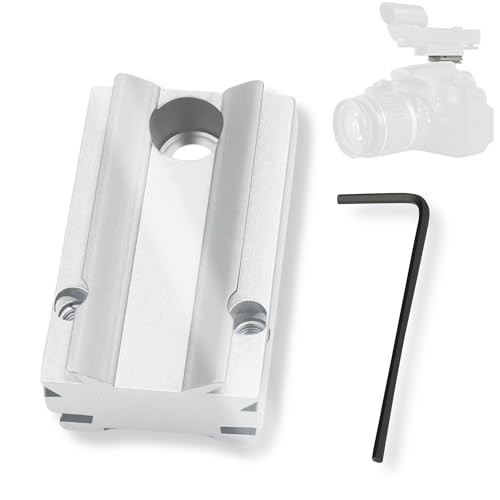
- Attaches through a DSLR flash shoe
- Supports compatible 20 mm rail devices
- Aluminum alloy construction
Best For: Adding a compatible reflex sight to a DSLR for easier aiming
Best Portable Tracker

- 11-lb balanced capacity
- Illuminated polar scope
- Up to 20-hour battery life
Best For: Portable DSLR astrophotography setups
Best Compact Adapter

- 1/4-inch and 3/8-inch screws
- 52mm balancing slot
- Six anti-slip rubber pads
Best For: Lightweight Vixen-saddle camera mounting
Best Accessory Platform

- 300mm mounting surface
- Aluminum-alloy construction
- Includes screws and wrench
Best For: Multi-accessory DSLR photography rigs
Flexible Vixen Rail

- Vixen-style rail for compatible saddles
- Long slots support positioning and balance
- Rubber pads and safety screws add security
Best For: Vixen-compatible DSLR and accessory setups
Finder-Shoe Camera Link
Telescope Finder Dovetail Adapter

- Fits 33–36mm finder dovetail bases
- Uses a standard 1/4-inch camera screw
- Lightweight aluminum body with rubber pads
Best For: Lightweight cameras and accessories using finder bases
Hotshoe Finder Bridge

- Connects camera hotshoes to finder dovetails
- Hand-tightened locking ring secures the shoe
- Includes rubber protection and a 1/4-inch hole
Best For: DSLR or mirrorless cameras with compatible finder accessories
Best All-in-One Portable Mount – Star Adventurer GTi Mount Kit
For photographers seeking astrophotography mounts for DSLR cameras, the Sky-Watcher Star Adventurer GTi kit combines a GoTo equatorial mount, tripod, pier extension, counterweight, and illuminated polar scope in one portable package. Built-in Wi-Fi and multiple tracking rates add convenience for guided night-sky sessions.
Best For: DSLR astrophotographers who want a complete, portable GoTo setup with tripod and counterweight included.
Pros:
- Includes the mount head, tripod, pier extension, counterweight bar, and 5-pound counterweight.
- Full GoTo functionality and built-in Wi-Fi support convenient operation.
- Illuminated built-in polar scope helps with polar alignment.
Cons:
- At 26 pounds, it is less lightweight than a mount head alone.
- It is not water resistant.
This is a strong choice when you prefer a ready-to-use kit rather than assembling the support components separately. Its portable design and GoTo features suit mobile imaging, while the included tripod and pier extension add setup flexibility.
Best DSLR Telescope Adapter – Astromania Canon EOS T-Ring Adapter
The Astromania T ring and T adapter are not a tracking mount, but they can complete a camera-to-telescope setup built around astrophotography mounts for DSLR cameras. This Canon EOS-compatible accessory provides a 1.25-inch telescope connection for imaging the Moon, planets, and nebulae.
Best For: Canon EOS and Rebel DSLR owners connecting their cameras to telescopes with standard 1.25-inch focusers.
Pros:
- Designed for Canon EOS and Rebel cameras with EF mounts.
- Includes a 1.25-inch adapter compatible with standard telescope focusers and accessories.
- All-metal aluminum construction with a hex wrench for angle adjustment.
Cons:
- It is an adapter, not a tracking mount.
- No electrical contacts means focus and aperture adjustments are manual.
- Compatibility is specifically oriented toward Canon EOS/EF-mount cameras.
This accessory makes sense for telescope-based DSLR imaging when your camera and focuser match its specifications. Pair it with a suitable equatorial mount and telescope, and confirm your Canon model and 1.25-inch connection before buying.
Best Compact Mount Head – Star Adventurer GTi GoTo Mount Head
The Sky-Watcher Star Adventurer GTi mount head offers a compact route into astrophotography mounts for DSLR cameras. It includes a counterweight bar and 5-pound counterweight, plus a dovetail for mounting a DSLR or mirrorless camera, while its GoTo system, Wi-Fi, and illuminated polar scope support streamlined tracking sessions.
Best For: DSLR or mirrorless users who already have suitable support equipment and want a portable GoTo mount head.
Pros:
- Full GoTo performance in a compact package.
- Dovetail supports mounting a DSLR or mirrorless camera.
- Built-in Wi-Fi and illuminated polar scope add setup convenience.
Cons:
- Tripod is not included.
- The listed package is heavier than some minimalist camera-mount options at 6.9 kg.
- Camera and other support components are not included.
This version is useful when you want the GTi tracking features without purchasing another complete tripod kit. Check your existing tripod or support setup and camera mounting hardware before choosing the head-only package.
Best DSLR Accessory Plate – Astromania Silver Flash-Shoe Mounting Plate
The Astromania silver plate is a small mounting accessory rather than one of the primary astrophotography mounts for DSLR cameras. It attaches to a DSLR flash shoe and provides a 20 mm rail mount for compatible reflex red-dot sights, which can help with camera aiming during night-sky work.
Best For: DSLR users who need a simple flash-shoe adapter for a compatible 20 mm rail-mounted reflex sight.
Pros:
- Designed for mounting a compatible reflex red-dot sight to a DSLR.
- Sturdy weatherproof aluminum alloy construction.
- Includes a hex wrench for securing the plate.
Cons:
- It is not an equatorial tracking mount.
- Compatibility depends on a DSLR flash shoe and a 20 mm rail-mounted device.
- It does not provide GoTo, tracking, or counterweight functionality.
This plate can complement a separate tracking mount by adding a sighting option to the camera body. Verify that both your DSLR flash shoe and reflex sight use the required connection before ordering.
Best Portable Tracker – SkyGuider Pro Full Package
The iOptron SkyGuider Pro is a strong option for photographers comparing astrophotography mounts for DSLR cameras. Its compact, 2.2-pound design, balanced load capacity of up to 11 pounds, and integrated illuminated polar scope make it practical for portable, long-exposure setups.
Best For: DSLR photographers who want a portable tracking mount for camera-and-lens combinations.
Pros:
- All-metal construction and precise machining are designed to reduce vibration.
- Supports up to 11 pounds when properly balanced.
- Built-in illuminated polar scope helps with low-light polar alignment.
- Internal rechargeable battery provides up to 20 hours of operation at 20°C.
Cons:
- Requires careful balancing for its stated maximum capacity.
- It is not water resistant.
- The supplied specifications list a 30-second maximum shutter speed.
Choose this model when portability, adjustable alignment, and extended battery operation matter more than having a larger permanent setup.
Best Compact Adapter – Vixen-Style Camera Rail
This 80mm Vixen-style rail bar is a compact accessory for photographers assembling astrophotography mounts for DSLR cameras. Its threaded mounting screws, adjustment slot, reference scale, and rubber pads help attach and position compatible cameras or devices on a Vixen-style saddle.
Best For: Lightweight camera or accessory mounting on a Vixen-style telescope saddle.
Pros:
- Includes both 1/4-inch and 3/8-inch D-ring mounting screws.
- The 52mm slot allows positioning for balance adjustments.
- Reference markings in 1mm increments support repeatable setup changes.
- Six rubber pads improve grip and help protect mounted equipment.
Cons:
- Its listed maximum weight recommendation is only 76g.
- It is compatible with Vixen-style saddles rather than a universal mount system.
- It is not water resistant.
This is best treated as a lightweight mounting interface, not as a standalone tracking mount or a solution for heavier DSLR bodies and lenses.
Best Accessory Platform – 300mm Camera Mount Plate
The ASTROPIX 300mm camera mount plate is a large accessory platform for building or expanding astrophotography mounts for DSLR cameras. Its aluminum-alloy construction, multiple threaded mounting points, included hardware, and generous length provide room for cameras, monitors, and other compatible accessories.
Best For: Larger photography setups that need a long platform for mounting multiple accessories.
Pros:
- 300mm length provides substantial space for accessory placement.
- Aluminum-alloy construction is intended for durable, heavy-duty use.
- Compatible with cameras, camcorders, monitors, tripods, and other photography accessories.
- Includes screws and an alloy wrench for installation.
Cons:
- At 458g, it is less convenient for lightweight portable kits.
- It is a mounting plate, not a complete tracking mount.
- Its broad format may be excessive for a simple single-camera setup.
Consider this plate when your priority is flexible accessory placement and a sturdy base; verify thread compatibility and the capacity of the supporting mount before loading it.
Flexible Vixen Rail – 160mm Dovetail Mounting Plate
For astrophotography mounts for DSLR cameras, this 160mm Vixen-style rail is a practical way to attach and balance compatible camera or telescope accessories. Its multiple slots, threaded holes, rubber pads, and safety screws support flexible mounting, but you should confirm your saddle and screw compatibility first.
Best For: DSLR or accessory setups using Vixen-style saddles and M6 or 1/4-inch mounting hardware.
Pros:
- Long slots allow flexible positioning and balancing.
- Accepts M6 and 1/4-inch screws through multiple mounting holes.
- Ten rubber pads help improve grip and protect attached equipment.
- Safety stop screws help prevent accidental drops.
Cons:
- It is a mounting plate rather than a complete camera mount.
- Compatibility depends on the saddle and attachment hardware.
- Some saddles may require removing two safety stop screws for drop-in loading.
This is a versatile hardware choice when your astrophotography setup already uses a Vixen-style saddle. The broad hole pattern is useful for balancing, while the included screws and Allen wrenches simplify setup.
Finder-Shoe Camera Link – Telescope Finder Dovetail Adapter
This compact adapter offers a simple way to connect a camera with a 1/4-inch thread to a telescope’s finder dovetail base. Among astrophotography mounts for DSLR cameras, it suits lightweight, finder-base mounting needs, provided your telescope uses the specified 33–36mm finder base.
Best For: Cameras or accessories with a 1/4-inch thread that need to attach to a compatible finder dovetail.
Pros:
- Compatible with 33–36mm standard finder bases.
- Solid aluminum construction with stainless steel hardware.
- Anti-slip rubber pads help hold and protect the camera.
- Lightweight at 47g and includes a 4mm Allen wrench.
Cons:
- Requires a compatible finder dovetail base.
- Limited to cameras or items with a 1/4-inch mounting thread.
- Does not provide a complete tracking or telescope mount.
Choose this adapter when you need a lightweight interface between a compatible finder shoe and a threaded camera. Its compact design is convenient, but the narrow compatibility requirements should be checked before ordering.
Hotshoe Finder Bridge – Camera Flash-Shoe Adapter
This adapter connects a camera hotshoe or cold shoe to a compatible finder-scope dovetail. For astrophotography mounts for DSLR cameras, it is useful when you want to place a finder or guide-scope accessory on a camera, while its locking ring and rubber pad help secure the shoe connection.
Best For: DSLR or mirrorless cameras with a hotshoe or cold shoe that need a compatible finder-dovetail accessory connection.
Pros:
- Male flash shoe fits most camera hotshoe or cold-shoe interfaces.
- Top finder base accepts compatible guide-scope and finder dovetails.
- Knurled locking ring is designed for hand tightening.
- Includes a 1/4-inch threaded hole for bracket mounting.
Cons:
- Compatibility depends on both the camera shoe and finder dovetail.
- It is an adapter, not a complete tracking mount.
- The camera connection uses a hotshoe or cold shoe rather than a universal clamp.
This is a specialized bridge for combining a camera shoe with finder-scope hardware. It makes sense for compact accessory arrangements, but verify both interfaces and the intended load before relying on it in the field.
How We Picked These Astrophotography Mounts for Dslr Cameras
We selected products across the main components needed for tracked DSLR imaging: complete GoTo equatorial mounts, camera-focused star trackers, mounting plates, counterweight hardware, and camera-to-telescope adapters. The goal is to cover both ready-to-use packages and lower-cost accessories for photographers assembling a custom setup.
We also considered portability, payload flexibility, compatibility, included hardware, and how easily each option can fit into a broader astrophotography workflow. Before buying, confirm the exact camera, lens, tripod, dovetail, and telescope connections required.
Quick Comparison
| Type | Best For | What to Check |
|---|---|---|
| GoTo equatorial mount kit | Automated tracking and future expansion | Payload, power, tripod stability, and included counterweights |
| Portable camera tracker | Wide-field DSLR shots and travel | Payload balance, polar alignment, and lens weight |
| Mounting plate or rail | Connecting cameras or accessories | Thread size, dovetail standard, length, and clearance |
| Camera adapter or T-ring | Connecting a DSLR to optical equipment | Camera mount, telescope interface, and focus compatibility |
Key Buying Factors for Astrophotography Mounts for Dslr Cameras
Payload and Balance
Use the mount’s practical imaging capacity rather than its maximum advertised load. Include the DSLR body, lens or telescope, adapters, guide equipment, and counterweights. A balanced setup generally tracks more consistently and places less strain on the drive system.
Tracking and Alignment
For wide-angle lenses, a compact tracker may be sufficient. Longer focal lengths demand more precise polar alignment and steadier mechanics. GoTo mounts can simplify finding targets, but they still require correct setup and alignment for reliable tracking.
Tripod, Power, and Portability
A sturdy tripod is essential because vibration can ruin long exposures even when the tracking motor is accurate. Check whether a kit includes a tripod, pier extension, counterweight bar, and counterweight. Also verify battery or external-power requirements if you plan to shoot away from home.
Connection Standards
Inspect every thread and interface before ordering. DSLR T-rings are camera-specific, while T-adapters, 1/4-inch and 3/8-inch threads, Vixen-style dovetails, finder shoes, and hot-shoe accessories serve different purposes. An adapter may connect physically but still fail to provide the focus or clearance your setup needs.
Who Should Buy Which Astrophotography Mounts for Dslr Cameras?
Choose a complete GoTo equatorial kit if you want automated target locating, tracking, and a platform that can support additional telescope equipment. These are the most versatile choices but are usually heavier and more involved to transport.
Choose a portable camera tracker if your priority is wide-field Milky Way, constellation, and landscape astrophotography with a DSLR and moderate lens. Portability is the main advantage, though careful balancing and polar alignment remain important.
Choose plates, rails, or finder adapters if you already own a mount and need a secure way to attach a camera, telescope, or accessory. Match the mounting standard and thread specifications exactly.
Choose a T-ring and T-adapter when connecting a Canon or other compatible DSLR directly to a telescope. Confirm the camera mount and optical-side connection, and remember that adapters do not replace a tracking mount.