
The best digital microscopes make small details easier to inspect, capture, and share. This roundup compares 10 models suited to soldering, coin collecting, electronics repair, classroom projects, and family science activities.
We focus on practical differences such as display size, camera quality, working distance, lighting, portability, and ease of use so you can choose a microscope that matches your projects—not just the highest advertised magnification.
Best 10 Digital Microscopes Picks for 2026
Versatile Workshop Pick
Andonstar AD249S-M 3-Lens Digital Microscope

- Three lenses for soldering, coins, and slides
- 2160P recording with HDMI output and 32GB card
- Adjustable metal boom arm and Windows measurement software
Best For: Multi-purpose electronics repair, inspection, and education
Family STEM Favorite
TOMLOV DM301 Pro 7-Inch Digital Microscope

- 7-inch IPS display with adjustable viewing angle
- Wi-Fi app support for iOS and Android devices
- Slides, accessories, dual LEDs, and measurement scale included
Best For: Kids, homeschoolers, and classroom science activities
Autofocus 4K Upgrade
Elikliv EM4K-AF Autofocus 4K Digital Microscope

- Autofocus with AI algorithms and TOF sensor
- 4K video, 52MP images, and 8-inch IPS display
- Rechargeable battery, 10-inch stand, and split-screen mode
Best For: High-detail soldering, coin inspection, and portable viewing
Compact Multi-Use Choice
Andonstar AD246S-M 3-Lens Digital Microscope

- Three lenses for repair, coins, and biological slides
- 2160P recording with HDMI output and remote control
- Complete accessory kit with slides, tweezers, and 32GB card
Best For: Shared home use, soldering, coin viewing, and demonstrations
Best Large-Screen Coin & Repair Microscope
TOMLOV DM9 Max 10.1-inch Digital Soldering Microscope

- 10.1-inch IPS screen with 5X-1500X zoom
- Tall stand and large base for PCB repair
- 20MP photos, 1080P video, PC/TV output
Best For: Coin collectors and bench-based electronics repair
Best Portable WiFi Microscope
Skybasic Wireless 50X-1000X Handheld Microscope

- WiFi for Android/iOS and USB for computers
- Compact design for travel and outdoor use
- Eight LEDs with 1080P smartphone capture
Best For: Casual inspection, children’s learning, and field use
Best 3D Soldering Microscope
TOMLOV TM3K-3D 7-inch Magnetic Dual-Lens Scope
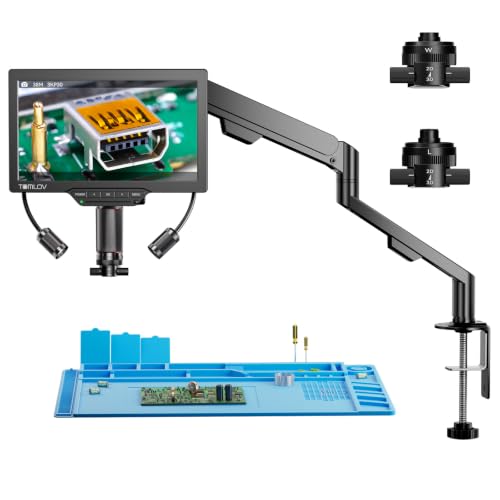
- 3D side-viewing with 360° rotation
- Magnetic wide-angle and long-distance lenses
- 3K display with HDMI and USB output
Best For: Angle-critical PCB repair, soldering, and precision inspection
Best LCD Coin Microscope

- 4.3-inch 720P LCD display
- Eight adjustable LED lights
- PC compatible with height-adjustable stand
Best For: Coin collecting, STEM learning, and general close-up inspection
Best Kids’ Portable Microscope

- 4.0-inch IPS display with 1080P imaging
- 100X–1600X magnification range
- Includes 8GB TF card and built-in hotspot
Best For: Children’s science activities and portable exploration
Best Large-Screen Coin Microscope
TOMLOV DM9 7-Inch Digital Microscope

- 7-inch LCD screen for comfortable viewing
- Stable metal base with adjustable stand
- Includes 16GB card and 1080P video capture
Best For: Coin collecting, soldering, and detailed bench work
Versatile Workshop Pick – Andonstar AD249S-M 3-Lens Digital Microscope
The Andonstar AD249S-M is one of the more adaptable digital microscopes for users who move between electronics repair, coin inspection, and biological slides. Its three interchangeable lenses, 10.1-inch display, 2160P recording, HDMI output, and adjustable boom arm make it particularly useful when you need both a broad work area and detailed viewing.
Best For: Electronics repair, coin collecting, slide observation, classroom demonstrations, and Windows-based measurements.
Pros:
- Three lenses cover soldering, coins and specimens, and biological slides.
- 2160P video, HDMI output, image capture, and included 32GB microSD card support documentation and group viewing.
- Adjustable metal boom arm provides a larger working envelope for soldering and inspection.
- Windows measurement software can measure length and area and capture photos or videos.
Cons:
- Changing lenses requires removing and installing screws.
- The feature-rich setup may be more than casual users need.
Choose this model when versatility is the priority. It combines specialized lenses with a sturdy adjustable stand and useful recording and measurement tools, making it a strong all-purpose option among digital microscopes.
Family STEM Favorite – TOMLOV DM301 Pro 7-Inch Digital Microscope
The TOMLOV DM301 Pro is a student-friendly choice among digital microscopes, pairing a 7-inch IPS display with a ready-to-use selection of slides and accessories. Wireless app support, dual LED lighting, and a built-in measurement scale make it suitable for guided science activities at home or in the classroom.
Best For: Kids ages 6 and up, homeschool lessons, classroom demonstrations, and family specimen exploration.
Pros:
- 7-inch adjustable-angle IPS screen provides a comfortable shared viewing experience.
- Includes five prepared slides, five blank slides, a carrying case, and a microSD card.
- Wi-Fi app support enables viewing, zooming, and media capture on iOS and Android devices.
- USB/HD output, dual adjustable LEDs, and a measurement scale support hands-on learning.
Cons:
- Maximum magnification is lower than the 2000x-rated Andonstar and Elikliv models.
- Battery use is rated for up to three hours of observation.
This is a practical starter kit rather than a specialist workstation. Its screen, accessories, wireless sharing, and measurement overlay help make microscopy approachable for young learners and group experiments.
Autofocus 4K Upgrade – Elikliv EM4K-AF Autofocus 4K Digital Microscope
The Elikliv EM4K-AF stands out among digital microscopes for its autofocus system, 4K video, and large 8-inch IPS display. A TOF sensor helps adjust focus quickly, while the tall stand, broad base, rechargeable battery, and HDMI/USB outputs make it well suited to detailed inspection away from a fixed desk.
Best For: Soldering, coin and watch inspection, comparison work, and users who want automatic focusing with high-resolution imaging.
Pros:
- Autofocus uses AI algorithms and a TOF sensor for quick focal adjustments.
- 4K video, 52MP imaging, and a 1280×800 IPS screen support detailed viewing.
- 10-inch stand and broad base provide room for whole-coin inspection and soldering tasks.
- Rechargeable battery, smart controller, split-screen, and freeze functions add flexibility.
Cons:
- The extensive feature set may be unnecessary for basic specimen viewing.
- Its 16GB card provides less included storage than the 32GB cards supplied with the Andonstar models.
Consider this model if fast focusing and image quality matter more than a multi-lens biological kit. Its autofocus, 4K capture, and portable power are especially useful for inspection tasks that involve frequent repositioning.
Compact Multi-Use Choice – Andonstar AD246S-M 3-Lens Digital Microscope
The Andonstar AD246S-M is a practical option for buyers seeking digital microscopes that can handle electronics repair, coins, and biological slides in one setup. It offers three interchangeable lenses, 2160P recording, HDMI connectivity, a 7-inch display, and an adjustable boom arm for hands-on work.
Best For: Adults and kids sharing a microscope for soldering, coin inspection, specimen viewing, and demonstrations.
Pros:
- Lens choices support circuit-board repair, whole-coin viewing, and biological slides.
- 2160P video recording, HDMI output, remote control, and adjustable LED brightness provide flexible operation.
- Includes a 32GB microSD card, prepared slides, slide holder, observation box, and tweezers.
- Adjustable metal boom arm accommodates different object positions and working distances.
Cons:
- Lens changes require manual screw removal and installation.
- The 7-inch screen is smaller than the AD249S-M’s 10.1-inch display.
The AD246S-M is a well-rounded choice when you want the same three-lens concept and broad application range in a more compact display format. It is especially appealing for shared home use and basic repair work.
Best Large-Screen Coin & Repair Microscope – TOMLOV DM9 Max 10.1-inch Digital Soldering Microscope
For shoppers comparing digital microscopes for coin collecting, electronics repair, and hands-on inspection, the TOMLOV DM9 Max emphasizes workspace, screen size, and flexible recording. Its 10.1-inch IPS display, tall metal stand, and full-view coin capability make it a practical choice when a compact handheld scope is not enough.
Best For: Coin collectors, PCB repair, soldering, jewelry inspection, and shared demonstrations.
Pros:
- Large 10.1-inch IPS screen with a 178° viewing angle.
- 5X-1500X zoom range and full viewing of coins up to 30.61 mm.
- Tall 12.6-inch stand and large heat-resistant metal base provide more repair clearance.
- Captures 20MP photos and 1080P video, with PC and TV connectivity.
Cons:
- The larger stand and base are less portable than a handheld microscope.
- Its feature set is geared toward bench work rather than simple pocket inspection.
The DM9 Max is a strong fit if you want digital microscopes with a comfortable built-in display and a stable work area. Wireless controls, adjustable lighting, and included media storage add convenience for documenting findings or repair progress.
Best Portable WiFi Microscope – Skybasic Wireless 50X-1000X Handheld Microscope
If portability and phone connectivity matter most, this Skybasic model is one of the more convenient digital microscopes for casual inspection and outdoor learning. It sends images to Android and iOS devices over WiFi and connects to Windows or Mac computers by USB.
Best For: Students, children, hobbyists, and users inspecting plants, insects, minerals, crafts, or everyday objects.
Pros:
- Wireless connection works with Android and iOS devices, while USB supports Windows and Mac computers.
- Compact handheld design is convenient for trips and outdoor activities.
- Eight adjustable LED lights help illuminate subjects.
- One-button photo and video capture through the device or app.
Cons:
- The product is described as a fixed-focus magnifying glass rather than a traditional microscope.
- It is not intended for professional serious biology work.
- Sharpness depends on maintaining a 3-60 mm distance from the subject.
This Skybasic microscope makes sense for accessible, mobile viewing rather than precision laboratory work. Buyers should be comfortable with app setup and device permissions, but the WiFi workflow and lightweight design are useful for quick discoveries and demonstrations.
Best 3D Soldering Microscope – TOMLOV TM3K-3D 7-inch Magnetic Dual-Lens Scope
For buyers who need to inspect components from more than one angle, the TOMLOV TM3K-3D stands apart from conventional digital microscopes with side-viewing and 360° rotating 3D imaging. Its dual magnetic lenses let you switch between a wide-angle view and a longer working distance for repair tasks.
Best For: Electronics technicians, PCB repair, watchmaking, jewelry inspection, coin examination, and precision hobby work.
Pros:
- 3D side-viewing and 360° rotation help reveal solder joints and components from multiple angles.
- Magnetic L and W lenses switch without tools.
- 3K UHD imaging appears on a 7-inch IPS screen.
- Flexible arm stand, HDMI, USB, and built-in display support varied work setups.
Cons:
- The specialized 3D design may be more capability than casual users need.
- A 7-inch screen is smaller than the DM9 Max’s 10.1-inch display.
- The system is primarily suited to a stable bench or workstation.
The TM3K-3D is the most specialized option here for angle-critical inspection. Its magnetic lens system, articulating arm, and targeted gooseneck lighting make it particularly appealing for detailed soldering and repair where conventional top-down viewing can leave blind spots.
Best LCD Coin Microscope – Elikliv EDM4
The Elikliv EDM4 is a practical choice among digital microscopes for coin collectors, hobbyists, and anyone who wants a built-in screen for close-up inspection. Its 4.3-inch 720P display, adjustable lighting, PC compatibility, and height-adjustable stand support comfortable viewing of coins, circuit boards, jewelry, stamps, and other small objects.
Best For: Coin collecting, household inspection, STEM activities, and basic electronics or repair work.
Pros:
- 4.3-inch LCD screen provides a comfortable real-time viewing area.
- Eight adjustable LED lights help illuminate subjects in low-light conditions.
- Height-adjustable stand supports different camera-to-object distances and viewing angles.
- Connects to Windows or MacBook computers for larger viewing and sharing.
Cons:
- Memory card for storing photos and videos is not included.
- Battery life is rated at up to three hours of continuous use.
The EDM4 balances portability and convenience with a useful built-in display. It is especially appealing to coin collectors who want to inspect markings and condition without relying on a separate monitor.
Best Kids’ Portable Microscope – 4.0-Inch Handheld Miniscope
This handheld model is one of the more approachable digital microscopes for children and on-the-go exploration. It combines a 4.0-inch IPS display, 1080P imaging, adjustable magnification, built-in lighting, and photo or video capture in a compact design suited to supervised science activities.
Best For: Children ages 36 months to 8 years, family science activities, and exploring plants, insects, coins, and fabric fibers.
Pros:
- 4.0-inch IPS screen and 1080P imaging provide clear views of specimens.
- 100X–1600X magnification range supports different close-up subjects.
- Compact handheld design is convenient for portable exploration.
- Includes an 8GB TF card and supports sharing through its built-in hotspot.
Cons:
- Charging adapter is not included; the package includes a USB cable.
- Its small handheld format may be less suitable for stable bench work.
With simple handheld operation and child-focused educational positioning, this miniscope makes a useful introduction to digital microscopes. The included storage card also lets young explorers save discoveries without purchasing one separately.
Best Large-Screen Coin Microscope – TOMLOV DM9 7-Inch Digital Microscope
The TOMLOV DM9 is a strong option among digital microscopes for detailed coin inspection, electronics projects, and hands-on hobby work. Its 7-inch screen, metal stand, 1200X magnification, adjustable lighting, and 12MP camera make it suited to extended viewing and documenting fine details.
Best For: Coin collectors, DIY electronics users, soldering tasks, jewelry examination, and shared demonstrations.
Pros:
- Large 7-inch LCD screen supports comfortable viewing and demonstrations.
- Solid metal base and adjustable 8.5-inch stand help reduce shaking.
- Eight LEDs and two flexible gooseneck lights allow more controlled illumination.
- Includes 16GB storage and supports 1080P video recording and PC connection.
Cons:
- Its metal stand and base make it less oriented toward pocket portability.
- Some included package details, such as the wired remote, may add setup complexity.
The DM9 is a sensible pick when stability, screen size, and recordkeeping matter more than compactness. Its sturdy platform and flexible lighting are particularly useful for collectors comparing surface details or hobbyists working around small components.
How We Picked These Digital Microscopes
We selected models across several common use cases, including electronics repair, soldering, coin inspection, education, and portable observation. The lineup includes 4K and 2160P cameras, larger built-in screens, dual-lens designs, autofocus options, Wi-Fi connectivity, and compact handheld formats.
Rather than ranking products by stated magnification alone, we considered features that affect real-world viewing: image clarity, usable working distance, lighting control, screen convenience, stability, accessory support, and whether a microscope is practical for children or detailed bench work.
Quick Comparison
| Best For | What to Prioritize | Ideal Features |
|---|---|---|
| Soldering and electronics | Working distance and stability | Large screen, adjustable stand, bright LEDs, remote controls |
| Coins and collectibles | Detail and color visibility | Even illumination, image capture, broad viewing area |
| Kids and students | Ease of use and durability | Simple controls, built-in display, portable design |
| Field or handheld inspection | Portability | Rechargeable battery, Wi-Fi, USB connectivity, compact body |
Key Buying Factors for Digital Microscopes
Magnification and Image Quality
Advertised magnification can be much higher than the level you can use comfortably. Camera resolution, lens quality, focus control, and screen sharpness matter more for identifying solder joints, engraving, fibers, and surface defects. A 4K model can provide a clearer image, while a lower-resolution scope may still be sufficient for basic observation.
Working Distance and Stand Design
For soldering, choose a microscope that leaves room beneath the lens for tools and components. A rigid stand reduces vibration and makes prolonged work easier. Dual-lens or 3D-style systems may improve depth perception and access, but they can cost more and require more setup.
Lighting, Display, and Connectivity
Adjustable LED lighting helps prevent glare on coins and reflective circuit boards. Built-in screens are convenient because they do not require a computer, while HDMI output can be useful for a larger monitor. USB or Wi-Fi connectivity matters if you want to save images, teach a group, or inspect objects from a phone or computer.
Portability and Ease of Use
Handheld models are useful for quick inspections and field use, but they generally offer less stability than a benchtop microscope. For children, prioritize straightforward controls, a stable base, and a screen that encourages shared viewing over complex software.
Who Should Buy Which Digital Microscopes?
Choose a larger-screen Andonstar or TOMLOV model for a stable workbench setup, soldering, or detailed coin inspection. Pick an Elikliv 4K or autofocus model when image clarity and convenient focusing are especially important. A Skybasic wireless microscope is a better fit for portable, quick inspections. For children and classroom activities, a compact kids’ digital microscope or an easy-to-use TOMLOV science kit offers a more approachable starting point.