
The best microscopes make it easier to examine cells, minerals, coins, circuit boards, and everyday specimens with useful clarity and control. This roundup includes compound, digital, binocular, trinocular, and kid-friendly models for different skill levels and budgets.
Use the guide below to compare magnification, illumination, viewing comfort, camera features, and stage design before choosing the right microscope for your work.
Best 10 Microscopes Picks for 2026
Research-Ready Pick
Swift SW380T Trinocular Microscope

- 40X–2500X range with six magnification levels
- Rotatable head and 10X/25X eyepieces
- Trinocular design supports camera attachments
Best For: Advanced students, clinicians, and hobbyists
Best Starter Kit
National Geographic Dual LED Microscope

- Dual lighting for slides and 3D objects
- Includes 50+ accessories and prepared slides
- 20X and 50X magnification for beginners
Best For: Children ages 8–12 exploring STEM
Best Digital Inspection Setup

- 7-inch screen for comfortable viewing
- 12MP photos and 1080P video recording
- Stable metal stand with adjustable lighting
Best For: Coin collecting, electronics, and hobby inspection
Best Camera Bundle
AmScope B120C-E5 Binocular Microscope
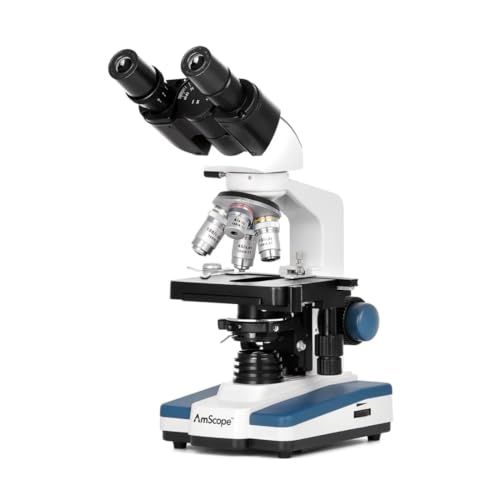
- 40X–2500X compound magnification
- Includes 5MP USB camera and software
- Daylight-balanced LED illumination
Best For: Schools, labs, clinics, and digital documentation
Laboratory Powerhouse

- 40X–5000X range with achromatic objectives
- Trinocular design with HD USB camera
- Extensive slides, tools, and specimen kit
Best For: Advanced biology, lab, and teaching use
Coin Inspection Pick
Elikliv LCD Digital Microscope

- 4.3-inch 720P LCD display
- Eight adjustable LED fill lights
- Rechargeable and PC-compatible
Best For: Coins, electronics, jewelry, and surface inspection
Beginner STEM Choice
MAXLAPTER 2000X Compound Microscope

- 40X–2000X compound magnification
- Rechargeable USB-C battery with dual lighting
- Includes slides, case, and phone holder
Best For: Kids, beginners, students, and home science
Portable Kids Microscope

- Built-in 2.4-inch screen for standalone viewing
- Adjustable LEDs and photo/video recording
- Portable rechargeable design for outdoor exploration
Best For: Young explorers ages 4–12 and hands-on STEM gifting
Binocular Compound Microscope

- Wide-angle binocular viewing for extended observation
- Dual LED lighting and mechanical stage
- Coaxial coarse and fine focus controls
Best For: Students, beginners, and hobbyists doing slide-based observations
Advanced Student Microscope

- Binocular compound optics with 100X–2000X settings
- Includes 28 slides and dissecting tools
- Dual LED lighting plus phone photography accessories
Best For: Student biology, homeschooling, classrooms, and amateur microscopy
Research-Ready Pick – Swift SW380T Trinocular Microscope
For buyers seeking versatile microscopes for serious slide work, the Swift SW380T combines high magnification, interchangeable eyepieces, and a camera-compatible trinocular design. Its achromatic objectives and precise focusing make it suitable for detailed specimen viewing in educational, clinical, and hobby settings.
Best For: Clinicians, university and high-school science students, and advanced hobbyists who need camera-ready compound microscopy.
Pros:
- Six magnification levels from 40X to 2500X.
- Rotatable Siedentopf head with interchangeable 10X and 25X eyepieces.
- Trinocular head supports camera attachments for viewing, recording, and livestreaming.
- Coarse and fine focusing controls allow precise adjustments.
Cons:
- Camera attachments are not included.
- Requires AC power and is relatively substantial in size.
The SW380T is a strong choice when flexibility and high-power slide viewing matter more than a beginner-friendly bundle. Its trinocular setup also gives it room to grow into imaging and documentation work.
Best Starter Kit – National Geographic Dual LED Microscope
This National Geographic kit is one of the more approachable microscopes for young learners. Dual LED illumination lets children view prepared slides with transmitted light or examine three-dimensional objects from above, while the included accessories provide materials for immediate experiments.
Best For: Children ages 8–12 beginning STEM exploration at home.
Pros:
- Dual LED lighting supports both slide viewing and 3D object examination.
- Includes more than 50 accessories, including prepared and blank slides.
- Simple 20X and 50X optical magnification is accessible to beginners.
- Includes a padded storage container, learning guide, and one-year warranty against manufacturer defects.
Cons:
- Lower magnification than advanced compound microscopes.
- Battery-powered operation may require replacement batteries.
With prepared specimens, blank slides, and basic tools included, this is a convenient first microscope rather than a lab-grade instrument. The dual-light design adds variety to beginner observations.
Best Digital Inspection Setup – TOMLOV DM9 Coin Microscope
For coin collecting, electronics, and close-up inspection, the TOMLOV DM9 offers a screen-based alternative to traditional microscopes. Its 7-inch display, adjustable stand, built-in lighting, photo and video capture, and included storage make it practical for examining and documenting small surface details.
Best For: Coin collectors, DIY electronics users, hobbyists, and anyone who wants a stable digital inspection station.
Pros:
- 7-inch LCD screen allows comfortable shared viewing.
- 12MP camera supports photos, while 1080P video enables recording.
- Metal base and adjustable stand provide a stable platform for inspection and light soldering tasks.
- Includes adjustable LEDs, flexible gooseneck lights, and a 16GB memory card.
Cons:
- Designed for digital close-up inspection rather than conventional compound slide microscopy.
- Computer connection is specified for Windows and Mac systems.
The DM9 is especially useful when viewing comfort, documentation, and hands-on work are priorities. Its stand and lighting controls help make extended coin or electronics inspection easier.
Best Camera Bundle – AmScope B120C-E5 Binocular Microscope
The AmScope B120C-E5 is a practical option for buyers who want compound microscopes with digital imaging included. It provides 40X–2500X magnification, binocular viewing, LED illumination, and a 5MP USB camera with software for capturing and analyzing images.
Best For: Students, educators, labs, and clinics that need a compound microscope with an included camera.
Pros:
- Broad 40X to 2500X magnification range.
- Bright, daylight-balanced LED illumination with a specialized fly-eye lens.
- Includes a 5MP USB microscope camera and professional software.
- Backed by a five-year manufacturer warranty.
Cons:
- Requires corded 110V power.
- The included camera requires a laptop or compatible computer for digital use.
This model stands out as a value-oriented compound microscope with imaging built into the package. It is a sensible fit when users want to capture microscope views without buying a camera separately.
Laboratory Powerhouse – Woehrsh Trinocular Microscope
For demanding biology work, this trinocular microscope offers a broad 40X–5000X range, achromatic objectives, and a metal laboratory-style build. Its dual mechanical stage, adjustable viewing setup, and included experiment accessories make it one of the more fully equipped microscopes in this roundup.
Best For: Adults, advanced students, school laboratories, pet hospitals, and biological inspection work.
Pros:
- Trinocular design supports observation and electronic viewing with the included HD USB camera.
- Wide 40X–5000X magnification range with 195 achromatic objectives and multiple eyepieces.
- Includes a substantial laboratory gift pack with slides, coverslips, specimens, tools, and a phone holder.
- Dual coaxial coarse and fine focusing, LED illumination, and a dual mechanical stage support precise handling.
Cons:
- Its professional configuration may be more involved than necessary for casual beginners.
- It uses corded electric power and is listed at 240 volts.
This is the most feature-rich option here for users who need a serious compound microscope rather than a simple inspection camera. The extensive accessories and viewing adjustments add versatility, while the laboratory-grade design is best suited to a dedicated workspace.
Coin Inspection Pick – Elikliv LCD Digital Microscope
This compact digital microscope is designed for viewing objects on its built-in 4.3-inch screen rather than through traditional eyepieces. With adjustable LED lighting, a height-adjustable stand, and Windows or MacBook connectivity, it is a practical choice for coin inspection and close-up surface work.
Best For: Coin collectors, electronics inspection, jewelry, stamps, watch repair, and hands-on STEM activities.
Pros:
- 720P live imaging appears on a large 4.3-inch LCD screen for comfortable viewing.
- Eight adjustable LED lights help illuminate details in low-light conditions.
- Height-adjustable stand lets users change the camera-to-object distance and viewing angle.
- Rechargeable battery provides up to three hours of continuous use and the unit can connect to Windows or MacBook.
Cons:
- The advertised magnification depends on screen size and camera-to-object distance.
- A memory card is required for photo and video storage but is not included.
- It is intended for surface inspection rather than traditional slide-based compound microscopy.
Choose this model when convenience and screen-based inspection matter more than laboratory slide work. Its display, lighting, stand, and computer compatibility make it especially useful for examining coins, components, and other solid objects.
Beginner STEM Choice – MAXLAPTER 2000X Compound Microscope
This beginner-friendly compound microscope combines a 40X–2000X range with a durable metal frame, rechargeable USB-C power, and dual illumination. It is a useful starting point for children, students, and adults who want to explore prepared slides and basic biology at home or in a classroom.
Best For: Kids, beginners, students, hobbyists, school projects, and home science learning.
Pros:
- 40X–2000X magnification uses WF10X/WF25X eyepieces, a 2X lens, and 4X, 10X, and 40X objectives.
- Rechargeable battery supports up to four hours of use after a full charge.
- Adjustable LED and mirror illumination provides flexible lighting for observations.
- Includes prepared slides, a shockproof carrying case, and a phone holder for sharing discoveries.
Cons:
- The monocular design provides one-eyepiece viewing rather than binocular or trinocular observation.
- The included kit has five prepared slides, so additional specimens may be needed for extended exploration.
- Its educational focus may not meet the needs of advanced laboratory users.
This is the most approachable option for a first microscope. The rechargeable design, sturdy metal construction, included slides, and phone holder reduce setup friction, making it well suited to guided STEM exploration and beginner biology.
Portable Kids Microscope – Handheld 4K 1000X Explorer
If you want a hands-on way to introduce kids to microscopes, this handheld digital model keeps observation simple and portable. Its built-in 2.4-inch screen, adjustable lighting, and rechargeable design let children examine insects, leaves, rocks, coins, and other everyday objects without needing a phone or tablet.
Best For: Children ages 4–12 who enjoy nature exploration, STEM activities, and documenting discoveries at home, outdoors, or in the classroom.
Pros:
- Up to 1000X magnification with a built-in 2.4-inch HD screen.
- Eight adjustable LEDs help illuminate specimens in different environments.
- Captures photos and videos, with storage for approximately 200 photos.
- Compact handheld design with computer and smartphone connectivity for sharing.
Cons:
- Designed primarily for casual exploration rather than laboratory-style specimen work.
- Its portable handheld format may provide less stability than a tabletop microscope.
This is a practical choice when portability and ease of use matter more than traditional slide-based microscopy. The screen and recording features also make it engaging for science journals, school projects, and family learning.
Binocular Compound Microscope – 40X–2500X Learning Lab
For shoppers comparing traditional microscopes, this corded binocular compound model offers a more structured setup for students, beginners, and hobbyists. It combines wide-angle viewing, 4X/10X/40X objectives, dual LED illumination, and a mechanical stage for slide-based biological observation.
Best For: Students, adult beginners, amateur scientists, and hobbyists who want a binocular microscope for home or educational lab work.
Pros:
- Binocular wide-angle eyepieces are designed for a clearer, more comfortable viewing experience.
- Dual top and bottom LED lighting supports different observation needs.
- Coaxial coarse and fine focus controls allow more precise adjustments.
- Mechanical stage with a moving scale helps position specimens during viewing.
Cons:
- Corded electric operation limits portability.
- The supplied details emphasize the microscope setup but do not list a slide or dissection accessory package.
- The product listing presents conflicting magnification specifications, so buyers should verify the exact configuration.
This microscope makes sense for users who prefer a conventional binocular instrument over a handheld digital model. Its adjustable lighting, mechanical stage, and dual focusing controls are useful for more deliberate specimen work.
Advanced Student Microscope – PalliPartners 40X–2000X Kit
This PalliPartners model is one of the more complete microscopes in this roundup, pairing binocular viewing with a broad objective range and a substantial slide-and-dissection kit. It is suited to students and hobbyists who want to study cells, microorganisms, plant tissues, and prepared specimens with a conventional compound microscope.
Best For: Students ages 8–18 with adult guidance, homeschoolers, classroom work, and adults pursuing amateur biology.
Pros:
- 4X, 10X, and 40X objectives, WF25X eyepiece, and 2X Barlow lens provide settings from 100X to 2000X.
- Includes 10 prepared slides, 18 blank slides, collection supplies, and dissecting tools.
- Top and bottom LED illumination accommodates opaque and translucent specimens.
- Phone clip adapter and Bluetooth remote support microscope photography.
Cons:
- Corded operation is less convenient for portable use.
- The extensive kit may be more equipment than a casual beginner needs.
- Adult guidance is recommended for younger users.
Among these microscopes, this is the strongest fit for a ready-to-use educational biology station. The included accessories reduce the need to buy basic supplies separately, while the binocular optics and coaxial focusing provide room for more advanced study.
How We Picked These Microscopes
We selected models across the main microscope categories rather than focusing on one type of user. The lineup includes compound Microscopes for slides and biological specimens, digital screens for coin and electronics inspection, portable handheld designs, and beginner-friendly kits. We considered stated magnification ranges, optical configuration, lighting, mechanical-stage controls, camera or display features, included accessories, and intended audience.
Because advertised maximum magnification does not always equal useful detail, we gave more weight to practical usability: stable focusing, adequate illumination, comfortable viewing, and controls that help users position specimens precisely.
Quick Comparison
| Best For | Look For | Recommended Type |
|---|---|---|
| Kids and first-time users | Simple controls, prepared slides, durable construction | Beginner compound or digital kit |
| School science and biology | Good optics, multiple objectives, mechanical stage | Binocular or monocular compound |
| Coins, stamps, and objects | Top lighting, working distance, screen viewing | Digital inspection microscope |
| Soldering and electronics | Long working distance, adjustable LEDs, stable stand | Digital or trinocular microscope |
| Advanced laboratory-style work | Fine focusing, broad magnification range, camera support | Binocular or trinocular compound |
Key Buying Factors for Microscopes
Optical Magnification and Image Quality
Choose a microscope based on the detail you actually need, not only the highest number in the listing. Compound models are generally better for transparent slides and cellular specimens, while digital models are often more convenient for opaque objects. Wide-field eyepieces and quality objectives can improve the view more than extreme advertised magnification.
Viewing Style and Comfort
Monocular Microscopes are usually compact and affordable. Binocular models reduce eye strain during longer sessions, while trinocular designs add a dedicated camera port for documentation or group viewing. A digital screen can be helpful for children, demonstrations, and users who prefer not to look through eyepieces.
Lighting, Stage, and Focus Controls
For slides, transmitted LED light and a mechanical stage make positioning easier. For coins, circuit boards, and other solid objects, reflected lighting and a reasonable working distance matter more. Coarse and fine focus controls, a stable base, and adjustable illumination are valuable at every level.
Camera and Device Compatibility
If you plan to save images or display them on a computer, check the camera resolution, connection type, operating-system support, and included software. A model with a screen may work independently, while USB cameras typically offer easier recording and sharing.
Who Should Buy Which Microscopes?
Parents and young students should prioritize a straightforward kit with built-in lighting, sample materials, and manageable controls. Hobbyists examining coins or collectibles will usually prefer a digital inspection microscope with a screen and adjustable LEDs. Electronics users should look for a stable digital or trinocular model with generous working distance and hands-free viewing.
Students taking biology seriously should consider a compound microscope with a mechanical stage and multiple objectives. For frequent, extended use or laboratory-style documentation, binocular or trinocular Microscopes with stronger optical systems and camera support are the better long-term choices. Before buying, confirm the available workspace, power requirements, accessory compatibility, and return policy.