
The best dual-track looper pedals make it easier to build layered performances without stopping between phrases. Whether you play guitar, bass, keys, or vocals, separate loop tracks can provide more control over verses, choruses, rhythms, and overdubs.
We selected 10 options ranging from straightforward stompbox loopers to feature-rich loop stations with drum machines, effects, extensive storage, and USB connectivity. Use the guide below to match recording capacity, control layout, sound quality, and workflow to your setup.
Best 10 Dual Track Looper Pedals Picks for 2026
Best Creative Dual-Track Pedal

- Two loop tracks for evolving compositions
- MIDI sync for timed live loops
- Seven loop effects with true bypass
Best For: Guitarists building layered songs and synchronized live loops
Best Advanced Tabletop Looper

- Five simultaneous stereo phrase tracks
- 49 Input FX and 53 Track FX types
- XLR, line, USB, and extensive routing options
Best For: Performers needing complex layered arrangements and hands-on mixing
Best Value Dual-Track Looper

- Serial and Free two-loop collaboration modes
- 100 stereo drum rhythms in 16 styles
- 99 project spaces with MIDI synchronization
Best For: Players wanting built-in rhythms and flexible two-loop playback
Best Long-Loop Dual-Track Alternative

- Up to 90 minutes per loop and 100 stored loops
- Five dedicated footswitches for live control
- 68 rhythms, eight effects, MIDI, and USB
Best For: Players needing long loops, hands-free controls, and stereo operation
Creative Dual-Loop Workstation

- Two independent loops with four footswitches
- Built-in drum machine with AUTO and SYNC modes
- 99 project slots and up to 11 hours of stereo recording
Best For: Performers building layered loops with drums and mic or instrument input
Simple Extended-Memory Looper

- Nine loops with 40 minutes of total recording time
- Unlimited overdubs and built-in tuner
- USB import/export for WAV loop files
Best For: Guitarists and bassists seeking simple, long-memory looping
Professional Two-Track Station

- Two tracks with 13 hours of stereo recording
- Onboard rhythms and color LCD
- XLR and 1/4-inch inputs with USB transfer
Best For: Performers needing extended two-track looping and flexible connections
Best Feature-Rich Pick
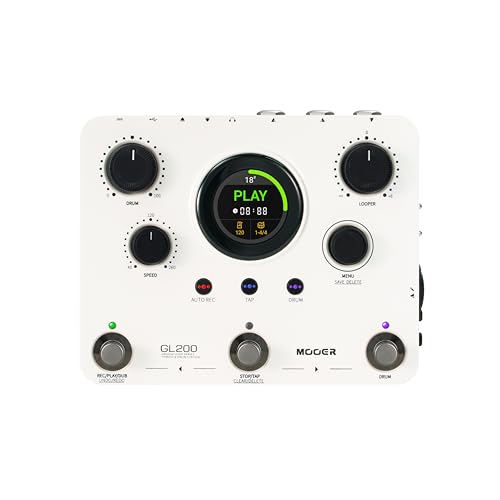
- 800 minutes of stereo recording in 100 slots
- 220 rhythms with DrumMatch AI
- Bluetooth, MIDI, XLR input, and phantom power
Best For: Full arrangements with drums, vocals, instruments, and MIDI gear
Best Simple Looping Value

- Three loop slots and 90 minutes of recording
- Unlimited overdubs with auto-save
- Bright status screen and true bypass
Best For: Beginners, buskers, and straightforward live guitar looping
Best Effects-Focused Option

- Seven assignable loop effects
- Stereo drum machine with tempo sync
- USB audio workflow and headphone output
Best For: Creative live looping, silent practice, and computer-based projects
Best Creative Dual-Track Pedal – Ditto X4 Looper
The TC Electronic Ditto X4 is a practical choice for guitarists seeking dual track looper pedals with a focused, intuitive workflow. Its two loop tracks support evolving multi-track compositions, while MIDI sync and loop effects add flexibility for live performance.
Best For: Guitarists building layered songs and synchronized live loops.
Pros:
- Two loop tracks support multi-track compositions and song-length arrangements.
- MIDI sync helps keep live loops precisely timed.
- True bypass, analog dry through, and loop decay preserve a straightforward signal path.
- Seven loop effects provide additional creative options.
Cons:
- Its feature set is centered on looping rather than broad multi-instrument connectivity.
- The pedal requires a 9V power source and draws 0.3 milliamps.
The Ditto X4 stands out when you want dual-track control without an overly complicated interface. It is especially appealing for players who prioritize song development, MIDI timing, and dedicated loop effects.
Best Advanced Tabletop Looper – BOSS RC-505mkII
The BOSS RC-505mkII is a powerful tabletop alternative to conventional dual track looper pedals. Rather than limiting you to two tracks, it provides five simultaneous stereo phrase tracks, independent faders, extensive effects, and broad input and output connectivity for detailed performance setups.
Best For: Performers and creators who need complex layered arrangements and hands-on mixing.
Pros:
- Five simultaneous stereo phrase tracks enable complex layering and mixing.
- 32-bit AD/DA conversion and 32-bit floating-point processing support professional-grade audio performance.
- Extensive Input FX and Track FX sections offer substantial sound-shaping flexibility.
- Two XLR microphone inputs with phantom power and multiple stereo line connections support versatile routing.
Cons:
- Its tabletop design is less compact than a conventional stompbox pedal.
- The extensive controls and effects may be more than beginners need.
- It uses a 9V, 500-milliamp power requirement.
The RC-505mkII is the strongest fit here for musicians who have outgrown basic dual-track looping. Its five-track architecture, customizable controls, memory storage, and connectivity make it suited to elaborate live sets and studio-style loop performances.
Best Value Dual-Track Looper – VALETON VLP-200
The VALETON VLP-200 combines dual-track looping with stereo operation, drum rhythms, and MIDI connectivity. For shoppers comparing dual track looper pedals, its Serial and Free collaboration modes offer either seamless song-section switching or parallel playback of two loops.
Best For: Guitar, bass, keyboard, and vocal players wanting built-in rhythms and flexible two-loop playback.
Pros:
- Serial and Free modes support song-section switching or parallel loop playback.
- Offers 99 project storage spaces for saving loop ideas and arrangements.
- Includes 100 stereo drum rhythms across 16 musical styles.
- MIDI In/Out supports synchronization with external MIDI devices.
Cons:
- Its controls are physical buttons rather than a larger tabletop control surface.
- It requires a 9V, 0.5A power source.
The VLP-200 is a well-rounded option when two-track flexibility, onboard rhythm support, and project storage matter more than a large effects library. Its stereo design also makes it practical for several instrument types.
Best Long-Loop Dual-Track Alternative – Zoom MS-90LP+ Looper
The Zoom MS-90LP+ expands on the dual-track looper pedals concept with long recording times, extensive storage, dedicated footswitches, and built-in rhythms. It can record up to 90 minutes per loop, making it useful for extended arrangements and composition work.
Best For: Performers and composers who need long loops, hands-free controls, and high-fidelity stereo operation.
Pros:
- Records up to 90 minutes per loop and stores up to 100 loops, with 13 hours of total capacity.
- Five dedicated footswitches provide separate Undo, Stop, Loop FX, and Rhythm controls.
- Includes 68 rhythm patterns, eight loop effects, and quantize functionality.
- Stereo I/O, MIDI, and USB support guitars, basses, synths, keyboards, and external devices.
Cons:
- Its digital signal format may appeal less to players specifically seeking an analog looper.
- The large recording capacity may be unnecessary for simple, short loop performances.
- It is more feature-heavy than a minimalist two-track pedal.
The MS-90LP+ is a compelling choice for players who value recording duration and direct foot control. Its rhythms, quantize feature, loop effects, and connectivity make it particularly versatile for stage and studio use.
Creative Dual-Loop Workstation – Valeton VLP-400
Valeton VLP-400 Multi-Track Sampler with 4 Footswitches - Two Full-Featured Loopers, Drum Machine
Check Price On AmazonThe Valeton VLP-400 is a strong choice for musicians who want dual track looper pedals with extensive hands-free control. It combines two fully operational loops, a built-in drum machine, four footswitches, and seven assignable loop effects in one pedal.
Best For: Guitarists, singers, and performers who want layered looping with rhythm backing and microphone or instrument input options.
Pros:
- Two full-featured loops support more flexible arrangements.
- Built-in drum machine includes AUTO and SYNC modes.
- Four footswitches provide broad control over looping, effects, and drums.
- Stores up to 11 hours of stereo recordings across 99 project slots.
Cons:
- Its 9.96-by-5-inch footprint is relatively substantial for a pedalboard.
- The larger feature set may require more setup than a basic looper.
With 32-bit/48kHz recording, USB-C connectivity, and an XLR/MIC combo input, the VLP-400 is built for performers who want a versatile dual-loop setup rather than a minimal practice pedal.
Simple Extended-Memory Looper – LEKATO 9-Loop Pedal
The LEKATO is a practical option for shoppers comparing dual track looper pedals but who may prefer a straightforward single-looper design. It offers nine stored loops, unlimited overdubs, a built-in tuner, and up to 40 minutes of total recording time.
Best For: Guitar and bass players who want uncomplicated looping, long memory, and USB file transfer in a compact pedal.
Pros:
- Nine loop slots provide up to 40 minutes of total recording time.
- Supports unlimited overdubbing with separate foot commands for core loop functions.
- 48kHz/24-bit uncompressed audio and Analog-Dry-Through preserve the dry signal path.
- Built-in tuner can be used without interrupting the phrase.
Cons:
- It does not provide the two independent loop tracks described for dedicated dual-loop pedals.
- Control is centered around a single-knob and foot-command interface.
The LEKATO emphasizes ease of use and useful storage over advanced multi-track control. USB import/export also makes it convenient for moving WAV loops between the pedal and a computer.
Professional Two-Track Station – BOSS RC-500
The BOSS RC-500 is a purpose-built choice among dual track looper pedals, pairing two tracks with 13 hours of stereo recording time. Its color LCD, onboard rhythms, USB import/export, and XLR/1/4-inch inputs make it suited to more involved live and studio workflows.
Best For: Performers who need extended stereo recording, two-track control, rhythm accompaniment, and flexible microphone or instrument connectivity.
Pros:
- Two-track design supports layered loop arrangements.
- Offers up to 13 hours of stereo recording time.
- Includes onboard rhythm tracks and a color LCD for control and feedback.
- XLR and 1/4-inch inputs plus USB import/export broaden connectivity.
Cons:
- At 950 g, it is heavier than many compact loop pedals.
- Its broad feature set may be more than casual loopers need.
The RC-500 is the most clearly focused on extended two-track performance in this group. Its long recording capacity and display make it a compelling fit for musicians managing larger, more structured loop sessions.
Best Feature-Rich Pick – MOOER GL200 Looper
The MOOER GL200 is a strong choice among dual track looper pedals for players who want looping, built-in drums, and extensive connectivity in one unit. Its large storage capacity, DrumMatch AI, Bluetooth audio, MIDI, and microphone support make it suited to more elaborate practice and performance setups.
Best For: Musicians building full arrangements with drums, vocals, instruments, and external MIDI gear.
Pros:
- Offers 800 minutes of stereo recording across 100 storage slots.
- Includes 220 drum rhythms and DrumMatch AI for automatic groove and tempo matching.
- Supports XLR/1/4-inch combo input, 48V phantom power, Bluetooth audio, and dual TRS MIDI.
- Provides Auto Rec, count-in, End Sync, time stretch, and custom drum-kit importing.
Cons:
- Its broad feature set may require more setup than a basic looper.
- The pedal needs a 9V, 500mA power source.
The GL200 stands out when versatility matters more than simplicity. It is particularly appealing for solo performers and creators who want drums, microphones, MIDI synchronization, and substantial loop storage without adding several separate devices.
Best Simple Looping Value – Donner Triple Looper
The Donner Triple Looper is a straightforward option for shoppers comparing dual track looper pedals and wanting an uncomplicated pedal for song sections or layered guitar parts. It provides three independent loop slots, generous recording time, unlimited overdubs, and a visible status screen.
Best For: Beginners, solo guitarists, buskers, and players who want simple live looping.
Pros:
- Stores three independent loops with up to 90 minutes of total recording time.
- Supports unlimited overdubs for building layered arrangements.
- Bright screen shows loop status, recording progress, and timing.
- Auto-save preserves loops when the pedal is powered off, while true bypass helps maintain guitar tone.
Cons:
- It has fewer loop slots and features than more advanced multi-function units.
- The supplied notes give conflicting power-supply information, so buyers should verify included accessories and requirements.
This Donner model favors ease of use over deep editing or connectivity. Its one-footwitch workflow and clear display make it a practical entry point for players who mainly need reliable overdubbing and a few saved song sections.
Best Effects-Focused Option – VALETON VLP-400 Looper
The VALETON VLP-400 is a compelling pick among dual track looper pedals for performers who want looping combined with creative effects and a synchronized drum machine. Assignable controls, colorful loop-status indicators, USB connectivity, and headphone monitoring give it a flexible practice and recording workflow.
Best For: Players who want live loop manipulation, drum backing, effects, and computer integration.
Pros:
- Includes seven assignable effects, including octave, reverse, freeze, half, fade, once, and solo.
- Provides 24-bit/48kHz stereo drum kits with tempo sync and automatic tempo matching.
- Color-coded LEDs and dedicated drum/effect controls clarify the live workflow.
- Offers headphone monitoring and USB connectivity for updates, project management, and audio import/export.
Cons:
- Its effect and assignment options may be more than needed for basic looping.
- The supplied dimensions are inconsistent, so confirm the physical size before fitting a pedalboard.
- The notes do not specify total loop-recording time or the number of loop slots.
The VLP-400 makes the most sense for creative performers who value effects and integrated rhythm tools. It is less clearly suited to buyers shopping primarily by loop capacity, but its USB workflow and headphone output add useful studio and silent-practice flexibility.
How We Picked the Best Dual Track Looper Pedals
We focused on loopers that support two-track or multi-track workflows and evaluated the features that matter most during practice and performance. Key considerations included recording time, overdub behavior, loop storage, footswitch access, audio quality, rhythm features, effects, connectivity, and ease of use.
Because “dual track” can describe different designs, check each model’s operating method carefully. Some pedals provide two independent loopers, while others use separate tracks within a single phrase or add multi-track functionality beyond a basic two-loop setup.
Quick Comparison
| Best For | What to Prioritize |
|---|---|
| Simple guitar looping | Clear controls, fast recording, and dependable overdubs |
| Live solo performance | Independent track control, dedicated stop functions, and rhythm support |
| Songwriting and arranging | Long recording time, project storage, and USB transfer |
| Multiple instruments | Stereo inputs, flexible routing, and broad instrument compatibility |
| Budget practice | Simple operation, adequate memory, and a built-in tuner or rhythms |
Key Buying Factors for Dual-Track Looper Pedals
Track Control and Footswitch Layout
Look for independent controls if you want to start, stop, clear, or switch tracks without complex tap combinations. Four or more footswitches can make live operation easier, especially when one person is managing an instrument and the looper simultaneously.
Loop Time, Memory, and Overdubs
Short loop time is sufficient for practice, but performers and songwriters benefit from longer recording limits and multiple project locations. Unlimited overdubs are useful for experimentation, though excessive layering can make a performance muddy. Undo and redo functions are valuable for removing mistakes without deleting the entire loop.
Audio Quality and Connectivity
High-resolution recording helps preserve clarity through repeated overdubs. Stereo operation matters for keyboards, stereo effects, and spacious rigs, while USB can support backups, firmware updates, audio transfers, or computer-based editing. Confirm whether the pedal offers the input and output connections your rig requires.
Rhythms, Effects, and Presets
Built-in drum machines can provide a practical timing reference and make a looper more useful for solo performances. Effects may add variety, but they should not replace the core controls you need. Preset storage is especially helpful when switching between songs or repeatable setlist arrangements.
Who Should Buy Which Dual Track Looper Pedals?
Choose a simple dual-track pedal if you want quick, hands-on looping for guitar practice, rehearsals, or uncomplicated live parts. Choose a larger loop station if you perform solo and need dedicated track management, drum patterns, extensive memory, or more reliable access to multiple functions.
Songwriters should prioritize long recording times, project storage, undo and redo, and USB support. Players using keyboards, vocals, bass, or stereo effects should verify input compatibility and signal handling before buying. If portability and price matter most, a compact looper with fewer features may be the better choice than a larger station you will not use fully.