
Choosing among digital pianos with MIDI means balancing realistic key feel, connectivity, portability, and price. The right model can support lessons, practice, recording, and live performance without requiring a full acoustic piano setup.
This roundup includes weighted and semi-weighted 88-key instruments, compact keyboards, folding designs, and MIDI controllers so you can match the instrument to your space, skill level, and workflow.
Best 10 Digital Pianos with Midi Picks for 2026
Best Yamaha Piano

- 88 weighted, touch-sensitive keys
- Simple controls and Dual Mode layering
- Includes sustain pedal and USB connectivity
Best For: Focused practice and traditional piano-style playing
Best MIDI Controller

- 37-key portable controller
- Pads, knobs, sequencer, and DAW controls
- USB, MIDI I/O, and CV/Gate connections
Best For: Computer music production and hardware control
Best Beginner Bundle

- 88 touch-sensitive keys and 480 sounds
- USB-MIDI with lesson and recording modes
- Includes stand, pedal, headphones, and case
Best For: Beginners starting lessons or home practice
Best Connected Piano
SDP-120 Weighted Digital Piano

- Fully weighted hammer-action 88-key design
- USB, MIDI, and wireless MIDI connectivity
- 128 tones, 200 rhythms, and 128-note polyphony
Best For: Players wanting piano feel and broad connectivity
Best Complete Set
UISCOM 88-Key Semi-Weighted Digital Piano

- 88 semi-weighted keys with USB-MIDI
- Wooden stand and triple pedal included
- 600 tones and 800 rhythms
Best For: Beginners practicing at home with a complete setup
Best Portable Option
Rhymo Folding 61-Key Bluetooth MIDI Piano
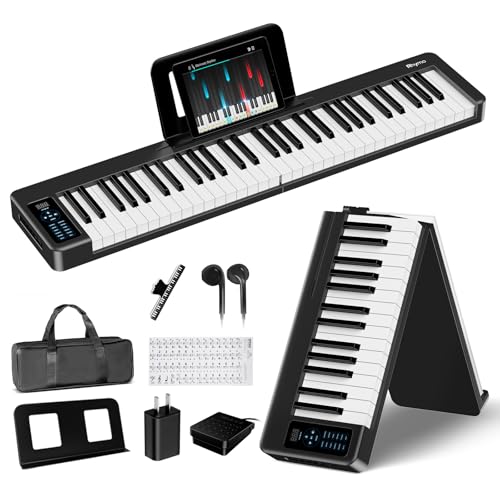
- Folds for travel and includes a gig bag
- Bluetooth MIDI for wireless device connection
- Up to 10 hours of battery operation
Best For: Mobile practice and space-conscious setups
Best Value 88-Key
Donner DEP-07 USB-MIDI Keyboard Piano

- 88 touch-sensitive keys with USB MIDI
- 500 tones and 128-note polyphony
- Stand, pedal, bag, and music rest included
Best For: Beginners wanting a portable full-size bundle
Versatile MIDI Starter
88-Key Semi-Weighted Digital Piano

- 88 velocity-sensitive semi-weighted keys
- Wireless and USB-MIDI connectivity
- 800 tones, 600 rhythms, and recording
Best For: Beginners wanting a feature-rich full-size MIDI piano
Complete Beginner Bundle

- Full-size semi-weighted 88-key layout
- USB-MIDI for apps and recording
- Includes stand, bag, headphones, and pedal
Best For: Adult beginners seeking an all-in-one starter package
Portable MIDI Pick

- Lightweight 61-key portable design
- USB MIDI with app and computer support
- Includes stand, headphones, and carry bag
Best For: Beginners and creators prioritizing portability
Best Yamaha Piano – P71 Weighted Digital Piano
The Yamaha P71 is a straightforward choice for players seeking digital pianos with MIDI connectivity and a more traditional acoustic-piano feel. Its 88 touch-sensitive, weighted keys, sustain pedal, built-in speakers, and simple controls suit focused practice and everyday playing.
Best For: Beginners through advanced players who want a full-size weighted keyboard with uncomplicated operation.
Pros:
- 88 weighted, touch-sensitive keys provide an acoustic-style playing response.
- Dual Mode blends voices such as piano and strings.
- Includes a sustain pedal and power supply.
- USB connectivity supports compatible computer and software setups.
Cons:
- Offers 10 voices, so its sound selection is narrower than feature-heavy keyboards.
- Its streamlined controls may feel limited for users wanting extensive onboard editing.
The P71 prioritizes piano feel and ease of use over a large feature set. It is a practical option when weighted action, full-size keys, and Yamaha piano voicing matter most.
Best MIDI Controller – MPK Mini Plus 37-Key
The Akai MPK Mini Plus is a compact controller for musicians who want digital pianos with MIDI-style workflow features for computer-based production. Its 37-key layout combines velocity-sensitive keys with pads, knobs, DAW controls, and hardware MIDI and CV/Gate connections.
Best For: Producers and performers building songs in a DAW or controlling external synthesizers and modular gear.
Pros:
- 37 keys provide three full octaves in a portable format.
- Includes eight RGB MPC pads, eight assignable knobs, and DAW transport controls.
- Offers USB, MIDI I/O, and CV/Gate connectivity.
- Built-in 64-step sequencer enables computer-free rhythm and melodic sequencing.
Cons:
- It has 37 keys rather than a full 88-key piano layout.
- Designed as a MIDI keyboard controller, not a standalone piano with built-in piano speakers.
This is the most production-focused option in the group. Choose it for hands-on beat making, DAW control, and synthesizer integration rather than traditional piano practice.
Best Beginner Bundle – Alesis Recital Play 88-Key
The Alesis Recital Play is a beginner-friendly package for shoppers comparing digital pianos with MIDI connectivity and useful learning extras. It provides 88 touch-sensitive keys, 480 sounds, lesson and record modes, USB-MIDI, and a stand, headphones, pedal, and carrying case.
Best For: Beginners who want an all-in-one setup for lessons, practice, recording, and portable use.
Pros:
- Full-size 88-key, touch-sensitive keyboard supports developing piano technique.
- USB-MIDI works with Mac or PC recording and educational software.
- Includes Split, Lesson, Record, metronome, transpose, and one-touch song features.
- Bundle includes stand, sustain pedal, headphones, carrying case, and tablet stand.
Cons:
- The keys are touch-sensitive but are not described as weighted or hammer-action.
- AA batteries are not included for portable battery operation.
With its broad sound library and unusually complete accessory bundle, the Recital Play is well suited to learners who do not want to purchase basic accessories separately.
Best Connected Piano – SDP-120 Weighted Digital Piano
The STRICH SDP-120 is a full-size option for players seeking digital pianos with MIDI, USB, and wireless connectivity. Its fully weighted hammer-action keys are paired with 128 tones, 200 rhythms, 110 demo songs, 128-note polyphony, and 2x15W built-in speakers.
Best For: Players who want weighted piano action plus extensive sounds, rhythms, and flexible device connections.
Pros:
- Fully weighted hammer-action keys simulate a grand-piano response.
- Supports USB, MIDI, and wireless MIDI connections.
- Provides 128 tones, 200 rhythms, 110 demo songs, and 128-note polyphony.
- 2x15W speakers offer substantial built-in amplification.
Cons:
- Its broader feature set may be more than needed for players seeking a simple practice piano.
- At 9.3 kg, it is less lightweight than compact keyboard options.
The SDP-120 balances authentic key response with a substantial selection of sounds and rhythms. It is a strong fit when wireless MIDI and full-size weighted action are priorities.
Best Complete Set – UISCOM 88-Key Semi-Weighted Digital Piano
If you want digital pianos with midi for home lessons and creative practice, the UISCOM offers a full-size 88-key layout with semi-weighted response and USB-MIDI connectivity. Its included wooden stand, triple pedal, headphones, and broad selection of tones make it a ready-to-use beginner setup.
Best For: Beginners and families wanting a furniture-style 88-key piano bundle for home practice.
Pros:
- Includes a wooden stand, triple pedal, headphones, music stand, cover, and accessories.
- USB-MIDI connects with compatible phones, tablets, computers, and learning apps.
- Offers 600 tones, 800 rhythms, demo songs, recording, split, dual voice, and transpose functions.
Cons:
- Semi-weighted keys may feel lighter than a fully weighted acoustic-piano-style action.
- The larger 88-key stand setup is less portable than a compact keyboard.
The UISCOM is a practical all-in-one choice when you want a traditional home-piano appearance, plenty of sounds, and MIDI-based learning or recording features without assembling a separate stand and pedal package.
Best Portable Option – Rhymo Folding 61-Key Bluetooth MIDI Piano
Among digital pianos with midi, the Rhymo stands out for travel-friendly design. Its 61 touch-sensitive keys fold into a compact form, while Bluetooth MIDI supports wireless communication with compatible devices for recording and music applications.
Best For: Players who need a portable keyboard for travel, compact apartments, or mobile practice.
Pros:
- Folds down to a compact size and includes a padded travel bag.
- Bluetooth MIDI sends and receives MIDI data wirelessly.
- Integrated battery provides up to 10 hours of operation and supports USB-C charging while playing.
- Provides 128-note polyphony, 128 timbres, an LCD screen, and touch-sensitive keys.
Cons:
- Its 61-key layout provides less range than a full-size 88-key piano.
- The listed 2.3 kg product description and 3.63 kg item weight may make carrying weight worth checking before travel.
The Rhymo is the most flexible choice here for musicians prioritizing portability and wireless MIDI. Its folding design and battery operation make it easier to take places where a conventional digital piano would be inconvenient.
Best Value 88-Key – Donner DEP-07 USB-MIDI Keyboard Piano
The Donner DEP-07 is a strong option for shoppers comparing digital pianos with midi and looking for a full-size instrument with a portable bundle. Its 88 touch-sensitive keys, USB connection, 128-note polyphony, and included X-style stand support practice, lessons, and basic music-production workflows.
Best For: Beginners who want an 88-key keyboard with useful sounds, speakers, and transport accessories.
Pros:
- Full-size 88-key touch-sensitive keyboard helps develop dynamic playing control.
- USB connectivity supports connection to compatible music software and devices.
- Includes 500 tones, 200 rhythms, 150 demo songs, and 128-note polyphony.
- Bundle includes a carry bag, X-style stand, pedal, music rest, and note stickers.
Cons:
- The supplied notes identify touch-sensitive keys but do not specify a weighted action.
- Its slim portable format may prioritize convenience over a furniture-style piano setup.
Choose the DEP-07 if you want full-size key coverage and MIDI-ready connectivity in a relatively portable package. The included stand and carry bag add practical value for lessons, storage, and occasional transport.
Versatile MIDI Starter – 88-Key Semi-Weighted Digital Piano
This full-size 88-key option is a strong choice for shoppers comparing digital pianos with midi connectivity. Its semi-weighted, velocity-sensitive keys support beginner practice, while wireless MIDI, wireless audio, and USB-MIDI make it useful with phones, tablets, computers, and compatible music apps.
Best For: Beginners and home musicians who want a full-size keyboard with extensive sounds, recording features, and flexible MIDI connections.
Pros:
- 88 semi-weighted, touch-sensitive keys with quick rebound response
- Wireless MIDI, wireless audio, and USB-MIDI connectivity
- Includes 800 tones, 600 rhythms, 80 demo songs, recording, and split/dual modes
- Includes a sustain pedal, music stand, and key stickers
Cons:
- Semi-weighted keys may not replicate the feel of fully weighted acoustic-piano action
- Its 51.6-inch width may be less convenient for very small spaces
This model combines a realistic-feeling beginner layout with an unusually broad sound library and modern connectivity. It is particularly practical if recording, app-based learning, or portable MIDI creation matters as much as traditional piano practice.
Complete Beginner Bundle – 88-Key Keyboard Piano Kit
This 88-key package is designed for shoppers seeking digital pianos with midi support and the accessories needed to start playing immediately. The semi-weighted keyboard connects to mobile apps, computers, and other devices through USB-MIDI, and the included stand, bag, headphones, and pedal make it a convenient starter setup.
Best For: Adult beginners who want an all-in-one home or portable keyboard package for practice, lessons, and basic recording.
Pros:
- Full-size 88 semi-weighted keys for a more piano-like playing experience
- USB-MIDI support for apps, computers, editing, and recording
- Includes 1,000 timbres, 1,000 rhythms, 150 demo songs, and dual-keyboard mode
- Bundle includes stand, carrying case, headphones, sustain pedal, and key stickers
Cons:
- Semi-weighted action is lighter than fully weighted piano keys
- The extensive accessory bundle may be more than buyers who already own equipment need
Its main advantage is convenience: the core keyboard and essential accessories arrive together, reducing the need for separate purchases. The large sound and rhythm libraries also give beginners plenty to explore beyond straightforward piano practice.
Portable MIDI Pick – Donner DEK-60 61-Key Keyboard
For shoppers who value portability over a full-size piano layout, the Donner DEK-60 is a practical choice among digital pianos with midi connectivity. Its 61 organ-style keys, USB MIDI, built-in speakers, and lightweight bundle support learning, recording, and music-making at home or on the go.
Best For: Beginners and entry-level creators who need a lightweight keyboard with USB-MIDI and a ready-to-carry accessory package.
Pros:
- Lightweight 61-key design with comfortable organ-style keys
- USB MIDI, AUX input, headphone output, and sustain-pedal jack
- Includes 300 tones, 300 rhythms, 80 demo songs, layer, split, and chord modes
- Bundle includes X-style stand, headphones, carry bag, music stand, and stickers
Cons:
- 61 keys provide less range than an 88-key digital piano
- Organ-style keys are not described as weighted or semi-weighted
The DEK-60 is a better fit for mobility and casual creative use than for players specifically seeking a traditional piano-action experience. Its included stand and bag make it especially convenient for lessons, travel, and compact practice spaces.
How We Picked These Digital Pianos with Midi
We focused on keyboards that offer MIDI connectivity alongside useful piano features, including full-size key layouts, weighted or semi-weighted action, built-in speakers, sustain-pedal support, and beginner-friendly controls. We also considered portability, included accessories, polyphony, sound selection, and whether each model is better suited to practice, music production, or performance.
Because these instruments serve different buyers, the list includes both complete digital pianos and compact MIDI controllers. A controller may not include onboard piano sounds or speakers, while a standalone digital piano is usually ready to play immediately.
Quick Comparison
| Best For | Recommended Type | What to Prioritize |
|---|---|---|
| Traditional piano practice | 88-key weighted digital piano | Hammer action, sustain-pedal input, and realistic dynamics |
| Beginners on a budget | 88-key semi-weighted keyboard | Simple controls, included accessories, and built-in speakers |
| Music production | MIDI keyboard controller | USB MIDI, DAW controls, pads, knobs, and compact size |
| Small spaces or travel | 61-key or folding keyboard | Low weight, battery or USB operation, and easy storage |
Key Buying Factors for Digital Pianos with Midi
Key Action and Size
Choose 88 weighted keys if you want the closest practice experience to an acoustic piano. Semi-weighted keys provide some resistance while keeping the instrument lighter and often less expensive. A 61-key model is easier to transport but limits the range available for advanced repertoire.
MIDI Connection
USB MIDI is convenient for connecting to a computer, tablet, or music-production software. Bluetooth MIDI can be useful for wireless apps and lessons, but compatibility and latency vary. Confirm whether the keyboard sends MIDI only or also includes onboard sounds and speakers.
Sound, Polyphony, and Speakers
Higher polyphony helps notes sustain naturally when using the pedal or layering sounds. Built-in speakers are convenient for practice, while headphone output allows quiet playing. Controllers typically require external software, headphones, or speakers.
Pedals and Included Accessories
A sustain pedal, stand, power supply, headphones, or carrying case can significantly improve value. Check what is included rather than assuming every pictured accessory comes in the box.
Who Should Buy Which Digital Pianos with Midi?
Traditional learners should start with an 88-key weighted model that supports a sustain pedal and offers dependable MIDI connectivity for lessons or recording. Beginners who want a lower-cost setup can choose an 88-key semi-weighted keyboard with speakers and bundled accessories.
Producers and beat makers should consider a compact MIDI controller such as a 37-key model if software instruments, pads, knobs, and desk space matter more than built-in piano sounds. Travelers and apartment dwellers may prefer a 61-key or folding keyboard for easier storage and transport.
Before buying, confirm the connection type your computer or mobile device supports, measure your available space, and decide whether realistic piano action or portability is the higher priority. Those choices will narrow the field quickly and help you select the best fit rather than simply the model with the most sounds.