
Choosing a podcast audio interface for beginners gets much easier when you focus on setup, sound quality, and the inputs you actually need. The right unit should help you record clean voice audio without forcing you to learn a full studio workflow.
In this roundup, we’ve prioritized beginner-friendly models that balance ease of use, useful controls, and solid value for solo creators, two-person shows, and livestream-first setups.
Best 10 Podcast Audio Interface for Beginners Picks for 2026
Best for Simple Podcast Recording
Focusrite Scarlett Solo 3rd Gen

- Clean mic preamps with Air mode for extra vocal clarity
- Gain Halos help beginners set levels without clipping
- Includes starter software for podcasting and recording
Best For: Solo podcasters and first-time users who want an easy, good-sounding interface.
Best for Co-Hosts
MAONO MaonoCaster E2 Gen2 Podcast Bundle

- Dual XLR inputs support two-mic podcast setups
- 60dB gain helps dynamic mics sound clear
- Sound pads, loopback, and mute button aid streaming
Best For: Beginner podcasters who want an easy two-person interface with extra streaming features.
Best for Simple Studio Upgrades
Focusrite Scarlett Solo 4th Gen

- Beginner-friendly single-mic interface
- Clean, high-quality sound with 120dB dynamic range
- Includes software and plugins to start recording fast
Best For: New podcasters and solo creators who want easy setup with polished audio.
Best for Sound Effects
MAONO MaonoCaster AME2 Podcast Mixer

- 11 customizable sound pads for intros and effects
- 48V phantom power with up to 60dB mic gain
- XLR, Bluetooth, and instrument input support
Best For: New podcasters and streamers who want creative effects plus flexible mic and instrument inputs.
Best for Easy Setup
Focusrite Scarlett 2i2 4th Gen

- Auto Gain makes first-time setup simple
- Clean preamps and strong converters improve vocal quality
- Includes software and plugins for podcasting and recording
Best For: New podcasters and small creator setups that want easy, reliable recording.
Best for XLR Starter Setups

- XLR input with 48V phantom power
- Separate control for mic, line, headphones, and output
- Front-access mute, monitor, RGB, and sound effects
Best For: Beginners moving from USB mics to an easy XLR mixer for podcasting and streaming.
Best for Comfort
MAONO Maonocaster Lite AM200 Bundle

- All-in-one starter kit with mixer, mic, cables, and stand
- Built-in effects and voice changes for live shows
- Works with PC, phones, and common streaming setups
Best For: New podcasters and streamers who want a simple all-in-one audio starter kit.
Best for Voice Effects

- XLR-only interface with built-in preamp and 48V phantom power
- One-click noise reduction, mute, monitoring, and loopback controls
- Voice effects, sound pads, Bluetooth, and RGB lighting for streaming
Best For: Beginner podcasters and streamers who want simple controls plus creative effects.
Best for Streamers
BM-800 Podcast Kit with Voice Changer
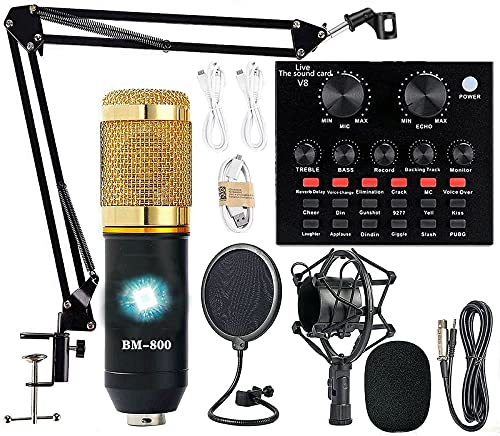
- All-in-one starter bundle with mic and sound card
- Compatible with phones, PCs, tablets, and consoles
- Voice effects add flexibility for streaming and short videos
Best For: New podcasters and streamers who want a feature-rich beginner kit.
Best for XLR Beginners

- Four-channel faders simplify level control
- XLR input with 48V phantom power
- Monitoring, mute, and multi-device ports
Best For: New podcasters and streamers who want hands-on XLR control with an easy learning curve.
Best for Simple Podcast Recording – Focusrite Scarlett Solo 3rd Gen
If you want a podcast audio interface for beginners that feels easy to learn but still sounds polished, the Scarlett Solo 3rd Gen is a strong place to start. It gives solo creators clean mic gain, straightforward plug-and-play operation, and enough quality to handle voice recording, light music tracking, and playback without fuss.
Best For: New podcasters, vocalists, and solo creators who want an affordable interface with reliable sound quality and simple controls.
Pros:
- Clear mic preamps with an Air mode for added vocal and acoustic brightness
- Easy input level management with Gain Halos to help prevent clipping
- 24-bit/192kHz recording for clean-sounding podcast and music capture
- Includes beginner-friendly software like Pro Tools Intro+, Ableton Live Lite, and Cubase LE
Cons:
- Only one mic input, so it is not ideal for multi-person podcasting
- Best suited to solo setups rather than more advanced studio routing
For a podcast audio interface for beginners, the Scarlett Solo 3rd Gen stands out because it balances simplicity, dependable sound, and useful bundled software. If you record alone and want a low-stress way to get started, it is an easy recommendation.
Best for Co-Hosts – MAONO MaonoCaster E2 Gen2 Podcast Bundle
If you want a podcast audio interface for beginners that is easy to set up but still flexible enough for growing shows, the MAONO MaonoCaster E2 Gen2 is a smart all-in-one choice. Its dual XLR inputs, USB-C/3.5mm connectivity, and built-in controls make it simple to start recording with a co-host, stream, or connect to a phone or computer without adding extra gear.
Best For: Beginner podcasters who want a ready-to-use interface for two mics, streaming, and simple live production.
Pros:
- Two XLR combo inputs with up to 60dB gain for dynamic microphones
- Built-in sound pads, mute, monitoring, and loopback for streaming
- USB-C, Bluetooth, and 3.5mm options add setup flexibility
- Battery-powered design can run for up to 8 hours
Cons:
- Sound effects and voice changes may be more than some beginners need
- Best fit for two-person setups rather than solo creators only
As a podcast audio interface for beginners, the E2 Gen2 stands out for giving you co-host support and useful streaming tools without requiring a complicated mixer setup. It’s a practical pick if you want room to grow into more advanced podcasting features.
Best for Simple Studio Upgrades – Focusrite Scarlett Solo 4th Gen
If you want a podcast audio interface for beginners that still sounds polished, the Scarlett Solo 4th Gen is an easy pick. It gives you a clean mic preamp, a dedicated instrument input, and simple controls that make it straightforward to start recording without a steep learning curve.
Best For: New podcasters, singer-songwriters, and solo creators who want reliable sound quality and an interface that’s easy to set up.
Pros:
- Simple single-mic, single-instrument layout is beginner-friendly
- 120dB dynamic range and upgraded converters deliver clear, studio-style audio
- Air mode adds presence to vocals for more polished podcast and voice recordings
- Includes recording software and plugins to help you start right away
Cons:
- Only one XLR mic input, so it’s not ideal for multi-host setups
- Best suited to solo recording rather than more complex podcast workflows
- Bundled software is useful, but beginners may still need a little setup time
For a podcast audio interface for beginners, the Scarlett Solo 4th Gen stands out because it keeps the setup simple while still delivering noticeably better sound than basic USB mics. If you record solo and want room to grow, it’s a smart, low-friction choice.
Best for Sound Effects – MAONO MaonoCaster AME2 Podcast Mixer
The MAONO MaonoCaster AME2 is a practical podcast audio interface for beginners who want a simple, all-in-one mixer with room to grow. It adds XLR mic support, phantom power, Bluetooth, and customizable sound pads, so you can start recording, streaming, or making short-form content without piecing together multiple devices.
Best For: New podcasters, streamers, and creators who want built-in sound effects, flexible mic support, and an easy starter mixer for PC or mobile workflows.
Pros:
- 11 customizable sound pads help add intros, effects, and reactions quickly
- 3-level mic gain, 48V phantom power, and denoise features improve vocal capture
- Works with XLR mics, Bluetooth, and multiple creator devices for flexible setups
- Also supports guitar and bass recording through the 6.35mm instrument input
Cons:
- Not compatible with USB microphones
- Feature-rich layout may feel busy for absolute first-time users
- Sound-pad customization is useful, but not essential if you only need basic recording
For beginners who want more than a bare-bones interface, the AME2 offers a lot of value in one box. It’s a strong podcast audio interface for beginners if you want easy setup, live-streaming tools, and more creative control than a basic two-channel device.
Best for Easy Setup – Focusrite Scarlett 2i2 4th Gen
If you want a podcast audio interface for beginners that takes the guesswork out of recording, the Scarlett 2i2 4th Gen is a strong pick. It combines clean preamps, simple two-input operation, and beginner-friendly tools like Auto Gain and Clip Safe so you can get usable levels fast without a steep learning curve.
Best For: New podcasters, solo creators, and small two-person shows that want reliable sound and easy setup.
Pros:
- Auto Gain helps set mic or guitar levels quickly
- Clip Safe reduces the risk of distorted takes
- High-quality converters and low-noise preamps deliver polished audio
- Includes recording software and plugin bundles to get started right away
Cons:
- Only two inputs, so it’s not ideal for larger podcast panels
- Some beginners may not use the full software bundle
- Pricier than the most basic entry-level interfaces
For a podcast audio interface for beginners, this model stands out because it balances ease of use with genuinely professional sound. If you want a straightforward interface that can grow with your setup, the Scarlett 2i2 4th Gen is an easy recommendation.
Best for XLR Starter Setups – FIFINE AmpliGame SC3 Mixer
If you want a podcast audio interface for beginners that adds real control without a steep learning curve, the FIFINE AmpliGame SC3 is a practical step up. It gives you an XLR mic input, 48V phantom power, and simple front-panel controls for managing your voice, monitor mix, and basic effects.
Best For: New podcasters, streamers, and creators who want a beginner-friendly XLR mixer with physical controls and built-in effects.
Pros:
- XLR input with 48V phantom power for condenser mics
- Independent volume control for mic, line in, headphones, and line out
- Mute, monitor, RGB, and sound-effect buttons are easy to reach
- Plug-and-play setup works with Mac and Windows
Cons:
- Not compatible with USB microphones
- XLR cable is not included
- Extra effects may be more than some beginners need
For a podcast audio interface for beginners, this mixer stands out because it combines straightforward controls with enough room to grow into better XLR gear. It is a good fit if you want a hands-on interface for recording, streaming, or voice work without overcomplicating the setup.
Best for Comfort – MAONO Maonocaster Lite AM200 Bundle
If you want a podcast audio interface for beginners that combines a mixer, mic, and sound effects in one box, the MAONO Maonocaster Lite is built to make that first setup feel straightforward. It works with PC, smartphones, and common streaming platforms, so you can start recording, streaming, or podcasting without piecing together a full studio.
Best For: New podcasters, streamers, and solo creators who want an all-in-one starter kit with built-in effects and simple controls.
Pros:
- All-in-one bundle includes the mixer, microphone, cables, and stand to reduce setup friction.
- Built-in sound effects, voice changes, and real-time monitoring add variety for live content.
- Compatible with PCs, Macs, iPhones, Android devices, and most major streaming use cases.
- Good starter value for creators who want one device to handle basic podcast and livestream audio.
Cons:
- Uses 3.5mm microphone input only and does not support phantom power.
- Some phones may need an OTG adapter, which is not included.
- Instrument connections may require extra adapters for full compatibility.
As a podcast audio interface for beginners, this bundle stands out for simplifying the learning curve while still offering enough creative tools to keep growing creators interested. It is a practical pick if you want a starter studio that can handle podcasts, livestreams, and casual recording without a lot of extra gear.
Best for Voice Effects – MAONO G1 NEO Gaming Mixer
If you want a podcast audio interface for beginners that also doubles as a fun streaming mixer, the MAONO G1 NEO is a friendly place to start. It gives new creators XLR mic support, phantom power, simple one-click controls, and built-in effects without requiring a complicated setup.
Best For: Beginner podcasters, streamers, and gamers who want an easy-to-use interface with voice effects and RGB styling.
Pros:
- Built-in preamp and 48V phantom power help XLR mics sound fuller and louder.
- One-click noise reduction, mute, monitoring, and loopback simplify everyday use.
- Voice effects, sound pads, and RGB lighting add extra personality for streaming.
- Wide compatibility with phones, PCs, tablets, and major streaming apps.
Cons:
- Not compatible with USB microphones, so it only fits XLR-based setups.
- More gaming-oriented than a pure podcast interface, so it may feel overstyled for some users.
- Beginners still need to follow setup steps carefully to get the best gain and monitoring levels.
Overall, the G1 NEO is a smart pick if you want a podcast audio interface for beginners that feels approachable but still adds useful extras for live content. It is especially appealing for creators who want clear voice control, easy monitoring, and a little production flair right out of the box.
Best for Streamers – BM-800 Podcast Kit with Voice Changer
If you want a podcast audio interface for beginners that bundles the essentials in one box, this BM-800 package is a practical starting point. It includes the mic, arm, shock mount, pop filter, and live sound card, so you can get set up for podcasting, streaming, or short-form video without piecing everything together separately.
Best For: New podcasters, streamers, and creators who want an all-in-one kit with a voice changer and broad device compatibility.
Pros:
- Complete starter bundle with microphone, stand, pop filter, and sound card
- Works with Windows, Mac, smartphones, tablets, and game consoles
- Cardioid pickup pattern helps focus on voice for podcast-style recording
- Includes multiple sound effects for live streams and creative content
Cons:
- Requires charging before first use
- More feature-heavy than a simple plug-and-play interface
- Accessory bundle may be more than some beginners need
For creators who want extra effects and a fuller starter kit, this is a versatile podcast audio interface for beginners, especially if you plan to stream, record on mobile, or experiment with voice changes. It’s less about pro-level simplicity and more about giving beginners a flexible setup they can grow into.
Best for XLR Beginners – FIFINE AmpliGame SC3W Mixer
If you want a podcast audio interface for beginners that adds real XLR support without feeling overly complicated, the FIFINE AmpliGame SC3W is a practical place to start. Its four faders, monitoring, mute control, and built-in 48V phantom power make it easier to manage a mic and other audio sources while you learn the basics of recording or streaming.
Best For: New podcasters, streamers, and gamers who want hands-on control, XLR mic support, and simple real-time monitoring.
Pros:
- Four-channel fader layout makes level control more intuitive for beginners
- XLR input with 48V phantom power supports condenser microphones
- Real-time monitoring and mute button help you catch issues quickly
- Multiple rear ports work well for dual-PC or multi-device setups
Cons:
- More mixer-style than plug-and-play, so setup takes a little learning
- RGB and voice effects are fun, but not essential for pure podcasting
For a podcast audio interface for beginners who want a more tactile control surface than a basic USB interface, this FIFINE model offers a useful balance of features and simplicity. It is especially appealing if you plan to expand into streaming or gaming audio later.
How We Picked the Best Podcast Audio Interface for Beginners
We focused on models that are approachable for first-time users, offer dependable voice recording, and include the features beginners benefit from most: simple gain control, clear monitoring, phantom power where needed, and flexible input options. We also considered whether each option makes sense for a Podcast Audio Interface for Beginners rather than only for advanced music production.
Quick Comparison: What Matters Most
The easiest way to narrow the list is by your show format. Solo podcasters usually do well with a compact USB interface and one microphone input. Co-hosted shows often benefit from dual XLR inputs or a mixer-style layout. If you plan to stream, game, or add sound effects, look for onboard pads, Bluetooth, or extra routing controls.
Key Buying Factors for a Podcast Audio Interface for Beginners
Inputs and Microphone Compatibility
Check whether you need one XLR input, two XLR inputs, or a bundle-style setup. XLR microphones generally give you more upgrade flexibility, while USB-centered setups are often simpler for true beginners.
Ease of Setup
Beginner gear should be plug-and-play or close to it. Clear knobs, labeled ports, and straightforward monitoring help reduce setup mistakes and make your first recording sessions less stressful.
Gain, Monitoring, and Phantom Power
Reliable gain control helps you avoid noisy or distorted recordings. Headphone monitoring is important for hearing your own voice in real time, and 48V phantom power is essential if you use a condenser mic.
Extra Features Versus Simplicity
Sound pads, Bluetooth, and RGB lighting can be useful, but they should not come at the expense of core recording quality. For most first-time buyers, cleaner audio and stable performance matter more than flashy extras.
Who Should Buy Which Podcast Audio Interface for Beginners?
If you want the simplest path to better audio, choose a compact interface with one or two high-quality mic inputs. If your podcast includes two hosts, guest calls, or live streaming, a mixer-style unit may be a better fit. If you want an all-in-one starter package, a bundle can save time and reduce compatibility guesswork. For a Podcast Audio Interface for Beginners, the best choice is usually the one that matches your current format while leaving room to grow.