
If you’re an intermediate photographer looking to enhance your skills, you know the right equipment can make a significant difference. Studio flashes play an essential role in elevating your work, offering control and creativity. In this discussion, we’ll explore the top three studio flashes that can take your photography to the next level. Let’s see how these tools can transform your approach and why they’re worth considering for your next project.
Godox IT32 TTL Camera Flash with X5N Flash Trigger (Compatible with Nikon)

If you’re an intermediate photographer looking to elevate your studio work, the Godox IT32 TTL Camera Flash with X5N Flash Trigger is a top contender. This flash is tailored for Nikon users, offering a magnetic hotshoe that allows for quick shifts between brands. With its built-in 2.4GHz receiver, you’ll enjoy seamless wireless communication, eliminating any manual pairing hassles. The colorful touch screen and rotatable flash head enhance usability, while the LED modeling light helps you visualize your shots. Plus, the dual functionality of the X5 module makes off-camera lighting a breeze, ensuring you capture stunning images every time.
Best For: Intermediate photographers looking to enhance their studio work with a versatile and user-friendly flash compatible with Nikon cameras.
Pros:
- Magnetic hotshoe allows for quick and easy switching between camera brands.
- Built-in 2.4GHz receiver provides seamless wireless communication without manual pairing.
- Colorful touch screen and rotatable flash head enhance usability and creative possibilities.
Cons:
- Limited compatibility as it is specifically designed for Nikon users.
- Weight of 6 ounces may feel slightly heavier for extended handheld use.
- Learning curve for new users unfamiliar with TTL and HSS flash settings.
Behringer Q1002USB
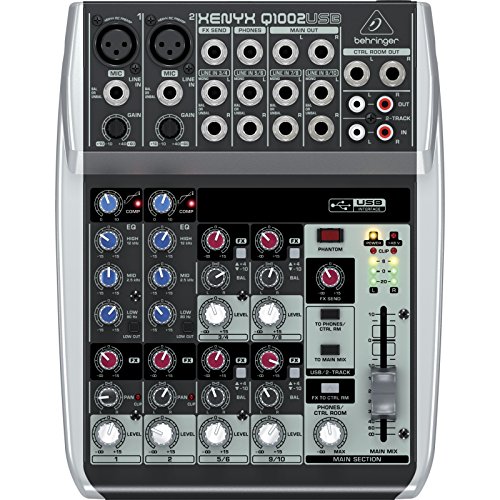
The Behringer Q1002USB stands out for intermediate users seeking a professional audio experience without the complexity of high-end equipment. This premium analog mixer features ultra-low noise and high headroom, perfect for your studio needs. With two state-of-the-art Xenyx microphone preamps, you’ll enjoy sound quality comparable to boutique options. The built-in studio-grade compressors offer easy one-knob functionality, ensuring a polished audio output. Plus, the neo-classic British 3-band EQs provide that warm, musical tone you crave. Designed for both vocal and instrumental applications, the Q1002USB enhances your overall audio quality, making it a fantastic addition to your setup.
Best For: Intermediate users seeking a professional audio experience without the complexity of high-end equipment.
Pros:
- Premium ultra-low noise and high headroom design for optimal audio performance.
- State-of-the-art Xenyx microphone preamps deliver sound quality comparable to boutique preamps.
- Easy-to-use studio-grade compressors with one-knob functionality for polished audio output.
Cons:
- Limited input channels may not suit larger production setups.
- Lacks advanced features found in higher-end mixers, which could limit professional use.
- Analog design may not appeal to users preferring digital mixers for integration with DAWs.
Focusrite Scarlett 18i8 3rd Gen USB Audio Interface

For intermediate users seeking a reliable and versatile audio interface, the Focusrite Scarlett 18i8 3rd Gen is an excellent choice. It offers high-fidelity, studio-quality recording with four mic pres featuring Air mode and eight line inputs. You’ll appreciate the super low latency and class-leading drivers that enhance your recording experience. The two hi-Z instrument inputs maintain your guitar’s tone, while independent level controls guarantee peak monitoring. With exceptional clarity and ultra-low noise, your recordings will sound authentic. It’s compatible with popular software and supports all audio recording tools, making it a perfect addition to your setup.
Best For: Intermediate users seeking a reliable and versatile audio interface for high-quality recording and production.
Pros:
- High-fidelity recording: Delivers studio-quality sound with exceptional clarity and dynamic range.
- User-friendly features: Independent level controls and gain halos make monitoring and level setting easy.
- Versatile compatibility: Works seamlessly with popular software and supports a wide range of audio recording tools.
Cons:
- Limited number of mic pres: Only four mic preamps may not suffice for larger recording sessions.
- Weight and size: Weighs 3.45 pounds, which may be considered bulky for mobile setups.
- Learning curve: Intermediate users may need time to fully explore all features and software included.
Factors to Consider When Choosing Studio Flash for Intermediate Users
When you’re choosing studio flash for your photography needs, several factors come into play. You’ll want to take into account flash power output, as well as features like TTL and HSS for better control. Don’t forget about wireless connectivity options, build quality, and ease of use, which can all enhance your shooting experience.
Flash Power Output
Choosing the right flash power output is essential for intermediate photographers looking to elevate their studio work. Flash power is typically measured in watt-seconds (Ws), with higher numbers providing greater light output for various shooting conditions. As you explore options, look for studio flashes with adjustable power settings. This feature allows you to fine-tune exposure and gain creative control over your lighting. Pay attention to the guide number (GN), which indicates how far a flash can effectively illuminate a subject; higher GN values offer more versatility. Finally, guarantee consistent power output across multiple flashes to maintain uniform lighting, especially during complex setups. With these considerations, you’ll be well on your way to achieving stunning results in your photography.
TTL and HSS Features
Understanding TTL (Through The Lens) and HSS (High-Speed Sync) features can markedly enhance your studio photography. TTL technology automatically adjusts flash output based on lighting conditions, simplifying exposure settings for you. This means less hassle and more focus on your creative vision. HSS, on the other hand, allows you to use faster shutter speeds than the typical flash sync speed, giving you better control in bright environments and enabling you to capture motion without overexposing your images.
Both features are essential for achieving consistent, professional-looking results in various lighting scenarios. They also facilitate creative techniques like fill flash in daylight, helping you balance ambient light with your flash effectively. By utilizing TTL and HSS, you can enhance your workflow, reducing manual adjustments during shoots.
Wireless Connectivity Options
Wireless connectivity options play an essential role in enhancing your studio flash setup. Many modern studio flashes come equipped with built-in receivers, allowing for instant wireless communication and eliminating the hassle of manual pairing. Utilizing the 2.4GHz frequency guarantees reliable long-range triggering, giving you the freedom to position lights creatively without being tethered. Some flashes even offer dual functionality, acting as both an on-camera flash and a wireless transmitter for off-camera setups. To improve compatibility across various camera brands, look for interchangeable hotshoe systems that facilitate seamless integration. If you’re aiming for complex lighting arrangements, consider advanced wireless systems that support multi-light sync, enabling you to trigger multiple flashes simultaneously for dynamic results.
Build Quality and Durability
When investing in studio flashes, build quality and durability are essential factors that can greatly impact your shooting experience. You’ll want flashes made from robust materials that withstand frequent use and transportation, ensuring they last. A solid construction helps prevent damage from accidental drops, which is vital if you’re often on the move with your gear. Look for weather-resistant features, so your flash performs well in various shooting conditions. Regular maintenance and a well-designed housing protect internal components from dust and moisture, extending the flash’s lifespan. Finally, check for warranties or support services, as these can indicate a manufacturer’s confidence in their product’s durability, giving you peace of mind during your shooting sessions.
Ease of Use
Choosing the right studio flash can be a game-changer for intermediate users, especially when ease of use is a top priority. Look for flashes with intuitive controls, like colorful touch screens, to make adjustments during shoots effortless. A magnetic mounting system allows you to quickly attach and detach the flash, saving you valuable time. Opt for models with built-in wireless communication to simplify your setup and avoid complicated pairing processes. Real-time status displays are essential; they keep you informed about battery levels and settings to prevent errors. Finally, consider flashes that offer dual functionality for both on-camera and off-camera lighting control, making your workflow smoother and more efficient.
Accessories and Compatibility
While selecting a studio flash, you can’t overlook the importance of accessories and compatibility, as they greatly enhance your creative options. Start by considering the compatibility of triggers and modifiers that expand your lighting versatility. Look for flashes with interchangeable hotshoe systems, allowing easy switching between different camera brands. This guarantees broader compatibility with your existing gear. Evaluate wireless features like built-in receivers, which simplify off-camera setups without the hassle of cables. Also, check for creative accessories such as color filters and diffusers that easily attach to your flash, providing a wider range of lighting effects. Finally, confirm the system supports dual functionality, letting the trigger serve as both a hotshoe mount and a wireless transmitter for added flexibility.
Budget Considerations
Establishing a budget for your studio flash is essential, as it directly impacts your choices and overall satisfaction with the equipment. Start by considering both the initial purchase price and any extra costs for accessories like triggers, softboxes, and stands. As an intermediate user, prioritize price-to-performance ratio; guarantee the flash has features like TTL, HSS, and wireless capabilities that fit within your budget. Don’t forget ongoing expenses, such as replacement bulbs and batteries, which can add up over time. Look for options that offer good warranty coverage and customer support to save on future repairs. Finally, explore financing options or payment plans to make higher-quality equipment more accessible without breaking the bank.