
Your first e-bike should fit your routine—not just promise a big motor or a long range. Frame style, storage space, riding position, and local rules can matter more than the largest number on a listing.
These 10 starter e-bikes cover commuter, folding, step-through, fat-tire, and mountain-style options. Use the comparisons below to narrow your choices, then check the current specifications and fit before ordering.
Best 10 Starter E Bikes Picks for 2026
Best for Flexible Gearing

- 21-speed drivetrain
- Up to 55 miles claimed with pedal assist
- Manual, assist, throttle, and walk modes
Best For: New riders who want familiar gearing and flexible assistance
Best for Mixed Terrain

- 16-by-3-inch fat tires
- Dual suspension
- Removable 48V 13Ah battery
Best For: Riders who want a compact bike for streets and loose surfaces
Best Everyday Commuter

- Easy-mount step-through frame
- Rear rack and full-coverage fenders
- 40–50 miles claimed with pedal assist
Best For: Everyday commuting and errands with an adjustable riding position
Best for Small Spaces

- Folds for compact storage
- Adjustable seat and handlebars
- Up to 15–20 miles claimed per charge
Best For: Short urban trips and limited storage space
Versatile Trail Starter
Funhang 26-Inch Electric Mountain Bike
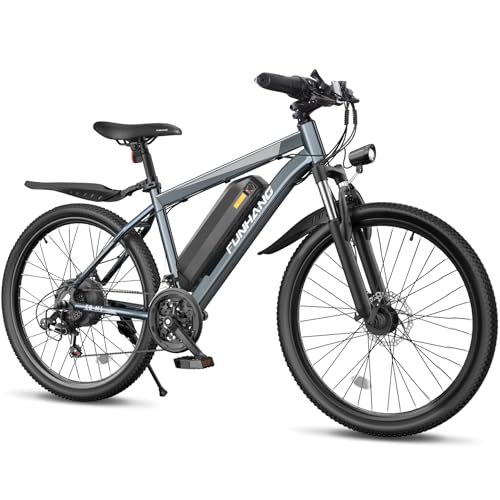
- 500W motor; 1,000W peak
- Up to 40–50 miles with pedal assist
- Fenders and front suspension included
Best For: Beginners mixing commutes with unpaved rides
Compact Commuter Pick

- Folds for compact storage
- 15–20-mile stated range
- Basket, phone holder, and lock included
Best For: Short commutes and limited storage space
Gear-Range Pick
Qlife Racer 26-Inch Electric Bike
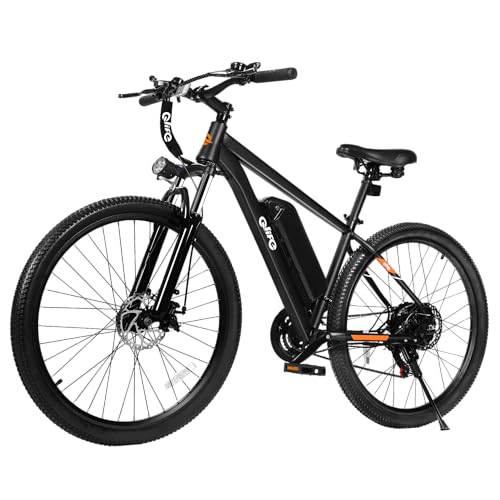
- 21-speed gearing
- Up to 40 miles with pedal assist
- Removable battery; nearly 90% assembled
Best For: Pedal-focused beginners riding varied terrain
Best with Extra Features

- Folding frame for compact storage
- Removable 48V 10Ah battery
- Three pedal-assist levels
Best For: Short urban rides and limited storage
Best Compact Fat-Tire Pick

- 16-by-3-inch fat tires
- Dual suspension for bumpy rides
- Up to 45 miles in pedal-assist mode
Best For: Teens and shorter adults riding varied surfaces
Best Full-Size Mountain-Style Pick

- 21-speed drivetrain
- 27.5-inch wheels and front suspension
- Up to 55 miles with pedal assist
Best For: Adults seeking a full-size bike for roads and trails
Best for Flexible Gearing – Qlife Racer 27.5-Inch E-Bike
Among starter e bikes, the Qlife Racer stands out for its 21-speed gearing and choice of manual, pedal-assist, throttle, and walking-assist modes. Its 27.5-inch tires and front suspension suit riders who expect a mix of paved routes and hills.
Best For: New riders who want familiar bicycle gearing alongside several ways to use electric assistance.
Pros:
- 21-speed drivetrain offers more gearing choices than the other bikes in this roundup.
- Removable 48V 10.4Ah battery is rated for up to 55 miles with pedal assist or 40 miles on throttle.
- LCD display, front light, and walking assist add day-to-day convenience.
Cons:
- Only front suspension is listed, so it may feel less cushioned on rough surfaces than a dual-suspension option.
- A rear reflector is included, but a powered rear light is not listed.
The claimed range gives it room for longer outings, though actual mileage will depend on how you ride. Choose this one if gearing flexibility matters more to you than a step-through or folding frame.
Best for Mixed Terrain – URLIFE T16 Fat-Tire E-Bike
The URLIFE T16 gives shoppers comparing starter e bikes a compact, motorcycle-inspired option with 16-by-3-inch fat tires. Its three speed levels and choice of electric, pedal-assist, or manual riding make it approachable for rides that move between streets and loose surfaces.
Best For: Adults or teens who want a compact bike for varied terrain and prefer wide tires over a traditional commuter setup.
Pros:
- Fat tires are designed for traction on sand, snow, and city streets.
- Dual suspension and an ergonomic seat help soften bumps.
- Removable 48V 13Ah battery is advertised for up to 40–60 miles in pedal-assist mode.
- Front and rear lights and dual mechanical disc brakes are included.
Cons:
- Its 16-inch wheels and motorcycle-inspired styling may not appeal to riders seeking a conventional bicycle feel.
- The 40–60-mile range claim is for pedal assist, not full-electric riding.
This is the more terrain-oriented pick of the group. Check that the compact frame and riding position suit you before choosing it for daily commuting.
Best Everyday Commuter – Funhang Step-Through E-Bike
For shoppers looking at starter e bikes for errands and commuting, the Funhang combines a low step-through frame with an adjustable stem and seat. A rear rack and full-coverage fenders make it especially practical for routine trips.
Best For: Riders who prioritize easy mounting, an adjustable fit, and built-in carrying space for everyday use.
Pros:
- Step-through frame, adjustable stem, and adjustable seat support a more personalized riding position.
- Rear rack and fenders are included for errands and wet roads.
- Five pedal-assist levels, a 7-speed drivetrain, and a walk-assist-style booster mode offer useful choices.
- Removable battery is rated for 40–50 miles with pedal assist or 20–30 miles on throttle.
Cons:
- At a stated 62.83 pounds, it could be cumbersome to carry upstairs.
- Recommended rider height is 5 feet 3 inches to 6 feet 1 inch, so fit may be limited outside that range.
Its commuter accessories and accessible frame make this a strong first-bike candidate. Plan around the shorter stated throttle range if you expect to ride without pedaling often.
Best for Small Spaces – 14-Inch Folding E-Bike
Storage is the main reason to consider this 14-inch folding model among starter e bikes. Its folding frame can fit more easily into an apartment, office, or car trunk, while its three riding modes let you switch between electric assistance and ordinary pedaling.
Best For: Riders with limited storage space and relatively short urban trips.
Pros:
- Folding frame is designed for convenient storage and transport.
- Adjustable seat and handlebars help tailor the fit.
- Removable 48V 10Ah battery can be charged separately from the bike.
- Front and rear lights and a battery display are included.
Cons:
- Advertised range is only up to 15–20 miles per charge, shorter than the claims for the other bikes here.
- Small 14-inch wheels may be less appealing for riders seeking a conventional full-size bike.
- The listed warranty is 90 days.
Choose this model for its foldability rather than long-distance capability. Its stated 20 mph top speed and short-trip range make it better suited to local travel than extended rides.
Versatile Trail Starter – Funhang 26-Inch Electric Mountain Bike
Among starter e bikes, the Funhang is a practical pick if you want one bike for commuting and unpaved rides. Its 500W motor (1,000W peak), 26-inch wheels, and front suspension give new riders room to explore beyond smooth streets.
Best For: Beginners who want throttle and pedal-assist options for commutes, leisure rides, and light trail use.
Pros:
- Removable 48V battery is rated for up to 25–30 miles on electric power or 40–50 miles with pedal assist.
- Five assist levels, seven gears, and a walk-assist-style booster mode offer flexible control.
- Includes fenders, dual disc brakes, a headlight, and UL 2849 e-bike certification.
Cons:
- Range estimates vary with rider weight, riding style, and road conditions.
- Arrives 85% assembled, so some setup is required.
The extra riding modes and included commuter equipment make it a flexible first bike, provided you’re comfortable completing assembly.
If storage space is your main concern while shopping for starter e bikes, this 14-inch model offers a folding frame for apartments, offices, and car trunks. Its 350W motor (700W peak) supports three riding modes and a stated top speed of 20 mph.
Best For: New riders with short daily trips who need a bike that folds for storage.
Pros:
- Folding frame and removable 48V 10Ah battery simplify storage and charging.
- Includes a basket, phone holder, and bike lock.
- Adjustable seat and handlebars help tailor the fit; UL 2271 and UL 2849 compliance is listed.
Cons:
- Stated range is 15–20 miles per charge, shorter than the other bikes here.
- At 25 kg, it may still take effort to carry when folded.
Choose this one for compact storage and useful included accessories rather than maximum range.
The Qlife Racer stands out among starter e bikes for its 21-speed gearing, which gives riders more pedaling choices on varied routes. It pairs a peak 1,000W motor with 26-by-2.1-inch tires and front suspension.
Best For: Beginners who expect to pedal often and want a broad gear range for hills and mixed terrain.
Pros:
- 21-speed drivetrain and manual, pedal-assist, throttle, and walking-assist modes offer multiple ways to ride.
- Removable 48V 7.8Ah battery is rated for up to 25 miles on throttle or 40 miles with pedal assist.
- LCD shows speed, battery level, and assist level; bike arrives nearly 90% assembled.
Cons:
- Rear visibility equipment is a reflector rather than a listed powered taillight.
- Some assembly remains before the first ride.
Its appeal is the combination of electric help and extensive gearing; consider whether the listed lighting setup suits where you ride.
Best with Extra Features – T5 14-Inch Folding E-Bike
Among starter e bikes, the T5 suits riders who need a compact option for paved streets and tight storage. Its 14-inch wheels and folding frame make it easier to tuck away than a full-size bike.
Best For: Short urban rides and riders with limited storage space.
Pros:
- Folding frame and removable 48V 10Ah battery simplify storage and charging.
- Three pedal-assist levels let you adjust how much help you get.
- Dual disc brakes, a basket, and a headlight add everyday utility.
Cons:
- 14-inch wheels are better suited to paved routes than rough trails.
- The stated range is up to 32 miles, so longer outings may require charging.
Choose this one for portability over trail capability. Check its folded dimensions against your intended storage spot before buying.
Best Compact Fat-Tire Pick – AVDLBIKE A13 16-Inch E-Bike
The AVDLBIKE A13 is one of the starter e bikes worth considering if you want a smaller bike with wide tires. Its 16-by-3-inch tires, suspension, and multiple riding modes offer more flexibility than a basic paved-road commuter.
Best For: Teens and shorter adults who want a compact bike for paved roads and unpaved trails.
Pros:
- Fat tires and dual suspension help absorb bumps on varied surfaces.
- Pedal-assist, electric, bike, and cruise modes provide riding options.
- Removable battery is rated for up to 45 miles in pedal-assist mode.
Cons:
- Recommended maximum rider weight is 205 pounds.
- At 61.8 pounds, it may be cumbersome to lift or carry.
The A13’s fit limits matter as much as its features: the listing positions it for riders under 70 inches tall. Confirm rider height and weight before choosing it.
Best Full-Size Mountain-Style Pick – Eskute M200 27.5-Inch E-Bike
If you prefer a conventional bike feel among starter e bikes, the Eskute M200 pairs 27.5-inch wheels with a 21-speed drivetrain. Its pedal-assist, throttle, manual, and walk modes make it adaptable to commuting and recreational rides.
Best For: Adults who want a full-size e-bike for city streets and unpaved trails.
Pros:
- 21 gears give riders options for climbs, descents, and cruising.
- Removable 48V 10.4Ah battery is rated for up to 55 miles with pedal assist.
- Front suspension, disc brakes, headlight, and LCD display cover useful riding basics.
Cons:
- Full-size, step-over frame is less storage-friendly than a folding bike.
- The stated 55-mile range applies to pedal assist; the listed throttle-mode figure is 40 miles.
This is the stronger match if you want gearing and full-size wheels rather than compact storage. Consider whether its step-over frame fits your mounting preference.
How We Picked the Best Starter E Bikes
We looked for a useful spread of frame styles, wheel sizes, and intended uses rather than treating every e-bike as interchangeable. The selection includes step-through and standard commuter frames, small folding bikes, fat-tire models, and mountain-style options. We weighed beginner-relevant details such as battery removability, claimed range, storage needs, and how easy each style is likely to be to mount and handle. Listed motor output and range are starting points for comparison, not guarantees of real-world speed or distance.
Quick Comparison: Which Style Fits Your Ride?
Everyday commuting: A full-size commuter or step-through bike is a sensible place to start if you want a familiar riding position and plan to pedal regularly. A step-through frame can make frequent stops and mounting easier.
Limited storage: A folding or compact model may suit an apartment, office, or small vehicle. Check its folded dimensions and weight before assuming it will be easy to carry.
Rougher paths and casual recreation: Mountain-style bikes offer larger wheels and more conventional bicycle handling; fat tires may add traction on loose surfaces but can add weight and rolling resistance. Neither style is automatically suitable for technical trails.
Key Buying Factors for Starter E-Bikes
Fit, Weight, and Storage
Check the stated rider-height range, standover height, maximum load, and assembled weight. A bike that feels manageable while riding can still be awkward to lift onto a rack or carry upstairs. If you choose a folding bike, confirm the folded size as well as whether it can be rolled when folded.
Battery and Real-World Range
Compare battery capacity in watt-hours when available; voltage or amp-hours alone do not tell the whole story. Hills, rider weight, tire pressure, weather, speed, and throttle use can all reduce range. A removable battery can simplify charging if the bike is stored away from an outlet. Confirm replacement-battery availability and the warranty terms before buying.
Brakes, Controls, and Legal Limits
Look for clear information on brake type, pedal-assist levels, throttle operation, and included lights or reflectors. Peak motor wattage is not the same as continuous output, and an advertised top speed does not establish an e-bike’s legal class. Check your local rules for permitted speed, throttle use, and where you can ride.
Who Should Buy Which Starter E Bikes?
For a first daily ride, start with a commuter or step-through model that fits you well and has a practical charging setup. Choose a folding bike when storage space is the deciding constraint, but prioritize manageable weight. Pick a mountain-style bike for mixed pavement and firm paths, or consider fat tires if loose surfaces are a regular part of your route. Whatever the style, verify current specifications, assembly requirements, service options, and return terms before you commit.