
The best star trackers for astrophotography make it easier to capture sharp, detailed images of the Milky Way, nebulae, and other deep-sky targets by compensating for Earth’s rotation. The right model depends on your camera weight, portability needs, polar-alignment workflow, and whether you want automated GoTo control.
This roundup compares compact camera trackers, full-featured equatorial mounts, and smart telescope alternatives so you can choose a setup that matches your experience level and shooting style.
Best 10 Star Trackers for Astrophotography Picks for 2026
Best GoTo Mount Kit
Sky-Watcher Star Adventurer GTi

- Complete kit with tripod and counterweight
- GoTo, Wi-Fi, and multiple tracking rates
- Illuminated polar scope included
Best For: Portable astrophotographers wanting automated tracking
Best Ultralight Tracker
SLIK ECH-630 Compact Star Tracker
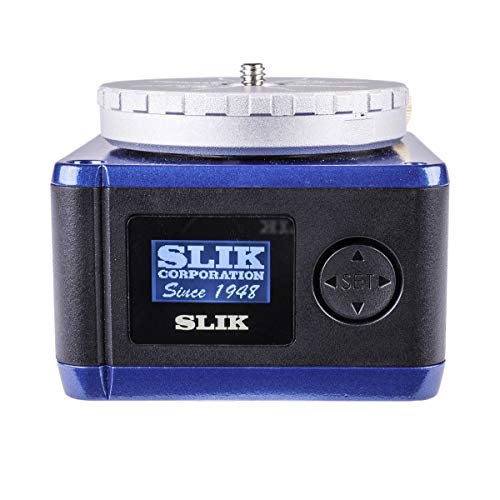
- Weighs just 22.4 ounces
- Runs up to 20 hours on four AA batteries
- Celestial, lunar, and time-lapse speeds
Best For: Backcountry photographers and lightweight travel
Best Portable Camera Mount

- Supports up to 11 pounds when balanced
- Illuminated polar scope and adjustable base
- Up to 20 hours of rechargeable operation
Best For: Mobile camera setups needing sturdy support
Best Precision Travel Tracker

- 1.4-kilogram body with 4-kilogram payload
- Claimed ±10-arcsecond periodic error
- Wi-Fi, app control, and three alignment methods
Best For: Lightweight precision imaging in the field
Best Lightweight Tracker

- 6.6-lb payload capacity
- Built-in polar scope
- Multiple tracking speeds
Best For: Portable camera-based astrophotography
Best GoTo Mount
Sky-Watcher Star Adventurer GTi

- Full GoTo operation
- Built-in Wi-Fi and polar scope
- Includes counterweight system
Best For: Automated portable equatorial tracking
Best All-in-One Smart Scope

- About 3 lb and travel-friendly
- 4K auto-tracking with Auto GOTO
- Dual lenses for sky and daytime subjects
Best For: App-controlled, beginner-friendly imaging
Best Portable Pick
Sky-Watcher Star Adventurer Mini Pro Pack

- Lightweight 1.5-pound tracking platform
- Wi-Fi SynScan app control
- Includes equatorial base and polar scope
Best For: Portable wide-field astrophotography and time-lapse shooting
Best Heavy-Duty Pick
Explore Scientific iEXOS-100-2 PMC-Eight

- Eight-CPU PMC-Eight control system
- GoTo operation through ExploreStars
- Includes mount and tripod
Best For: App-guided telescope navigation and equatorial setups
Best App-Free Design
TeSeek Equatorial Mount Star Tracker

- No app required for operation
- Supports stellar, lunar, and custom speeds
- Switches between hemispheres
Best For: Compact camera tracking and time-lapse use
Best GoTo Mount Kit – Sky-Watcher Star Adventurer GTi
For photographers seeking star trackers for astrophotography with more automation, the Sky-Watcher Star Adventurer GTi combines a GoTo mount head, tripod, pier extension, counterweight, and illuminated polar scope. Built-in Wi-Fi and multiple tracking rates add flexibility for portable setups.
Best For: Astrophotographers who want a complete, portable GoTo equatorial tracking kit.
Pros:
- Includes tripod, pier extension, counterweight bar, and 5-pound counterweight.
- GoTo functionality and built-in Wi-Fi support convenient setup and control.
- Illuminated polar scope helps with polar alignment.
Cons:
- At 26 pounds, it is less suitable for ultralight travel.
- It is not water resistant.
The GTi is a feature-rich choice when automated positioning and a supplied support system matter more than minimizing pack weight.
Best Ultralight Tracker – SLIK ECH-630 Compact Star Tracker
The SLIK ECH-630 is a compact option for photographers comparing star trackers for astrophotography on the trail. It weighs 22.4 ounces, runs for up to 20 hours on four AA batteries, and offers dedicated celestial, lunar, and time-lapse speeds.
Best For: Backcountry photographers prioritizing low weight, simple controls, and long battery runtime.
Pros:
- Compact 22.4-ounce design suits backpacking.
- Up to 20 hours of operation from four AA batteries.
- LCD menu provides simple control over multiple tracking speeds.
Cons:
- Its listed maximum weight recommendation varies by specification, so carefully check setup weight.
- The optional SMH-250 micro-adjustment head is not included.
Choose the ECH-630 when portability and straightforward operation are the main priorities, particularly for wide-ranging travel or backcountry work.
Best Portable Camera Mount – iOptron SkyGuider Pro
The iOptron SkyGuider Pro is a compact camera mount for photographers evaluating star trackers for astrophotography. Its all-metal construction, illuminated AccuAlign polar scope, adjustable base, and internal rechargeable battery are designed for stable, extended field sessions.
Best For: Mobile photographers who need a sturdy camera tracker with up to 11 pounds of balanced support.
Pros:
- All-metal body is designed to reduce vibration.
- Supports up to 11 pounds when properly balanced.
- Internal rechargeable battery provides up to 20 hours of operation at 20°C.
- Latitude and azimuth adjustments aid polar alignment.
Cons:
- The mount weighs 10.1 pounds according to the supplied details.
- It has a one-year limited warranty.
- It is not water resistant.
The SkyGuider Pro balances portability with a relatively high payload rating, making it a practical choice for camera-and-lens astrophotography when stability is important.
Best Precision Travel Tracker – OGST Single-Axis Mount
The OGST single-axis mount stands out among star trackers for astrophotography with its lightweight carbon-composite body, claimed ±10-arcsecond periodic error, and 4-kilogram payload. Travel and fixed modes, Wi-Fi control, and three polar-alignment options add versatility for field imaging.
Best For: Astrophotographers seeking a lightweight mount with precision tracking and app-based control.
Pros:
- Weighs 1.4 kilograms while supporting up to 4 kilograms of gear.
- Offers travel and fixed operating modes.
- Provides browser and app control over Wi-Fi.
- Supports optical, smartphone-based, and star-pointer alignment methods.
Cons:
- It is a single-axis mount rather than a full GoTo equatorial system.
- The supplied warranty is one year.
- The product notes do not list a tripod or counterweight system.
The OGST is compelling for users who value low carry weight and advanced control options, but the rest of the support setup may need to be selected separately.
Best Lightweight Tracker – iOptron SkyTracker Pro
The iOptron SkyTracker Pro is a straightforward option for photographers comparing star trackers for astrophotography. Its automatic right-ascension tracking, built-in polar scope, and 6.6-pound payload support make it suitable for camera-based night-sky shooting without the added complexity of a full GoTo mount.
Best For: DSLR or mirrorless photographers who want a compact, manually aligned tracker for portable astrophotography.
Pros:
- Supports payloads up to 6.6 pounds (3 kg).
- Includes a polar scope for alignment.
- Offers sidereal, half-speed, solar, lunar, and north/south tracking modes.
- Includes a padded carrying bag.
Cons:
- This is a mount-only package, so a camera setup and compatible mounting accessories are needed.
- It uses manual exposure control and has no viewfinder.
- It is not water resistant.
The SkyTracker Pro keeps the feature set focused on portable camera tracking. Its 3 kg capacity is useful for many camera-and-lens combinations, while the lack of GoTo functionality favors photographers comfortable with manual target selection and setup.
Best GoTo Mount – Sky-Watcher Star Adventurer GTi
The Sky-Watcher Star Adventurer GTi is a strong choice for photographers seeking more automation from star trackers for astrophotography. This equatorial mount combines full GoTo performance, built-in Wi-Fi, and a polar scope with a counterweight system for portable camera setups.
Best For: Astrophotographers who want computerized GoTo operation and Wi-Fi control in a relatively portable equatorial mount.
Pros:
- Provides full GoTo performance in a compact package.
- Includes built-in Wi-Fi and an illuminated polar scope.
- Comes with a counterweight bar and 5-pound counterweight.
- Supports DSLR or mirrorless camera mounting through its dovetail.
Cons:
- The DSLR or mirrorless camera is not included.
- At 6.9 kg, it is substantially heavier than the most compact camera trackers.
- Setup involves additional counterweight hardware compared with simpler trackers.
The Star Adventurer GTi is the more feature-rich pick of these camera mounts. Its GoTo system and Wi-Fi add convenience, but the heavier design and counterweight setup make it better suited to photographers who value automation over minimum pack weight.
Best All-in-One Smart Scope – Dwarf 3 Smart Telescope
The Dwarf 3 takes a different approach to star trackers for astrophotography by combining the camera, tracking system, and app-based controls in one compact smart telescope. Its dual-lens design supports deep-space and wide-angle imaging, while automatic tracking and cloud-powered processing reduce the need for manual equipment and software.
Best For: Beginners and travelers who want an app-controlled astrophotography system that also handles wildlife, landscapes, and star trails.
Pros:
- Lightweight design at about 3 pounds.
- Offers 4K auto-tracking, Auto GOTO, and AZ/EQ modes.
- Dual lenses cover telephoto subjects and wide-angle sky scenes.
- Includes a battery, carrying bag, magnetic filters, and USB-C cable.
Cons:
- Its 35 mm objective lens is more specialized than a conventional interchangeable-camera setup.
- Cloud-powered image processing uses the dedicated app and an internet-dependent workflow may be preferable.
- It is an integrated smart telescope rather than a mount for a separate DSLR or mirrorless camera.
The Dwarf 3 is the simplest option for users who want to capture images without assembling a traditional tracker and camera rig. Its automatic features and portability are appealing, while photographers seeking full control over interchangeable lenses may prefer a conventional mount.
Best Portable Pick – Sky-Watcher Star Adventurer Mini Pro Pack
For photographers looking for portable star trackers for astrophotography, the Sky-Watcher Star Adventurer Mini combines a lightweight design with smartphone control and an included equatorial base. Its 6.6-pound payload supports most DSLR and mirrorless setups, while the polar scope helps with alignment.
Best For: Portable wide-field astrophotography, Milky Way images, eclipses, and time-lapse photography.
Pros:
- Lightweight 1.5-pound tracker with a 6.6-pound payload capacity.
- Wi-Fi control through the free SynScan app.
- Includes an equatorial base, polar scope, DEC bracket, and ball-head adapter.
- Runs on two AA batteries or an external 5V mini-USB power source.
Cons:
- AA batteries and external power accessories are not included.
- Counterweights are not included.
- Its design is oriented toward wide-field and portable setups.
The Star Adventurer Mini is a practical choice when portability matters most. The included alignment accessories and app control make it a flexible option for camera-based night-sky work, particularly when traveling or shooting without a permanent setup.
Best Heavy-Duty Pick – Explore Scientific iEXOS-100-2 PMC-Eight
The Explore Scientific iEXOS-100-2 is one of the more feature-rich star trackers for astrophotography in this group, pairing a GoTo equatorial mount with a tripod and app-based control. Its PMC-Eight system uses eight independent CPUs, while belt-driven stepper motors provide quiet dual-axis operation.
Best For: Users who want app-guided GoTo operation, telescope navigation, and a full equatorial mount with tripod.
Pros:
- PMC-Eight system uses eight independent CPUs for responsive operation.
- ExploreStars app works with Apple, Android, and Windows tablets.
- Clutched RA and declination axes support smooth balancing and repositioning.
- Includes altitude control and an RA-axis sight hole for polar alignment.
Cons:
- Requires a compatible tablet for app-based GoTo control.
- Does not include a focuser.
- Its mount-and-tripod format is less compact than a small camera tracker.
This mount suits astrophotographers who prefer guided object locating over a minimalist travel tracker. The combination of tablet control, dual-axis mechanics, and balancing features makes it better aligned with telescope-oriented or more involved equatorial setups.
Best App-Free Design – TeSeek Equatorial Mount Star Tracker
The TeSeek Equatorial Mount offers a compact, open-source-inspired approach to star trackers for astrophotography. It starts tracking when powered on without requiring an app, supports stellar, lunar, and custom rotation speeds, and can also serve as a gimbal head for time-lapse photography.
Best For: Camera users who want a compact, app-free tracker with custom speeds and hemisphere switching.
Pros:
- Supports stellar speed, moon speed, and custom rotation speeds.
- Switches between Northern and Southern Hemisphere operation.
- Can function as a gimbal head for time-lapse photography.
- Powered through USB Type-C from a power bank.
Cons:
- A ball head is required to connect a camera.
- A separate 1/4-to-3/8-inch screw sleeve may be needed for many ball heads.
- No built-in battery; USB-A-to-C power cable is required, and USB-C-to-C is prohibited.
The TeSeek is appealing for photographers who value a small, direct setup without app downloads. Its speed options and hemisphere switching add flexibility, but buyers should plan for the required ball head and carefully follow the specified power and mounting requirements.
How We Picked These Star Trackers for Astrophotography
We focused on the features that have the greatest effect on real-world imaging: tracking design, payload capacity, portability, power options, alignment aids, control systems, and compatibility with common cameras and lenses. The selection includes single-axis trackers for wide-field images, more capable GoTo equatorial mounts for longer focal lengths, and app-controlled systems for users who want a simplified workflow.
We also considered whether each mount is practical for travel, how much setup it requires, and whether its included accessories create a usable starting package. Specifications can vary by configuration, so verify the stated payload and included counterweights before ordering.
Quick Comparison
| Best for | Recommended type | What to prioritize |
|---|---|---|
| Travel and wide-field landscapes | Compact camera tracker | Low weight, battery life, and simple alignment |
| Mirrorless or DSLR deep-sky imaging | Equatorial camera mount | Payload capacity, counterweight support, and tracking accuracy |
| Automated target finding | GoTo equatorial mount | Polar scope, app control, and motorized axes |
| Minimal manual setup | Smart telescope | Integrated camera, software, and automatic alignment |
Key Buying Factors for Star Trackers for Astrophotography
Payload and Balance
Choose a mount with enough capacity for your camera, lens or telescope, ball head, dovetail hardware, and counterweight. Staying comfortably below the maximum rating usually improves stability and tracking performance. A balanced setup is more important than simply selecting the mount with the largest advertised capacity.
Tracking and Alignment
Single-axis trackers are generally simpler and lighter, but equatorial mounts with more precise alignment options are better suited to longer exposures and longer lenses. Look for a polar scope, illuminated reticle, or app-assisted alignment if you plan to work beyond basic wide-angle compositions.
Portability and Power
For hiking or air travel, compare packed size, tripod requirements, battery type, and charging options. A tracker that is technically capable but difficult to carry or power may see less use than a lighter model with a faster setup.
Control and Compatibility
GoTo mounts can locate targets automatically and may support guiding, smartphone control, or computer connections. Confirm the mount’s app compatibility, connector requirements, camera interface, and tripod or head compatibility before buying.
Who Should Buy Which Star Trackers for Astrophotography?
Choose a compact tracker if you mainly use wide-angle lenses, travel frequently, or want the simplest path to longer exposures. Choose a full equatorial or GoTo mount if you use heavier camera systems, telephoto lenses, or plan to photograph faint deep-sky objects. Choose a smart telescope if automated capture and integrated processing matter more than using your existing camera and lenses.
Beginners should prioritize a complete, stable package with clear alignment tools rather than chasing the highest theoretical tracking precision. Experienced photographers may prefer a modular mount that supports counterweights, guiding, interchangeable heads, and future upgrades.