
Making fresh pasta is easier to learn when the machine fits the way you cook. A hand-crank roller gives you control over dough thickness, a stand-mixer attachment saves cranking, and an automatic machine handles more of the process.
These 10 picks cover all three approaches. The right choice depends on whether you already own a compatible mixer, how much hands-on work you enjoy, and which pasta shapes you want to make.
Best 10 Pasta Maker for Beginners Picks for 2026
Simple Mixer Setup
3-in-1 KitchenAid-Compatible Pasta Attachment

- Rolls sheets and cuts two noodle shapes.
- Eight thickness settings.
- Includes recipe guidance and cleaning brush.
Best For: KitchenAid mixer owners seeking fewer attachment swaps.
Classic Hand-Crank Pick
MARCATO Atlas150 Manual Pasta Maker

- Ten thickness settings.
- Makes sheets, fettuccine, and tagliolini.
- Hand-cranked; no mixer required.
Best For: Cooks who want traditional manual control.
Versatile Sheet Maker
Antree 3-in-1 Mixer Pasta Attachment

- 5.5-inch roller for pasta sheets.
- Eight thickness settings.
- Cuts spaghetti and fettuccine.
Best For: KitchenAid mixer owners making noodles and wrappers.
Manual Starter Kit
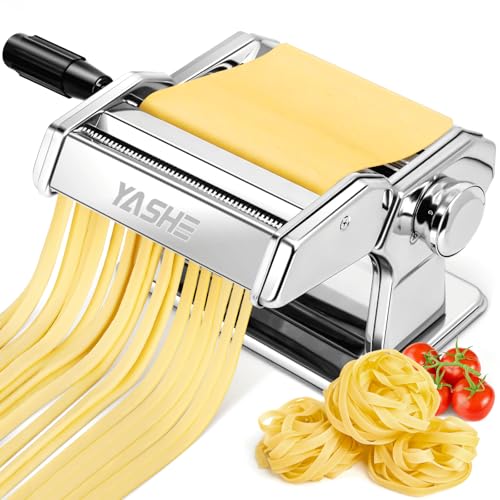
- Nine settings from 0.3 to 3 mm.
- Two cutter widths: 2 and 6.5 mm.
- Includes clamp and cleaning tools.
Best For: Beginners seeking a standalone manual kit.
Flexible Manual Pick

- Manual roller with two cutting widths
- Advertised nine thickness settings
- Blade attachment requires dry cleaning
Best For: Hands-on beginners who want to adjust pasta-sheet thickness
Automatic Pick
Philips Viva Compact Pasta Maker
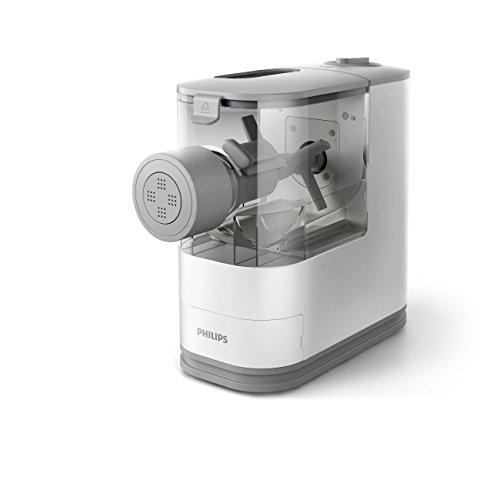
- Automatically kneads and extrudes
- Makes two to three servings in about 18 minutes
- Three included shaping discs
Best For: Beginners who want automatic pasta making in small batches
Easy-Access Manual Pick

- Nine settings from 0.3 to 2.6 mm
- Two cutting widths: 2 mm and 6.6 mm
- Dismantlable cutter for cleaning access
Best For: Hands-on beginners who value cutter-cleaning access
Most Thickness Options
Sur La Table Va Bene Manual Pasta Maker

- Nine roller settings
- Spaghetti and fettuccine cutter
- Includes crank and clamp
Best For: Beginners experimenting with sheet thickness
Best for Measured Thickness

- Seven thickness settings
- Stated 0.5–3 mm sheet range
- Two cutter widths: 2 mm and 6 mm
Best For: Cooks following recipes with specified dough thicknesses
Most Noodle Variety
CucinaPro Deluxe Pasta Maker Set
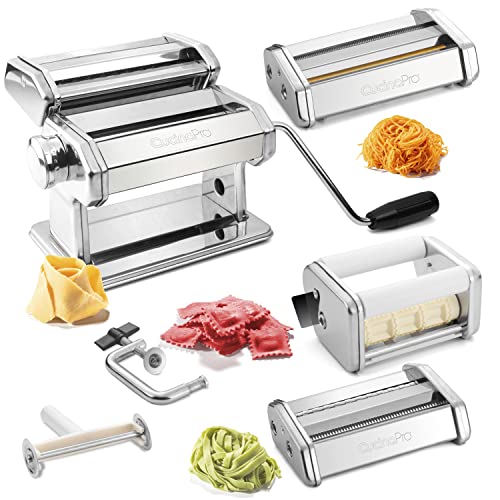
- Three interchangeable attachments
- Five listed pasta options
- Includes clamp, crank, and brush
Best For: Beginners keen to try several pasta shapes
Simple Mixer Setup – 3-in-1 KitchenAid-Compatible Pasta Attachment
If you already own a KitchenAid stand mixer, this attachment is a practical pasta maker for beginners who want to skip hand-cranking. One unit rolls dough and cuts spaghetti or fettuccine, so you do not need to swap separate attachments between steps.
Best For: KitchenAid stand mixer owners who want a compact, mixer-powered way to make pasta sheets and two noodle shapes.
Pros:
- Combines a dough roller, spaghetti cutter, and fettuccine cutter in one attachment.
- Eight thickness settings and an included manual with recipes and flour-to-water guidance.
- Includes a cleaning brush; a detachable bottom cover provides access to trapped dough.
Cons:
- Requires a compatible KitchenAid stand mixer; the attachment is not made by KitchenAid.
- Not dishwasher-safe, and it should not be soaked for long periods.
This is a convenient starting point if your mixer is already on the counter. Choose it for fewer attachment changes, while allowing time to clean the roller and cutters by hand.
MARCATO Atlas150 Manual Pasta Maker Machine-LASAGNA, FETTUCCINE & TAGLIOLINI. Made in Italy
Check Price On AmazonThe MARCATO Atlas150 is a manual pasta maker for beginners who would rather learn dough rolling by hand than rely on a stand mixer. Its crank-operated design offers 10 settings, with a listed sheet-thickness range of 0.8 to 4.8 mm.
Best For: Home cooks who want a traditional, hand-cranked machine for pasta sheets, fettuccine, and tagliolini.
Pros:
- Ten settings give you control over sheet thickness.
- Designed for lasagna sheets, fettuccine, and tagliolini.
- Made in Italy with a metal construction listed in the product details.
Cons:
- Manual cranking takes more hands-on work than a mixer-powered attachment.
- The supplied component list names the machine, crank, and manual but does not list a cleaning brush.
Pick the Atlas150 if you value the feel and control of a conventional pasta machine. It is less appealing if minimizing hands-on rolling is your main priority.
For KitchenAid stand mixer owners comparing a pasta maker for beginners, the Antree attachment combines a 5.5-inch sheet roller with spaghetti and fettuccine cutters. Its eight thickness settings also make it useful for preparing sheets for lasagna, ravioli, dumplings, and wontons.
Best For: Mixer owners who want to make both noodles and sheets for filled pasta or wrappers.
Pros:
- Roller and two cutters are combined in one compact attachment.
- Eight settings let you adjust dough thickness for different recipes.
- Includes a brush and a removable protective cover for easier access during cleaning.
Cons:
- Requires a compatible KitchenAid stand mixer.
- Its built-in cutters are limited to spaghetti and fettuccine shapes.
The Antree stands out when pasta sheets are as important to you as noodles. If you want other cut shapes, you will need another way to make them.
The YASHE is a hand-cranked pasta maker for beginners who want a standalone machine with cleanup tools included. It rolls sheets from 0.3 to 3 mm thick and provides two cutting widths, 2 mm and 6.5 mm, for different noodle styles.
Best For: Beginners without a stand mixer who want a manual roller, two cutter widths, and an included cleaning kit.
Pros:
- Nine thickness settings offer control over sheets for pasta or dumplings.
- Includes a hand crank, fixing clamp, detachable cutter, brush, and cleaning cloth.
- Stainless steel and aluminum construction, with a clamp to hold the machine in place.
Cons:
- Hand-cranking requires more effort than using a mixer-powered attachment.
- The cutter provides two stated widths; other shapes must be made from rolled sheets.
This is a well-specified manual option if you want to start making pasta without buying a mixer attachment. The included brush and cloth are useful extras, but rolling and cutting remain hands-on tasks.
Flexible Manual Pick – Sailnovo 3-in-1 Pasta Maker
If you want a hands-on pasta maker for beginners, the Sailnovo gives you a dough roller, two cutting widths, and a thickness knob for experimenting with different sheets. Its manual design keeps the process straightforward, though you will need to crank and guide the dough yourself.
Best For: Beginners who want to roll pasta sheets and try different thicknesses by hand.
Pros:
- Nine advertised roller thickness settings, with a stated sheet range of 0.5 to 3 mm.
- Cuts pasta into 2.0 mm or 4.5 mm widths.
- Includes a clamp and English manual.
Cons:
- The blade attachment must be cleaned dry, not washed or put in a dishwasher.
- The supplied details conflict on the number of settings, listing both nine and seven.
This is a practical choice if adjusting dough thickness appeals to you. Check the setting count before buying if that specification matters.
Automatic Pick – Philips Viva Compact Pasta Maker
For a pasta maker for beginners who would rather skip manual rolling, the Philips Viva automatically kneads and extrudes dough. It is designed to make two to three servings in about 18 minutes and comes with three classic shaping discs.
Best For: Beginners who prefer an automatic process for small batches of fresh pasta.
Pros:
- Automatically kneads and extrudes pasta.
- Includes spaghetti, penne, and fettuccine shaping discs.
- Has built-in storage for the discs and a space-saving design.
Cons:
- The supplied discs limit the included shapes to three options.
- Its stated batch size is two to three servings.
Choose this one when convenience matters more than hands-on control of rolled sheets. The included discs cover familiar shapes without requiring a separate hand-cranked cutter.
Easy-Access Manual Pick – 3-in-1 Pasta Maker
This manual pasta maker for beginners pairs nine thickness settings with two cutter widths, making it useful for learning how sheet thickness changes the finished pasta. Its cutter can also be dismantled to reach the cutting rollers for cleaning.
Best For: Beginners who want a hand-cranked machine with access to the cutter rollers for maintenance.
Pros:
- Nine settings cover a stated sheet-thickness range of 0.3 to 2.6 mm.
- Cuts 2 mm or 6.6 mm widths.
- Includes a hand crank, table clamp, cutter attachment, and user manual.
- Redesigned cutter can be dismantled for cleaning access.
Cons:
- Manual rolling and cutting require hands-on effort.
- Only two cutting widths are supplied.
It is a solid fit if you want to practice rolling dough and value access to the cutting rollers. The included clamp helps hold the machine in place while you crank.
Most Thickness Options – Sur La Table Va Bene Manual Pasta Maker
If you want a pasta maker for beginners with room to experiment, the Sur La Table Va Bene offers nine roller settings, numbered 0 through 9. Its detachable cutter makes spaghetti and fettuccine, while the roller produces sheets for lasagna or dumpling skins.
Best For: Beginners who want more control over dough thickness and two familiar noodle cuts.
Pros:
- Nine adjustable roller settings for working toward your preferred sheet thickness.
- Detachable shaper cuts spaghetti and fettuccine.
- Includes a removable hand crank and a countertop clamp.
Cons:
- Hand wash only.
- Manual cranking takes hands-on effort.
The clamp and included cutter make this a practical starter setup. Choose it if thickness adjustments matter more to you than extra cutting attachments.
The Nuvantee is a pasta maker for beginners who prefer clearly specified roller adjustments: its seven settings are described as producing sheets from 3 mm down to 0.5 mm. A two-width cutter adds 2 mm and 6 mm noodle options, and the roller can also prepare sheets for lasagna or dumplings.
Best For: Home cooks who want specified dough thicknesses and two noodle widths.
Pros:
- Seven thickness settings with a stated 0.5–3 mm range.
- Cuts noodles at 2 mm and 6 mm widths.
- Comes with a user manual.
Cons:
- Manual operation requires cranking.
- Limited to two listed cutter widths.
This is a straightforward choice if you want to match a dough thickness to a recipe. Check which of its two cuts suits the noodles you plan to make most often.
For a pasta maker for beginners who want to try several shapes, the CucinaPro Deluxe set includes three interchangeable attachments. The listed options are lasagnette, fettuccine, angel hair, spaghetti, and ravioli, alongside an adjustable dough roller.
Best For: Beginners interested in trying multiple pasta shapes with one manual set.
Pros:
- Three attachments offer five listed pasta options.
- Includes a hand crank, table clamp, and cleaning brush.
- Adjustable roller lets you change dough thickness.
Cons:
- Manual cranking requires hands-on work.
- Three interchangeable attachments mean more pieces to manage.
The included brush and attachments make this a versatile starter kit. It makes the most sense if you expect to use the additional shapes rather than sticking to basic ribbons.
How We Picked the Best Pasta Maker for Beginners
We focused on the decisions that matter most when you are learning: how each machine feeds and cuts dough, whether it requires equipment you already own, how much counter space it takes, and how straightforward it is to clean and store. This selection includes manual roller-and-cutter machines, attachments designed for KitchenAid stand mixers, and a compact automatic maker, so you can compare different ways of working rather than only different brands.
Product names do not tell the whole story. Before buying, check the current listing for included cutters or shaping discs, clamp or mixer compatibility, and any cleaning restrictions. Those details can vary between packages and sellers.
Quick Comparison: Which Type Fits Your Kitchen?
- Manual roller and cutter: A good starting point if you want to learn to roll sheets and control thickness yourself. Expect to turn a crank and make, rest, and feed the dough separately.
- Stand-mixer attachment: Useful if you already have a compatible KitchenAid mixer and want both hands available to guide the dough. You still prepare the dough and move sheets between roller and cutters.
- Automatic pasta maker: Worth considering if you prefer a machine that mixes and extrudes dough. It is a different process from rolling sheets, and the available shapes depend on the included discs.
Key Buying Factors for a Pasta Maker for Beginners
Start with the Pasta You Want to Make
Roller machines are well suited to sheets for lasagna and, with the appropriate cutters, ribbon or thin-strand pasta. If you want extruded shapes, look at an automatic maker and confirm which shaping discs come in the box. Do not assume every machine can produce every shape.
Check Setup and Compatibility
A manual machine needs a stable surface and a clamp that fits your countertop or table. A mixer attachment needs the right drive connection and enough room to feed long sheets. Check compatibility before choosing any accessory advertised for a particular mixer family.
Consider the Learning Curve and Cleanup
Adjustable thickness settings help you thin dough gradually, which is easier than forcing a thick piece through a narrow setting. Roller machines generally require you to prepare dough to the right consistency before feeding it; automatic machines have their own ingredient and hydration requirements. Follow the manufacturer’s cleaning instructions—many pasta-machine components should be brushed clean rather than submerged.
Look Beyond the Number of Pieces
Count the functions you will actually use, not just the attachments in the box. A secure clamp, clear thickness controls, accessible cleaning areas, and practical storage may matter more on your first few batches than an extra cutter.
Who Should Buy Which Pasta Maker for Beginners?
Choose a manual model if you want an approachable, hands-on way to learn rolled pasta without relying on a stand mixer. Choose a mixer attachment if you already own a compatible machine and expect to make sheets and cut pasta regularly. Choose an automatic maker if minimizing rolling and cranking matters more to you than learning traditional sheet-making. Whichever route you take, match the included shapes to the pasta you cook most often.