
Freshly milled flour can improve flavor, control, and flexibility in everyday baking, but the right mill depends on how often you grind, which grains you use, and how much counter space you have.
We selected 10 grain mills for daily use, covering high-speed electric models, compact grinders, and durable hand-crank mills for different household routines and budgets.
Best 10 Grain Mills for Daily Use Picks for 2026
Fast Everyday Milling

- 1000W motor mills up to 24 cups in under 10 minutes
- Stainless steel chamber resists gumming and glazing
- Compact 7.6-pound design is easy to clean
Best For: Fast home flour production and alternative flours
Traditional Craft Milling
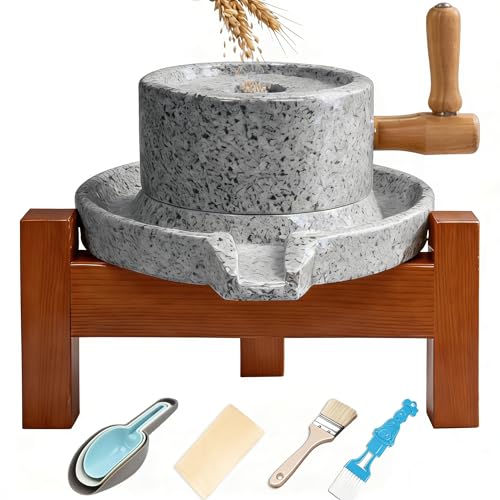
- Granite stones and red oak frame use natural materials
- Manual, electricity-free operation controls texture
- Includes brushes, scoops, filter bag, and recipe booklet
Best For: Hands-on traditional grinding and natural-material kitchens
Batch Baking Power
NutriMill Compact Electric Mill

- 1200W motor handles hard grains such as wheat
- 8-cup hopper and 12-cup canister support batches
- Nesting parts and cyclone filtration aid storage and airflow
Best For: Frequent bread bakers milling larger batches
Self-Sufficient Hand Milling

- 6-cup hopper handles larger dry-grain batches
- 12-inch flywheel supports easier hand grinding
- Can be motorized and has polished stainless steel burrs
Best For: Manual home milling with future motorization flexibility
High-Capacity Electric Mill

- 2500g stainless steel jar for larger batches
- 30–300 mesh adjustment with 36,000 RPM motor
- Overload protection and lockable lid
Best For: Large-batch home, coffee shop, and light commercial grinding
Versatile Home Electric Mill
1000g Adjustable Flour Grinder

- 1000g capacity for routine household batches
- 30–300 mesh adjustment and 0–5 minute timer
- Overheating protection and lid safety switch
Best For: Home users milling grains, herbs, spices, and coffee
Electricity-Free Manual Mill
Heavy-Duty Flywheel Grain Grinder

- Hand-crank operation works without electricity
- Three adjustable settings for coarse to fine grinding
- 2L hopper and powder-coated carbon steel body
Best For: Off-grid users and low-heat manual grinding
Powerhouse Pick

- Large 750g capacity for bigger batches
- 30–300 mesh adjustment with timer
- Overheating and lid-lock safety features
Best For: High-capacity home or professional dry-ingredient grinding
Electricity-Free Choice

- Operates without electricity
- Adjustable from fine grinding to coarse grist
- Large hopper with 1.3kg listed capacity
Best For: Off-grid, camping, survival, and manual home milling
Compact Batch Pick
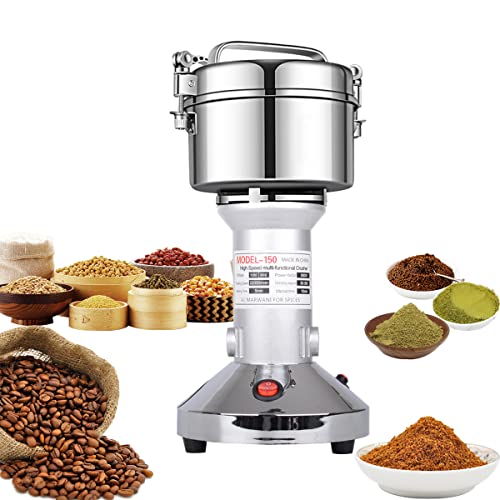
- 150g capacity for small batches
- 900W motor reaches 22,000 RPM
- 50–300 mesh fineness range
Best For: Fast, occasional small-batch kitchen grinding
Fast Everyday Milling – Compact Electric Grain Mill
For shoppers comparing grain mills for daily use, the Kitchen Mill is a compact electric option built around speed and easy cleanup. Its 1000-watt motor can produce up to 24 cups of whole-grain flour in under 10 minutes, while the stainless steel milling chamber is designed to resist gumming, jamming, and glazing.
Best For: Home cooks who want fast, convenient flour production from wheat, corn, rice, popcorn, beans, legumes, and other grains.
Pros:
- High-speed milling can produce up to 24 cups in under 10 minutes.
- Compact, lightweight design measures about 10 by 8.5 by 7.75 inches and weighs 7.6 pounds.
- Stainless steel chamber and simple brush-or-wipe cleanup support frequent use.
- Includes a see-through mill pan and supports alternative flours from rice, quinoa, and soy.
Cons:
- Corded electric operation requires access to a power outlet.
- The listed capacity is 3.8 pounds, so very large batches may require refilling.
- Its plastic-and-stainless-steel construction may appeal less to shoppers seeking an all-metal mill.
This is a practical daily-use choice when speed, small-kitchen storage, and straightforward maintenance matter most. The included warranty coverage further supports its role as a regular household appliance.
Traditional Craft Milling – Handmade Stone Grain Mill
Among grain mills for daily use, this handmade stone model takes a slower, hands-on approach. Its granite stones and unfinished red oak frame are intended for traditional home grinding without electricity, with manual control over flour texture.
Best For: Buyers who value natural materials, hands-on milling, and adjustable textures for flour, meal, spices, nut butter, and selected grains.
Pros:
- Granite stones and a red oak frame provide a natural-material construction.
- Manual operation works without electricity and allows control over fine or coarse results.
- Includes cleaning brushes, measuring scoops, a filter bag, and a recipe booklet.
- Designed for wheat, corn, rice, soybeans, spices, nuts, and other home milling tasks.
Cons:
- At 40 pounds and 16 by 16 by 12 inches, it is substantially less portable than compact electric mills.
- Manual grinding is slower and more physically demanding than powered milling.
- Its stone-and-wood design requires dedicated countertop space.
This mill suits a traditional kitchen workflow rather than high-speed batch production. Choose it if the process, natural construction, and hands-on control are more important than convenience.
Batch Baking Power – NutriMill Compact Electric Mill
For frequent bakers evaluating grain mills for daily use, the NutriMill combines a 1200-watt motor with impact milling heads designed for fine-textured bread flour. Its 8-cup hopper and 12-cup flour canister support larger batches, while the nesting design helps simplify storage.
Best For: Bread bakers who regularly mill hard wheat and want a high-capacity electric setup that stores compactly.
Pros:
- 1200-watt motor is built to mill hard grains such as wheat.
- Impact milling heads are designed for consistent, fine bread flour.
- 8-cup hopper and 12-cup canister accommodate larger milling batches.
- Nesting parts and patented cyclone air filtration support storage and airflow.
Cons:
- Electric operation requires a power source.
- The supplied notes emphasize bread flour and hard grains rather than a broad list of specialty ingredients.
- The white compact housing may not suit shoppers seeking a heavier traditional mill.
Its combination of strong motor power, bread-focused milling heads, and sizable containers makes this a good fit for regular baking routines. The nesting construction is especially useful when cabinet space is limited.
Self-Sufficient Hand Milling – Lehman's Manual Power Mill
This Lehman’s model is a substantial manual option for shoppers seeking grain mills for daily use without depending on electricity. Its 6-cup hopper, stainless steel burrs, and 12-inch flywheel are designed to make hand grinding dry grains more manageable, and the mill can also be motorized.
Best For: Home bakers and self-sufficiency-minded users who want a large-capacity manual mill for dry grains and the option to add motor power.
Pros:
- Grinds wheat, corn, rye, rice, quinoa, and small beans to pastry flour.
- Large 6-cup hopper reduces the need for frequent refilling.
- 12-inch iron V-belt flywheel provides momentum for easier hand grinding.
- Stainless steel burrs have an electrolytically polished, smooth grinding surface, and the base can be bolted down.
Cons:
- At 26 pounds and 14 inches high, it needs a sturdy, dedicated setup.
- Manual milling takes more time and effort than using an electric mill.
- The supplied notes do not specify that a motor is included; they state that the mill can be motorized.
This is a robust choice for users who prioritize independence and a generous hopper over compact storage. Its motorization option also gives it more flexibility than a strictly manual mill.
High-Capacity Electric Mill – 3600W 2500g Grain Mill
For shoppers comparing grain mills for daily use, this high-capacity electric model is designed for large batches of dry grains and other ingredients. Its 2500g stainless steel jar, 30–300 mesh range, and 36,000 RPM triple-blade system suit home kitchens, coffee shops, and light commercial work.
Best For: Large-batch flour making and users who also grind coffee, corn, beans, and spices.
Pros:
- Large 2500g stainless steel capacity for fewer batches.
- Adjustable 30–300 mesh fineness and 270° swing arm.
- Overload protection and secure buckle-lock lid.
- Includes screens, replacement blades, brushes, and other accessories.
Cons:
- Requires dry ingredients and should be operated in three-minute intervals with cooling breaks.
- Cleaning is limited to dry wiping; the unit should not be exposed to water.
- Its large footprint may be more than a small kitchen needs.
This is a practical choice when capacity and speed matter more than compact storage. Follow the recommended loading and cooling instructions to support reliable daily operation.
Versatile Home Electric Mill – 1000g Adjustable Flour Grinder
This 1000g electric grain mill is a balanced option for grain mills for daily use when you want adjustable results without the capacity of a commercial-size machine. It handles dry, non-oily ingredients such as wheat, rice, corn, oats, beans, herbs, spices, and coffee beans.
Best For: Home users who want a versatile mill with timer control, safety features, and a moderate batch size.
Pros:
- 1000g capacity fits regular home milling tasks.
- 30–300 mesh adjustment supports coarse, medium, and fine results.
- Overheating protection and lid micro-switch improve operating safety.
- Includes spare blades, carbon brushes, sieve, brush, and wrench.
Cons:
- Limited to dry, non-oily foods.
- Must be brushed and wiped rather than washed or immersed.
- High-speed operation still requires attention to the five-minute timer limit.
With its smaller capacity and broad ingredient range, this model is well suited to routine household milling. The included accessories and one-year manufacturer warranty add practical value for first-time buyers.
Electricity-Free Manual Mill – Heavy-Duty Flywheel Grain Grinder
For shoppers seeking grain mills for daily use without relying on electricity, this VEVOR hand-crank model provides a durable, low-tech alternative. Its carbon steel body, stable base, adjustable settings, and 0.53-gallon hopper make it suitable for grains, corn, coffee beans, spices, and nuts.
Best For: Users who prefer manual control, off-grid operation, and low-heat grinding for smaller-scale kitchen preparation.
Pros:
- Operates without electricity and helps limit heat buildup.
- Three fineness settings—coarse, medium, and fine—with repeat passes for finer results.
- Stable wide base helps reduce vibration during grinding.
- Powder-coated carbon steel construction resists rust and wear.
Cons:
- Manual cranking requires more physical effort than an electric mill.
- Motor is not included, despite the flywheel supporting belt and motor drive.
- Only one manual mill and user manual are included.
This mill is a strong fit for buyers prioritizing independence from electrical power and gentle, hands-on processing. Choose it over an electric model when slower manual work and a heavier 32.2-pound build are acceptable.
Powerhouse Pick – 750g Electric Grain Mill
For shoppers comparing grain mills for daily use, this 1,800W electric model offers a large 750g capacity and fast, high-speed grinding for dry, oil-free ingredients. Its adjustable 30-to-300-mesh range makes it practical for switching between coarse and fine results.
Best For: Home or professional users who want high-capacity electric grinding for grains, herbs, spices, and other dry ingredients.
Pros:
- 750g capacity and 1,800W rated power support larger batches.
- Adjustable 30-to-300-mesh fineness and a 0-to-5-minute timer offer control.
- Safety features include overheating protection and a lid micro-switch.
- Includes spare blades, carbon brushes, a sieve, cleaning brush, and wrench.
Cons:
- Limited to dry, non-oily ingredients.
- Cleaning requires brushing and wiping rather than immersing the unit.
- Its high-speed motor may be more machine than needed for occasional small batches.
This is a versatile daily-use option when capacity, speed, and adjustable powder fineness matter most. The included replacement parts and one-year manufacturer warranty add practical value.
Electricity-Free Choice – Manual Hand Grain Mill
If you are choosing grain mills for daily use without relying on electricity, this heavy-duty manual model provides adjustable grinding for flour, grist, coffee, spices, and dry grains. Its large hopper and flywheel are designed for hands-on batch preparation at home, outdoors, or in emergency settings.
Best For: Users seeking a manual mill for home kitchens, camping, survival preparation, or everyday grinding.
Pros:
- Manual operation works without electricity.
- Adjustable grinding supports fine coffee and spices as well as coarser grist.
- Large hopper and 1.3kg listed capacity suit larger manual batches.
- Stainless steel grinding discs and a removable design support cleaning.
Cons:
- At 28.6 pounds, it is substantially heavier than the electric options.
- Manual cranking requires more physical effort for regular batches.
- It is intended for dry materials and cannot grind wet, oily, or sticky ingredients.
This mill stands out for independence from power and its broad adjustment range. Choose it when durability, portability away from outlets, and manual control outweigh speed and convenience.
Compact Batch Pick – 150g High-Speed Grain Grinder
For smaller daily tasks, this compact electric grinder handles up to 150g of dry ingredients at a time and can reach 50-to-300-mesh fineness. Its 900W motor and triple-blade setup are suited to grains, seeds, flour, nuts, herbs, spices, and coffee beans.
Best For: Users who need quick, small-batch grinding in a kitchen, pantry, restaurant, or other workspace.
Pros:
- Compact 150g capacity is convenient for small quantities.
- 900W motor and 22,000 RPM speed can produce fine powder quickly.
- Triple-blade design supports grinding and powder removal.
- Overload shutoff and a lid-lock requirement provide added operating safety.
Cons:
- Operation should be limited to three minutes followed by a five-to-ten-minute rest.
- Small capacity is less suitable for large flour batches.
- The grinding container should not be rinsed directly with water.
This model is a practical space-saving choice for frequent small batches, especially when speed matters more than capacity. Its required rest periods make it less appropriate for continuous or high-volume milling.
How We Picked the Best Grain Mills for Daily Use
We focused on practical features that matter when a mill is used regularly: grinding capacity, motor or hand-crank efficiency, adjustment range, construction, cleanup, storage, and the types of dry ingredients each design can handle. The selection includes mills for wheat and other grains, plus models suited to rice, corn, oats, spices, seeds, or herbs where stated.
Because product specifications vary, check the manufacturer’s instructions before milling oily ingredients or unusually hard materials. Capacity figures also describe batch size, not necessarily the amount of flour produced in one uninterrupted session.
Quick Comparison
| Type | Best For | Main Advantage | Trade-Off |
|---|---|---|---|
| High-capacity electric | Frequent baking and large batches | Fast, consistent output | Uses counter space and electricity |
| Compact electric | Small kitchens and occasional use | Easy storage and quick setup | Smaller batches or shorter duty cycles |
| Manual stone or steel | Off-grid use and hands-on milling | No electricity required | Requires more time and effort |
| Multipurpose grinder | Small quantities of grains, seeds, or spices | Versatile ingredient handling | May not match a dedicated flour mill’s texture or capacity |
Key Buying Factors for Grain Mills for Daily Use
Electric Power and Throughput
For daily bread baking or family-size batches, prioritize a dedicated electric mill with a strong motor, efficient milling heads, and adequate cooling or duty-cycle guidance. High wattage alone does not guarantee better flour, so consider stated capacity, speed, and user instructions together.
Grinding Range and Flour Texture
Adjustable fineness is useful when you switch between coarse meal, bread flour, pastry flour, and cracked grains. Stone mills can appeal to users seeking traditional milling, while impact and blade-style grinders may offer faster processing but can produce different textures.
Capacity, Noise, and Cleanup
A larger hopper reduces refilling during big batches, but compact models are easier to store. Electric mills can be loud, especially at high speed. Look for removable parts, accessible grinding chambers, and clear cleaning instructions. Avoid washing electrical components unless the manual specifically permits it.
Build Quality and Usability
Metal housings, stainless-steel milling components, stable bases, sturdy flywheels, and comfortable handles can improve long-term usability. Manual mills should clamp or sit securely, while electric models should have dependable controls and protection against overloading.
Who Should Buy Which Grain Mills for Daily Use?
Choose a High-Capacity Electric Mill
Choose one of the larger electric options if you regularly bake bread, process several cups at a time, or want minimal physical effort. These are the most convenient Grain Mills for Daily Use when speed matters.
Choose a Compact Electric Grinder
A 150g to 1000g model may suit apartments, occasional baking, or users who also grind rice, herbs, seeds, and spices. Confirm that the model is designed for the ingredients and batch sizes you plan to use.
Choose a Manual Mill
Manual stone and hand-crank models are best for users who value independence from electricity, traditional operation, or emergency preparedness. They make sense when quieter, slower milling is acceptable and you are prepared for the physical work.
Final Buying Tip
Match the mill to your real weekly routine rather than its headline speed. For the best long-term value, prioritize suitable grain compatibility, manageable batch capacity, easy cleaning, and a construction style you will genuinely use.