
Choosing a curved monitor for graphic design beginners is less about chasing the highest refresh rate and more about finding a screen that makes layout work, color checks, and long editing sessions easier.
This roundup focuses on beginner-friendly curved displays with practical sizes, dependable panel specs, and useful features for creative workflows.
Best 10 Curved Monitor for Graphic Design Beginners Picks for 2026
Studio-Friendly Ultrawide
Dell 34 Plus USB-C Curved Monitor

- 34-inch 21:9 ultrawide layout
- 99% sRGB and 95% DCI-P3 coverage
- USB-C with up to 65W power delivery
Best For: Beginners needing a roomy, color-strong ultrawide with easy setup
Work-Ready Ultrawide

- 34-inch 3440 x 1440 ultrawide workspace
- Up to 99% sRGB with HDR10
- USB-C charging up to 65W
Best For: Beginners who need a practical ultrawide for multitasking and laptop use
Immersive Gaming Curve
Samsung Odyssey G5 34" Ultra-Wide

- 34-inch 3440 x 1440 ultrawide panel
- 1000R curve with immersive wraparound view
- 165Hz refresh rate and 1ms response time
Best For: Beginners who want a large curved screen and also play games
Starter Pick
SANSUI 27-inch Curved 120Hz USB-C Monitor
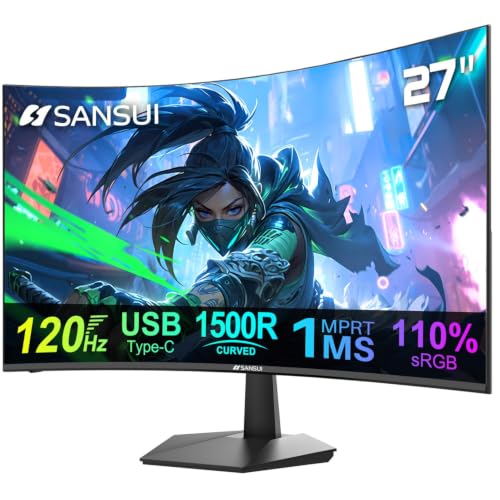
- 110% sRGB with HDR support
- USB-C, HDMI, and built-in speakers
- Anti-glare with low blue light features
Best For: Beginners wanting an easy-to-use curved monitor with decent color and simple connectivity
Premium Upgrade
LG 32GS60QC-B 32-inch QHD Curved Monitor

- QHD resolution with 99% sRGB
- Large 32-inch 1000R curved screen
- HDMI and DisplayPort connectivity
Best For: Beginners who want a bigger, sharper curved monitor with stronger color and more workspace
Value Choice
Sceptre 27-inch Curved 100Hz Monitor

- 99% sRGB with 1500R curvature
- HDMI, VGA, and built-in speakers
- Affordable 27-inch Full HD option
Best For: Budget shoppers who want a simple curved monitor for learning the basics of design
Budget-Friendly Large Screen
LG 32MR50C-B 32-Inch Curved FHD Monitor
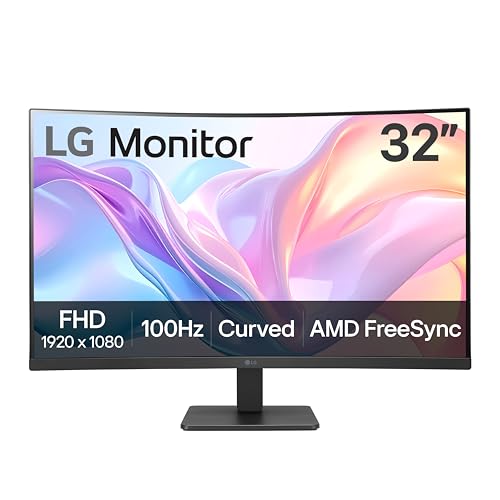
- 32-inch curved display for a roomy workspace
- Vivid VA panel with Full HD 1080p clarity
- Reader Mode and anti-glare support long sessions
Best For: Beginners who want a simple, large curved display for everyday design work
Ultrawide Creative Space
Sceptre 34-Inch Curved WQHD Ultrawide

- 3440 x 1440 WQHD resolution with 21:9 ultrawide space
- 99% sRGB supports color-conscious creative work
- Good for multitasking, editing, and tool-heavy layouts
Best For: Beginners who want an ultrawide layout for multitasking and creative productivity
Color-Packed Budget Pick
SANSUI 27-Inch Curved 240Hz FHD Monitor

- 130% sRGB and HDR for vivid-looking visuals
- 27-inch curved panel with anti-glare comfort features
- 240Hz refresh rate and 1ms response time
Best For: Beginners who want vivid color and a smooth, affordable curved monitor
Studio-Friendly Ultrawide – Dell 34 Plus USB-C Curved Monitor
If you want a curved monitor for graphic design beginners, the Dell 34 Plus is a practical place to start because it combines a 34-inch 21:9 workspace with strong color coverage and easy USB-C connectivity. The 3440 x 1440 resolution gives you room for toolbars and canvases side by side, while the 99% sRGB and 95% DCI-P3 coverage help keep colors vivid for everyday creative work.
Best For: Beginners who want an ultrawide design monitor with simple single-cable setup and solid color performance.
Pros:
- 34-inch 21:9 curved screen gives extra room for editing timelines, palettes, and reference windows.
- 99% sRGB and 95% DCI-P3 support make it stronger for color-aware beginner design work.
- USB-C with up to 65W power delivery helps reduce desk clutter.
- ComfortView Plus reduces blue light without sacrificing color accuracy.
Cons:
- VA panel is more oriented toward contrast than premium pro-grade color work.
- Not a specialized creator monitor with hardware calibration features listed.
Overall, this Dell is a balanced pick for beginners who want more screen space and dependable color without overcomplicating the setup. It looks especially appealing if you value comfort, tidy cabling, and a display that can handle both design tasks and general daily use.
Immersive Budget Curve – Samsung Odyssey G55C 32" QHD
The Samsung Odyssey G55C is a curved monitor for graphic design beginners only if your priorities lean more toward immersion and sharp QHD detail than color-accurate creative work. Its 32-inch 1000R curve and 2560 x 1440 resolution create a punchy, detailed view, but the product notes frame it primarily as a gaming monitor rather than a design-focused display.
Best For: Beginners who want a curved QHD screen for casual creative work and everyday use, especially if they also game.
Pros:
- QHD resolution provides sharp detail for layouts and on-screen text.
- 1000R curve creates a highly immersive viewing experience.
- 165Hz refresh rate and 1ms response time make motion very smooth.
- FreeSync and Eye Saver Mode add comfort for long sessions.
Cons:
- Color coverage is not positioned as a creator-first strength in the supplied notes.
- Glossy screen finish may be less ideal in bright workspaces.
- Gaming-first feature set is more than many design beginners need.
This is a solid choice if you want a fast, immersive curved monitor that can also handle entry-level design tasks, but it is not the most obvious pick for color-centric beginner graphic design. For learners who split time between creative work and gaming, it offers a lot of screen appeal.
Work-Ready Ultrawide – LG 34WR55QK-B Curved Monitor
If you are shopping for a curved monitor for graphic design beginners, the LG 34WR55QK-B stands out as a practical ultrawide with good workspace flexibility. The 34-inch 3440 x 1440 panel, 99% sRGB coverage, and USB-C with up to 65W power delivery make it a strong everyday option for arranging design apps, browser references, and project files on one screen.
Best For: Beginners who want an ultrawide curved monitor for multitasking, learning design, and tidy laptop connectivity.
Pros:
- 34-inch 21:9 WQHD screen gives room for multiple windows and creative layouts.
- Up to 99% sRGB and HDR10 support help with vibrant general-purpose visual work.
- USB-C with 65W power delivery keeps laptop setups simple.
- OnScreen Control and Picture-by-Picture make organizing workspaces easier.
Cons:
- 5ms response time is less snappy than faster gaming-style monitors.
- VA panel is better suited to everyday productivity than top-tier color-critical work.
For beginners, this LG hits a smart middle ground: enough size for productive design practice, enough color support for visual work, and enough convenience to stay easy to live with. It is especially appealing if you want a curved monitor that supports both learning and multitasking.
Immersive Gaming Curve – Samsung Odyssey G5 34" Ultra-Wide
The Samsung Odyssey G5 is a curved monitor for graphic design beginners mainly if you want a big, immersive screen and do not mind that it is built first as a gaming display. Its 34-inch ultrawide 3440 x 1440 panel and 1000R curve are great for spreading out windows, while the 165Hz refresh rate and 1ms response time keep motion smooth.
Best For: Beginners who prioritize immersion and screen space over design-specific color features.
Pros:
- 34-inch ultrawide QHD screen gives strong room for editing and multitasking.
- 1000R curve creates a very wraparound viewing experience.
- 165Hz refresh rate and 1ms response time deliver smooth motion.
- FreeSync Premium and HDR10 add value for mixed use.
Cons:
- Color gamut is listed at 72%, which is less compelling for design-focused buyers.
- Gaming-oriented tuning makes it less specialized for beginner graphic design.
- Brightness is modest compared with some productivity-first options.
As a beginner design monitor, this Samsung makes the most sense if you want a large curved canvas and also plan to use it for games or entertainment. It is more about immersion than creator-grade accuracy, but the ultrawide format still works well for simple design workflows.
Starter Pick – SANSUI 27-inch Curved 120Hz USB-C Monitor
If you want a curved monitor for graphic design beginners that also works well for everyday desk use, the SANSUI 27-inch gives you a friendly mix of size, color coverage, and simple connectivity. Its 110% sRGB rating, anti-glare screen, and USB-C input make it a practical entry-level option for learning color work, editing photos, or using a laptop with fewer cables.
Best For: Beginners who want a budget-friendly curved monitor with decent color coverage, USB-C convenience, and built-in speakers for a clean workspace.
Pros:
- 110% sRGB and HDR support help give beginner design work more vibrant color handling.
- USB-C, HDMI, and built-in speakers keep the setup simple and tidy.
- 120Hz refresh rate and 1ms response time also make it smooth for general use.
- Anti-glare, anti-flicker, and low blue light features add comfort for longer sessions.
Cons:
- FHD 1080p resolution is less detailed than QHD options for precision-heavy design.
- The built-in speakers are only 2W each, so they are basic for media use.
- It is more of an all-purpose monitor than a color-critical creator display.
This is a sensible starter pick if you are new to design and want a curved screen that is easy to connect, comfortable to use, and more color-capable than a basic office monitor.
Premium Upgrade – LG 32GS60QC-B 32-inch QHD Curved Monitor
For a curved monitor for graphic design beginners who want extra room to grow, the LG 32GS60QC-B brings a larger 32-inch QHD panel with a 1000R curve and strong color specs. While it is built as a gaming monitor, its 2560 x 1440 resolution, 99% sRGB gamut, and borderless design can also support cleaner layouts and sharper on-screen detail for design learning.
Best For: Beginners who want a larger, sharper curved display with strong color coverage and a premium feel.
Pros:
- QHD 2560 x 1440 resolution gives more workspace and finer detail than 1080p screens.
- 99% sRGB and HDR10 help deliver rich, vivid color expression.
- 1000R curve and 32-inch size create a more immersive, roomy viewing experience.
- Two HDMI ports plus DisplayPort offer flexible connectivity.
Cons:
- It is primarily a gaming monitor, so it may include features you will not need for design-only work.
- There is no USB-C input listed.
- The steep 1000R curve may feel dramatic if you prefer a flatter reference display.
This is the strongest step-up choice here if you want a more detailed, more spacious curved monitor and do not mind that it is positioned mainly for gaming.
Value Choice – Sceptre 27-inch Curved 100Hz Monitor
If you are shopping for a curved monitor for graphic design beginners on a tighter budget, the Sceptre 27-inch is a straightforward option with a 1500R curve, 99% sRGB, and a simple Full HD panel. It is not the sharpest monitor in this roundup, but it offers useful color coverage, built-in speakers, and multiple ports for a low-friction starter setup.
Best For: Budget-minded beginners who want a basic curved monitor with good sRGB coverage and simple connectivity.
Pros:
- 99% sRGB gives it more useful color range than many basic entry-level monitors.
- 1500R curved design and 27-inch size make it comfortable for general desktop use.
- Two HDMI ports and VGA offer broad compatibility with older and newer devices.
- Built-in speakers and Adaptive Sync add convenience for everyday use.
Cons:
- 1080p resolution is modest for detailed graphic work.
- 75Hz refresh and 8ms response are slower than the other options here.
- Brightness is limited at 250 nits, so it is less flexible in bright rooms.
This model is best seen as a value-first starter screen: good enough for learning design basics, easy to connect, and priced for shoppers who care more about affordability than maximum sharpness.
Budget-Friendly Large Screen – LG 32MR50C-B 32-Inch Curved FHD Monitor
If you want a curved monitor for graphic design beginners that gives you plenty of screen space without getting complicated, this LG 32-inch model is a practical starting point. The Full HD VA panel offers vivid color and clarity for everyday design work, while Reader Mode and flicker-free viewing help make longer editing sessions more comfortable.
Best For: Beginners who want a simple, large curved display for basic design tasks and everyday creative work.
Pros:
- 32-inch curved screen gives a roomy workspace for layouts and multitasking.
- FHD VA panel delivers vibrant color and clear 1080p visuals.
- Reader Mode and anti-glare features support comfortable long sessions.
- 100Hz refresh rate keeps motion smooth for general use.
Cons:
- 1080p resolution is modest for detailed design compared with QHD options.
- Color specs are less focused on pro-level editing than the wider-gamut monitors here.
Overall, this LG is a straightforward curved monitor that favors comfort, size, and ease of use over advanced creative specs. For beginners building skills on a budget, it is an approachable choice for design, browsing, and everyday productivity.
Ultrawide Creative Space – Sceptre 34-Inch Curved WQHD Ultrawide
For a curved monitor for graphic design beginners who want more room to spread out tools, the Sceptre 34-inch ultrawide is a strong step up. Its 3440 x 1440 WQHD resolution and 21:9 aspect ratio give you noticeably more workspace than a standard 1080p monitor, and the 99% sRGB spec is a useful fit for color-conscious creative tasks.
Best For: Beginners who want an ultrawide layout for multitasking, photo/video editing, and creative productivity.
Pros:
- 3440 x 1440 WQHD resolution adds detail over standard 1080p displays.
- 21:9 ultrawide format provides more horizontal space for tools and timelines.
- 99% sRGB is appealing for color-focused beginner design work.
- 1ms response time and FreeSync Premium add smooth performance.
Cons:
- 34-inch ultrawide size takes more desk space than a standard monitor.
- Built-in speakers are included, but audio quality is not the main selling point.
This model stands out if you want a more flexible workspace for design apps, reference images, and side-by-side windows. It is especially attractive for beginners who expect to grow into a larger, more productive setup.
Color-Packed Budget Pick – SANSUI 27-Inch Curved 240Hz FHD Monitor
The SANSUI 27-inch is a curved monitor for graphic design beginners who care about color punch and want a budget-friendly screen for mixed creative and entertainment use. It pairs a 130% sRGB gamut with 4000:1 contrast and HDR, so it can bring strong visual impact to design previews, even though the panel is still limited to Full HD resolution.
Best For: Beginners who want vivid color and a smooth, affordable curved monitor for casual creative work.
Pros:
- 130% sRGB and DCI-P3 95% promise wide, vivid color coverage.
- 4000:1 contrast and HDR can make images look punchy and dynamic.
- 1ms response time and 240Hz refresh rate provide very smooth motion.
- Anti-glare, low blue light, and flicker-free features improve comfort.
Cons:
- 1080p resolution is not as detailed as higher-resolution design monitors.
- No built-in speakers, so you will need external audio if needed.
As a starter curved display, this SANSUI leans hard into color and motion performance. It makes sense if you want a lively all-around monitor now and can live with the lower 1080p sharpness for design work.
How We Picked the Best Curved Monitor for Graphic Design Beginners
We focused on curved monitors that make sense for newcomers learning design basics: solid resolution, comfortable screen sizes, decent color coverage, and features that help with everyday editing. For a Curved Monitor for Graphic Design Beginners, usability matters more than flashy gaming specs, so we favored models that can handle creative apps without feeling overcomplicated.
Quick Comparison
In this group, ultrawide 34-inch models are the best choice for multitasking and timeline-heavy work, while 27-inch and 32-inch displays are easier to fit on a desk and usually cost less. QHD models offer a sharper working area than Full HD, which can make text, vectors, and UI elements look cleaner. If you want a straightforward starter setup, prioritize resolution and color coverage before refresh rate.
Key Buying Factors for Curved Monitor for Graphic Design Beginners
Resolution and Screen Size
For design work, 27-inch 1080p is acceptable for a tight budget, but 32-inch QHD or 34-inch ultrawide WQHD is a better long-term choice. Higher resolution gives you more workspace and sharper detail when reviewing typography and image edges.
Color Performance
Look for strong sRGB coverage, preferably around 99% sRGB or higher, since beginners need predictable color for web design, social graphics, and content creation. HDR labels are nice to have, but they are not a substitute for accurate base color.
Curve and Panel Type
A gentler curve can feel more natural for general design, while a stronger 1000R curve is immersive but may feel distracting if your work involves precise flat layouts. VA panels often deliver better contrast, but IPS-style color consistency can be easier for beginner creatives if available.
Connectivity and Ergonomics
USB-C, DisplayPort, and multiple HDMI inputs make setup easier, especially if you switch between a laptop and desktop. Adjustable tilt and VESA compatibility are helpful for getting the monitor positioned correctly.
Who Should Buy Which Curved Monitor for Graphic Design Beginners?
If you want the easiest all-around starting point, choose a 32-inch QHD or 34-inch ultrawide monitor with good sRGB coverage. If your desk is smaller or your budget is tighter, a 27-inch curved monitor can still work well for learning tools and practicing basic design. If you also game or edit video, a higher refresh rate model can be a bonus, but it should not outrank resolution and color quality for creative use.
For most beginners, the best curved monitor is the one that balances sharpness, color, and comfort without paying for performance features you will not use every day.