
Choosing a cnc controller for beginners is easier when you focus on setup speed, compatibility, and the level of control you actually need. The right unit should match your machine, your software, and your comfort with wiring and tuning.
This roundup highlights beginner-friendly options for everything from small desktop routers to more advanced offline systems, so you can start with confidence and avoid buying a controller that outgrows your skill level too quickly.
Best 8 Cnc Controller for Beginners Picks for 2026
Best for Offline Control
CNCTOPBAOS 3-Axis GRBL Control Board

- Offline SD/TF card control for computer-free operation
- GRBL 1.1F support with common CNC software compatibility
- Adds E-stop, probe, and limit switch ports for safer setup
Best For: New CNC users with small GRBL routers who want offline control and added safety features.
Best Starter Kit
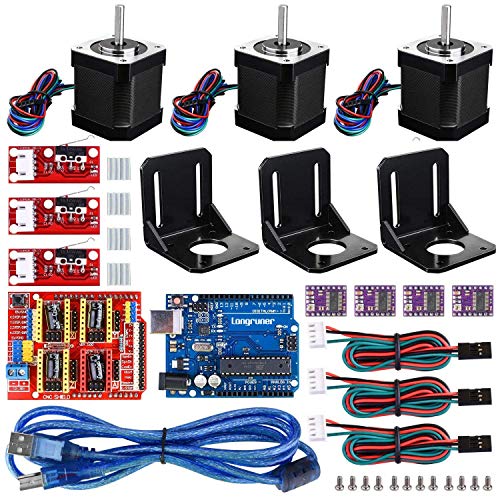
- All-in-one Arduino-compatible starter bundle
- Supports GRBL and multiple driver types
- Good for small DIY CNC learning projects
Best For: New builders who want a bundled Arduino CNC starter kit with room to learn.
Best for Easy Setup
Longer RAY5 10W Laser Engraver

- Easy setup with included tools and guides
- Wi‑Fi, USB, app, TF card, and offline control
- Large 400 x 400mm workspace with 10W power
Best For: New users who want a beginner-friendly laser engraver with flexible control and a roomy work area.
Best for Offline GRBL Control
4-Axis 7-Inch USB CNC Controller

- 7-inch IPS touchscreen for clearer offline control
- USB/CH340 compatibility with many GRBL routers
- 4-axis support with preview, macros, and settings
Best For: Beginners using GRBL desktop CNC routers who want standalone touchscreen control without a computer.
Best Offline Stand-Alone Pick
CNCTOPBAOS 4 Axis DDCSV4.1 CNC Controller
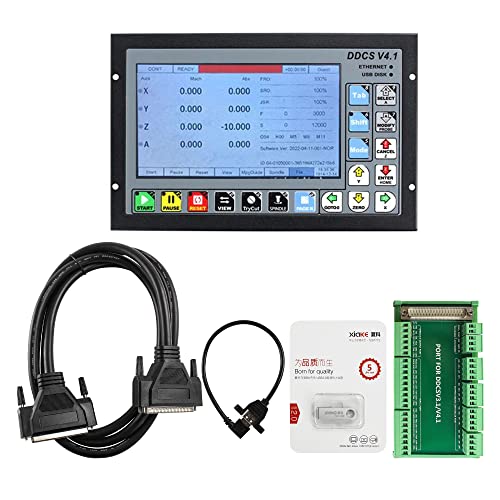
- Offline stand-alone operation reduces PC dependence
- 4-axis support for routers, lathes, and mills
- Works with stepper and servo motor systems
Best For: Beginners who want a dedicated CNC controller without relying on Mach3 or a computer.
Best for Mach3 4-Axis Beginners
CNCTOPBAOS 4-Axis USB Mach3 Board

- USB Mach3 control for Windows-based CNC setups
- 4-axis linkage with 100KHz pulse output
- Includes spindle, relay, and input connections
Best For: New Mach3 users building a small 4-axis router, engraver, or milling machine.
Best for Offline CNC Control
CNCTOPBAOS DDCSV4.1 4-Axis Controller
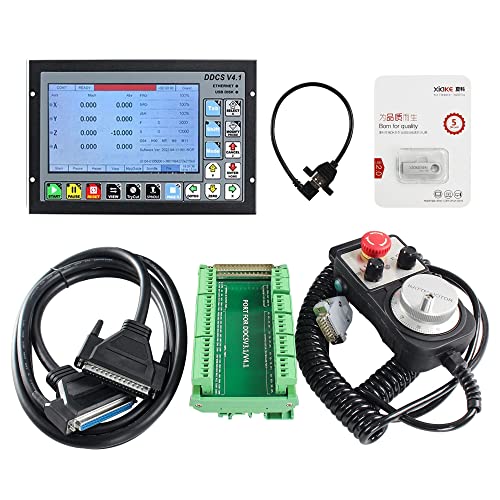
- Runs CNC jobs offline from USB or Ethernet
- 4-axis 500kHz motion control with interpolation
- 7-inch screen and MPG handwheel support
Best For: New users who want a stand-alone CNC controller with offline file handling and gantry support.
Best Offline Standalone Pick
CNCTOPBAOS DDCSV3.1 4-Axis Controller

- Standalone offline operation with no PC required
- 4-axis control with 100 PPR MPG handwheel and E-stop
- USB G-code loading and 500KHz pulse output
Best For: Beginners who want a self-contained controller for routers, engravers, and light CNC machines.
Best for Offline Control – CNCTOPBAOS 3-Axis GRBL Control Board
If you want a practical cnc controller for beginners, this CNCTOPBAOS board is appealing because it combines a GRBL 1.1F control board with an offline controller, so you can run simple jobs without relying on a computer the whole time. It also adds useful beginner-friendly ports for an emergency stop, probe, and limit switches, which makes basic setup and safer operation easier to manage.
Best For: New CNC users with 3018-style or similar GRBL machines who want offline control and straightforward wiring.
Pros:
- Offline controller lets you run jobs from SD/TF card without a PC
- Supports common GRBL software like Candle and Universal Gcode Sender
- Includes ports for E-stop, probe, and XYZ limit switches
- Works with popular 1310, 1610-PRO, and 3018-series machines
Cons:
- Wiring and setup may still feel technical for complete beginners
- Best suited to smaller desktop CNC routers rather than larger machines
- Some spindle and motor limits may restrict higher-power builds
This is a strong pick if you want a cnc controller for beginners that adds safety features and offline convenience, but still expects you to be comfortable with GRBL-style hardware setup. It is especially useful for learning on a compact router while keeping the workflow simple and affordable.
Best Starter Kit – Longruner GRBL CNC Shield Kit
If you want a cnc controller for beginners that bundles the core parts in one box, this Longruner kit is a practical starting point. It combines a GRBL CNC shield, RAMPS 1.4 board, endstops, driver options, and Nema17 support, so you can build and learn without sourcing every component separately.
Best For: New builders who want an all-in-one Arduino-compatible CNC starter kit for small DIY machines and hands-on learning.
Pros:
- Includes multiple essential CNC and motion-control parts in one package
- Compatible with Arduino IDE and GRBL setups
- DRV8825/A4988 driver support gives you flexible motor setup options
- Good fit for experimenting, prototyping, and small DIY builds
Cons:
- Not a plug-and-play system for total beginners
- Learning curve is still present if you are new to GRBL and wiring
- Better for hobby projects than polished, production-ready machines
This is a solid value pick if you need a cnc controller for beginners and want to understand the full control stack instead of buying a preassembled system. It is most appealing to tinkerers who are comfortable following wiring diagrams and want a broad starter bundle.
Best for Easy Setup – Longer RAY5 10W Laser Engraver
If you want a capable starter machine that feels less intimidating than many workshop tools, the Longer RAY5 is a practical pick for a cnc controller for beginners. It combines app, Wi‑Fi, USB, and TF card control with an offline mode, so you can learn at your own pace without being tied to a computer.
Best For: New users who want a straightforward laser engraver with flexible control options, a large work area, and easy assembly.
Pros:
- Simple setup with included tools, guides, and 3.5-inch touchscreen control
- Flexible connectivity: Wi‑Fi, USB, app, and TF card with offline support
- Strong performance for its class, including 10W output and fast engraving speeds
- Large 400 x 400mm work area for bigger projects
Cons:
- Laser engravers still require safety gear and careful supervision
- Overkill if you only need very small, occasional engraving jobs
The RAY5 stands out for beginners who want room to grow, but it is still a laser engraver rather than a traditional CNC mill. For a cnc controller for beginners, the mix of offline control, touch navigation, and solid documentation makes it easier to learn without giving up useful capability.
Best for Offline GRBL Control – 4-Axis 7-Inch USB CNC Controller
If you want a cnc controller for beginners that lets you run a GRBL router without keeping a computer tethered to the machine, this 7-inch offline controller is a practical step up. It uses USB communication, supports common desktop GRBL setups, and adds a larger touchscreen for easier navigation than small handheld units.
Best For: Beginners with GRBL-based desktop CNC routers who want standalone touchscreen control, simple workflow, and broader machine compatibility.
Pros:
- Large 7-inch IPS touchscreen makes menus, toolpaths, and settings easier to read.
- USB connection and CH340 support improve compatibility with many GRBL routers.
- 4-axis support, macros, preview, and parameter controls cover most everyday tasks.
- Aluminum shell and included accessories make setup feel more complete out of the box.
Cons:
- Only works with compatible GRBL-based systems, so it is not a universal controller.
- Advanced features may still take some learning for true first-time users.
- Heavier and larger than compact offline controllers.
Overall, this is a strong cnc controller for beginners who want a more guided, standalone way to operate a desktop CNC router. The bigger screen and offline workflow make it easier to manage jobs, while the GRBL focus keeps it aimed at the most common hobbyist machines.
Best Offline Stand-Alone Pick – CNCTOPBAOS 4 Axis DDCSV4.1 CNC Controller
If you want a cnc controller for beginners that does not rely on a full PC setup, the CNCTOPBAOS DDCSV4.1 is built around offline operation and straightforward machine control. It replaces the need for Mach3-based control in many hobby and small-shop setups, making it a practical option for users who want a dedicated panel-style controller for routers, lathes, and milling machines.
Best For: Beginners who want a stand-alone controller for CNC routers and similar machines without tying their workflow to a computer.
Pros:
- Offline stand-alone design helps simplify the setup process
- Supports 4-axis control for a wide range of hobby and shop machines
- Compatible with stepper and servo motor systems
- Useful as a Mach3 replacement for more self-contained operation
Cons:
- More controller than a true plug-and-play beginner starter kit
- Learning curve may still be steep for first-time CNC users
- Best suited to users who already have compatible machine hardware
As a cnc controller for beginners, this model makes the most sense if you value an offline interface and want to keep the control system separate from a PC. It is a strong fit for hands-on learners who are ready to move beyond basic entry-level software control and into a more dedicated CNC workflow.
Best for Mach3 4-Axis Beginners – CNCTOPBAOS 4-Axis USB Mach3 Board
If you want a cnc controller for beginners that keeps the setup focused on standard Mach3 workflows, this CNCTOPBAOS 4-axis USB motion control card is a practical place to start. It works with Windows-based PCs, supports four-axis linkage, and adds common CNC control features like 0-10V spindle control, relay outputs, and limit/probe inputs.
Best For: New Mach3 users who need a straightforward 4-axis USB controller for a router, engraver, or small milling machine.
Pros:
- Simple USB connection works with Mach3 on common Windows PCs
- Supports 4-axis linkage with 100KHz pulse output for stepper or servo drives
- Includes useful I/O: 0-10V spindle speed control, relay outputs, and 4 inputs
Cons:
- Requires Mach3 software and a compatible Windows setup
- Needs an external 24V DC supply for stable operation
- Not an all-in-one beginner package if you still need drives, wiring, and enclosure parts
For a cnc controller for beginners who specifically want to learn Mach3 control on a 4-axis machine, this board covers the core functions without adding a lot of extra complexity. It is best suited to users who are comfortable following wiring diagrams and setting up external power and motor drivers.
Best for Offline CNC Control – CNCTOPBAOS DDCSV4.1 4-Axis Controller
If you want a cnc controller for beginners that can run a machine without keeping a computer tethered to it, the CNCTOPBAOS DDCSV4.1 is a practical starting point. It combines a built-in screen, offline G-code loading, and support for routers, lathes, and engraving or milling setups, while still offering enough I/O and motion options to grow into more capable projects.
Best For: New users who want a stand-alone CNC controller with offline file handling, basic gantry support, and flexible 4-axis control.
Pros:
- Offline operation via USB flash drive or Ethernet file transfer
- 4-axis, 500kHz output with linear and circular interpolation support
- 17-key, 7-inch display makes on-machine control straightforward
- Supports gantry slaving and analog 0-10V spindle control
Cons:
- Requires separate 24V power for both IO and controller system
- Better suited to users comfortable with CNC wiring and setup
- Not as beginner-friendly as a plug-and-play desktop controller
For a cnc controller for beginners who want independence from a PC and room to expand, this DDCSV4.1 hits a strong middle ground. It is more industrial than entry-level hobby gear, but its offline workflow and clear front-panel controls make it a sensible first controller for serious DIY builders.
Best Offline Standalone Pick – CNCTOPBAOS DDCSV3.1 4-Axis Controller
If you want a cnc controller for beginners that does not require a PC, the CNCTOPBAOS DDCSV3.1 keeps things straightforward with a built-in 5-inch screen, basic key controls, and USB G-code loading. It is a practical option for small CNC routers, engravers, and mills where standalone operation and simple jogging matter more than advanced software workflows.
Best For: Beginners who want a standalone 4-axis controller with manual handwheel control for routers, engravers, and light-duty CNC machines.
Pros:
- Runs offline without a computer for simpler day-to-day use
- Supports 4-axis control plus a 100 PPR MPG handwheel with E-stop
- 500KHz pulse output and 0-10V spindle control for broad machine compatibility
- USB G-code input with no practical file size limit for larger jobs
Cons:
- Requires two 24V DC power supplies, so setup is less plug-and-play
- Physical controls and menu navigation may take time to learn
- Not ideal if you specifically want PC-based Mach3-style control
Overall, the DDCSV3.1 is a strong fit if you need a cnc controller for beginners that prioritizes standalone operation, manual control, and compatibility across common CNC machine types. It is less about software flexibility and more about giving you a direct, self-contained control box that is easier to manage on the machine.
How We Picked the Best Cnc Controller for Beginners
We prioritized beginner-friendly controls that balance ease of setup with room to grow. That means clear software support, sensible hardware compatibility, reliable motion handling, and features that reduce frustration during first-time installation.
We also considered whether each option is better for small hobby machines, laser engravers, or more advanced multi-axis projects. For a Cnc Controller for Beginners, the best choice is usually the one that minimizes configuration time and matches the machine you already own.
Quick Comparison
As a rule of thumb, GRBL boards and offline controllers are the simplest entry points for most users. USB Mach3-style cards can work well if you are already comfortable with PC-based control, while stand-alone systems suit builders who want a dedicated interface and less dependence on a computer.
Smaller 3-axis setups are typically easier to learn, while 4-axis systems offer more flexibility for rotary or expanded motion projects. If you are new to CNC, do not overbuy for features you will not use right away.
Key Buying Factors for Cnc Controller for Beginners
Compatibility
Check whether the controller supports your firmware, software, motors, drivers, and power requirements. A promising feature set is useless if it does not fit your machine’s architecture.
Control Style
USB-connected boards are convenient, but offline controllers can be simpler for shop use because they reduce dependence on a tethered PC. If you prefer a tablet-like interface, a touch-screen controller may feel more intuitive.
Axis Count
Three-axis systems are enough for many beginners. Choose 4-axis only if you know you need it for rotary work or future expansion.
Setup Difficulty
Look for clear documentation, straightforward wiring, and common community support. For a first Cnc Controller for Beginners, good instructions often matter more than advanced performance specs.
Workflow Needs
Think about whether you will run a router, engraver, or hybrid project. Some controllers are better suited to light-duty desktop machines, while others are built for more robust motion control and standalone operation.
Who Should Buy Which Cnc Controller for Beginners?
If you want the simplest path into CNC, start with a GRBL-based board or an offline controller for a small machine. If you expect to experiment with more advanced builds, a 4-axis stand-alone system may offer more long-term flexibility.
For users who already rely on Mach3 workflows, a compatible motion control card can be a practical upgrade. The best Cnc Controller for Beginners is the one that fits your current machine, your software comfort level, and how hands-on you want to be during setup.