
If you’re enthusiastic to explore astrophotography but feel overwhelmed by the options, you’re not alone. Finding the right camera tracker can make all the difference in capturing stunning night sky images. With user-friendly features and portability, these devices can elevate your photography game. So, what should you look for in a camera tracker? Let’s uncover the best options that can help you achieve professional-quality results.
Sky-Watcher Star Adventurer 2i Pro Pack – Motorized DSLR Night Sky Tracker
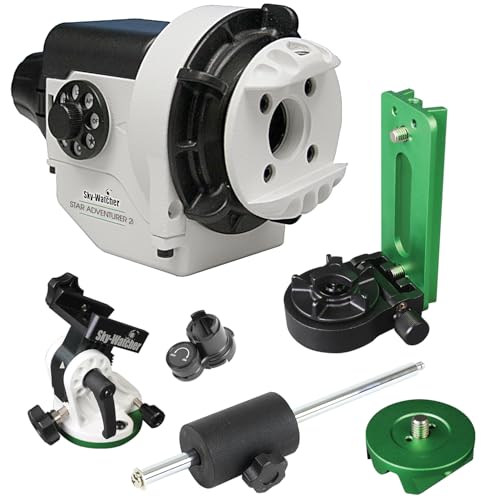
If you’re a budding astrophotographer looking for a reliable and user-friendly option, the Sky-Watcher Star Adventurer 2i Pro Pack is an excellent choice. Weighing just 2.4 pounds, this motorized DSLR night sky tracker supports payloads up to 11 pounds, making it versatile for various cameras. Its portable design allows you to capture stunning images of the Milky Way or eclipses. With Wi-Fi capability, you can control it via your smartphone. Setup is straightforward, and with good polar alignment, you’ll enjoy accurate tracking for long exposures. This investment, priced around $500-$550, opens up a world of astrophotography possibilities.
Best For: The Sky-Watcher Star Adventurer 2i Pro Pack is best for budding astrophotographers seeking a portable and user-friendly tracking solution for capturing night sky images.
Pros:
- Portable and lightweight, making it easy to transport for outdoor astrophotography sessions.
- Wi-Fi capability allows for convenient smartphone control and monitoring via the SAM Console app.
- Straightforward setup and user-friendly design suitable for photographers of all skill levels.
Cons:
- Polar alignment can be challenging for beginners, requiring practice and patience.
- Some users report erratic motor behavior, which may require maintenance or adjustments.
- Additional accessories, like a sturdy tripod and counterweights, can increase the overall investment cost.
SVBONY SV105 Telescope Camera for Astrophotography Beginners
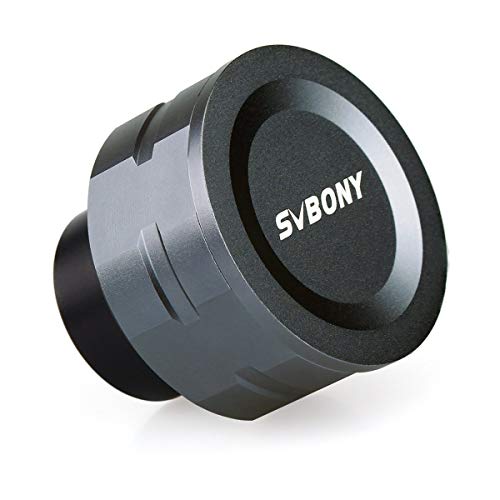
The SVBONY SV105 Telescope Camera is an excellent choice for beginners enthusiastic to plunge into astrophotography, thanks to its user-friendly plug-and-play setup. Weighing just 9.6 ounces and measuring 7.28 x 5.31 x 2.95 inches, it’s incredibly portable. With a 1/2.8 IMX307 sensor, you can capture up to 30 frames per second at 1920×1080 resolution, making it perfect for lunar and planetary photography. While it’s compatible with various operating systems, users may need dedicated software like SharpCap for ideal results. Overall, it’s a great introduction to astrophotography, though post-processing can enhance your images considerably.
Best For: Beginners in astrophotography looking for an affordable and user-friendly introduction to capturing lunar and planetary images.
Pros:
- Easy plug-and-play setup with no drivers required.
- Good image quality for lunar and planetary photography, especially at 1920×1080 resolution.
- Lightweight and portable design, making it convenient for outdoor use.
Cons:
- Limited compatibility with software on certain operating systems, primarily designed for Windows.
- Not recommended for deep-sky astrophotography without significant skill and persistence.
- Some users may experience a learning curve regarding focus, tracking, and post-processing techniques.
Sky-Watcher Star Adventurer GTI Mount Kit for Astrophotography

Designed for both beginners and experienced astrophotographers, the Sky-Watcher Star Adventurer GTi Mount Kit stands out with its user-friendly GoTo EQ tracking mount. This kit includes everything you need, like a counterweight, tripod, and polar scope with illuminator. With a payload capacity of 11 pounds, it easily supports DSLR cameras and small telescopes. You’ll appreciate the precision alignment and multiple tracking rates, allowing unguided exposures of up to 3 minutes. Despite some weight and design critiques, user reviews praise its effective tracking and portability. Overall, it’s a solid investment for capturing stunning celestial images.
Best For: The Sky-Watcher Star Adventurer GTi Mount Kit is best for both beginners and experienced astrophotographers seeking a portable and user-friendly astrophotography solution.
Pros:
- User-friendly GoTo EQ tracking mount simplifies the astrophotography experience.
- Payload capacity of 11 pounds supports a variety of equipment, including DSLR cameras and small telescopes.
- Effective tracking capabilities allow for unguided exposures of up to 3 minutes, making it suitable for capturing celestial images.
Cons:
- Heavier than some predecessor models, which may affect portability for some users.
- Design flaws reported, including issues with the polar scope cover and balance for loads over 10 pounds.
- Potential difficulties with app-based polar alignment and software installation for object databases.
Sky-Watcher Star Adventurer Photo Kit for Nightscapes and Time-lapse
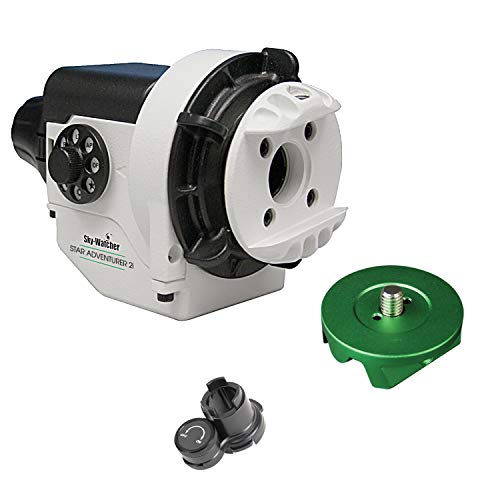
For those just starting their journey into astrophotography, the Sky-Watcher Star Adventurer Photo Kit offers an excellent blend of portability and ease of use. This motorized DSLR mount allows you to capture stunning nightscapes and time-lapse videos with precision. Weighing just 2.4 pounds, it’s easy to transport and supports a payload of up to 11 pounds. With features like Wi-Fi control via the SAM Console app and a built-in illuminated polar finderscope, aligning your shots becomes a breeze. Although some users note software challenges, overall, it’s a fantastic choice for beginners keen to explore the cosmos.
Best For: Beginners in astrophotography seeking a portable and user-friendly tracking mount for nightscapes and time-lapse videos.
Pros:
- Easy to transport at just 2.4 pounds, making it ideal for outdoor photography.
- Wi-Fi control through the SAM Console app enhances usability and alignment accuracy.
- Built-in illuminated polar finderscope simplifies the alignment process for capturing celestial objects.
Cons:
- Some users experience challenges with the software usability and documentation.
- Additional accessories, like equatorial wedges, may be needed for optimal performance.
- Reports of missing components upon delivery can lead to frustration.
iOptron SkyGuider Pro Camera Mount Full Package

If you’re stepping into the world of astrophotography, the iOptron SkyGuider Pro Camera Mount Full Package is an excellent choice, especially for those using heavier camera and lens setups. Weighing just 10.14 lbs, it supports up to 11 lbs, ensuring stability with its all-metal construction. You’ll appreciate the smooth, silent tracking and quick slew for precise framing. The built-in rechargeable battery lasts up to 20 hours, perfect for long nights. With an easy setup and a polar scope for alignment, this mount encourages experimentation with various camera combinations, making it a top pick for beginners aiming for stunning night sky captures.
Best For: Beginners and enthusiasts looking to capture stunning astrophotography images with heavier camera and lens setups.
Pros:
- Stability: All-metal construction minimizes vibrations, ensuring steady shots.
- Silent Tracking: Smooth camera motion is ideal for long-term exposures without noise interference.
- User-Friendly: Quick setup and integrated polar scope make it easy for newcomers to get started.
Cons:
- Tripod Requirement: A heavy-duty tripod is necessary for optimal stability, which may not be included.
- Learning Curve: Familiarity with polar alignment and balancing is needed for best performance.
- Weight Limitations: While it supports up to 11 lbs, heavier setups may require additional counterweights for balance.
SVBONY SV205 Astrophotography Camera

The SVBONY SV205 Astrophotography Camera stands out as an excellent choice for beginners enthusiastic to immerse themselves in astrophotography. With its 7.05MP IMX415 CMOS sensor, you’ll capture stunning images of the moon and planets. Plus, the plug-and-play setup makes it easy to use, even for novices. It connects via USB 3.0, ensuring smooth operation with compatible software like SharpCap. While it excels at planetary imaging, keep in mind it’s not ideal for deep-sky objects. Users appreciate its value for money, although some mention limitations in color tonalities and focusing. Overall, it’s a fantastic starting point for your astrophotography journey!
Best For: Beginners interested in astrophotography who want an easy-to-use camera for capturing images of the moon and planets.
Pros:
- Plug-and-play setup for quick and easy use without driver installation.
- Good value for money, especially for planetary imaging.
- Compact and lightweight design, making it portable for outdoor use.
Cons:
- Not suitable for deep-sky imaging, limiting its versatility.
- Users report issues with color tonalities and focusing.
- The camera may drain power quickly, requiring additional power solutions for extended use.
Sky-Watcher Star Adventurer 2i Astro Pack – Motorized DSLR Night Sky Tracker

A standout feature of the Sky-Watcher Star Adventurer 2i Astro Pack is its built-in AA battery compartment, providing up to 72 hours of power for extended night sky photography. Weighing just 2.4 lbs, it supports up to 11 lbs of gear, making it perfect for portable setups. The illuminated polar finderscope helps you align accurately with Polaris, while the rugged brass and aluminum gears guarantee smooth tracking. Ideal for capturing the Milky Way and other celestial wonders, this tracker transforms any tripod into a powerful astrophotography tool. Just remember to calibrate carefully for the best results!
Best For: Photographers of all skill levels looking to enhance their astrophotography capabilities with a portable and motorized night sky tracker.
Pros:
- Supports a payload of up to 11 lbs, allowing for versatile gear options.
- Built-in AA battery compartment provides up to 72 hours of power for extended use.
- Illuminated polar finderscope facilitates accurate alignment with Polaris, enhancing tracking precision.
Cons:
- Calibration can be complex, requiring careful setup for optimal performance.
- Users report tracking issues, particularly when using app mode, stressing the need for verification before extended use.
- Not entirely user-friendly, with some users experiencing challenges in setup and configuration.
SVBONY SV305C Astrophotography Camera

Designed specifically for beginners in astrophotography, the SVBONY SV305C Astrophotography Camera offers an impressive 2.1MP IMX662 sensor that delivers stunning images of planets and the moon. Its removable UV IR cut glass and 1.25 electronic telescope eyepiece enhance your imaging experience. With low readout noise and modes for both high-speed planetary and long-exposure sky imaging, you’ll capture incredible details. Set up is a breeze with compatible software like SharpCap, and the built-in 128MB DDRIII image buffer helps during USB transfers. While some users reported USB connectivity issues, the overall feedback highlights its excellent price-to-performance ratio for budding astrophotographers.
Best For: Beginners in astrophotography looking for an affordable and user-friendly camera to capture planetary and lunar images.
Pros:
- Excellent price-to-performance ratio, making it accessible for newcomers.
- Easy setup with compatibility for popular astrophotography software like SharpCap.
- High-quality images with low readout noise and customizable features for enhanced imaging.
Cons:
- Some users experience USB connectivity issues, particularly with hubs.
- Reports of camera instability and software-related problems may affect user experience.
- Occasional issues with hot pixels and inconsistent performance during use.
Telescope Camera 4K, 8MP Astrophotography Camera

Looking for a user-friendly option to explore astrophotography? The Telescope Camera 4K, 8MP is perfect for you. With an impressive 8MP sensor, it captures stunning 1080P video at 60fps and 4K at 30fps, ensuring true color reproduction even in low light. Weighing only 110g, its ultralight design won’t upset your telescope’s balance. Plus, it’s plug-and-play, compatible with Windows, macOS, and Linux, and fits standard 1.25 telescope focusers. The included IR-cut filter reduces light pollution, making it ideal for lunar and planetary captures. Stream live celestial views effortlessly with UVC-compatible software and immerse yourself in deep-sky exploration today!
Best For: Amateur astronomers and astrophotography enthusiasts looking for a lightweight and user-friendly camera to capture stunning celestial images and videos.
Pros:
- High-quality imaging: 8MP sensor provides excellent detail with true color reproduction, even in low-light conditions.
- Lightweight design: At just 110g, it maintains telescope balance, making it easy to handle during extended use.
- Plug-and-play compatibility: Works seamlessly with Windows, macOS, and Linux without the need for additional drivers.
Cons:
- Limited to standard focusers: Only compatible with 1.25 telescope focusers, which may not suit all telescope setups.
- 4K recording at lower frame rate: Limited to 30fps for 4K video, which may not appeal to users seeking higher frame rates for smoother motion.
- Dependent on software: Requires UVC-compatible software for live streaming, which may add complexity for some users.
The Beginners Guide to Astrophotography

If you’re just starting your journey into astrophotography, “Camera Trackers for Astrophotography Beginners” is an excellent choice for you. This thorough guide covers everything from the best times to shoot to essential technical settings, making it perfect for beginners. You’ll find clear explanations without jargon, ensuring you grasp the concepts easily. The Kindle version is especially accessible, retaining valuable visuals for your iPhone. Many users have successfully captured stunning night sky photos using the recommended techniques. With its high-quality content, this book will serve as a lifelong resource, helping you elevate your astrophotography skills over time.
Best For: Beginners in astrophotography looking for a comprehensive guide to enhance their skills and knowledge.
Pros:
- Comprehensive content covering essential techniques, best times, and technical settings for night sky photography.
- Accessible format with a Kindle version that retains visuals, making it easy to read on mobile devices.
- Effective teaching with clear explanations and practical tips that have helped users successfully capture stunning astrophotography images.
Cons:
- Physical book issues with glossy pages and faint print, making it difficult to read for some users.
- Appendix A table quality suffers from low resolution on various devices, hindering usability.
- Limited coverage on telescope astrophotography, leaving some users wanting more information on that topic.
Factors to Consider When Choosing a Camera Tracker for Astrophotography Beginners
When you’re picking a camera tracker for astrophotography, you’ll want to take into account factors like portability and weight to guarantee it’s easy to carry around. Think about the payload capacity as well, since it needs to support your camera and lens setup. Also, look for features that enhance tracking accuracy and compatibility with your accessories to make your experience smoother.
Portability and Weight
Choosing a camera tracker for astrophotography involves weighing portability and weight, as these factors greatly impact your shooting experience. Lighter models, around 2.4 pounds, make it easier to transport your gear to remote locations. A compact design, like those measuring approximately 5.24 x 4.53 x 3.74 inches, simplifies setup and allows quick adjustments as celestial objects move across the sky. Opt for trackers that can seamlessly integrate with existing tripods, enhancing versatility without adding bulk. Also, consider the construction material; rugged materials like aluminum provide durability while keeping the weight manageable. Balancing these aspects guarantees you can enjoy your astrophotography sessions without being weighed down by cumbersome equipment.
Payload Capacity Considerations
Understanding payload capacity is essential for ensuring your camera tracker performs well during astrophotography sessions. The payload capacity indicates the maximum weight the tracker can support, which is vital for stability during long exposures. Most beginner-friendly trackers handle between 8 to 11 pounds, perfect for standard DSLR or mirrorless cameras with typical lenses. Don’t forget to factor in additional accessories like counterweights and battery packs, as they contribute to the total weight. Balancing your equipment within the specified capacity helps prevent tracking issues and motor strain, leading to clearer images without star trails. It’s wise to choose a tracker with a slightly higher payload capacity than your current setup, allowing for future upgrades or added gear.
Ease of Setup
While selecting a camera tracker for astrophotography, you’ll want to prioritize ease of setup to guarantee a smooth shooting experience. Look for models with straightforward instructions and polar alignment aids that help you get ready quickly. Plug-and-play capabilities are a must, as they reduce the hassle of driver installation or complex configurations. A user-friendly app or software for smartphone control can make adjustments easier during setup, enhancing your overall experience. Additionally, choose lightweight, portable trackers that are easier to handle, especially for beginners. Finally, devices with clear visual aids or illuminated polar finderscopes will assist in accurate alignment, ensuring effective tracking and improved image quality.
Tracking Accuracy Features
When it comes to astrophotography, tracking accuracy is vital for capturing stunning long-exposure images without star trails. To achieve this, precise polar alignment is key. Many camera trackers come equipped with built-in polar scopes or illuminated finders to help you align accurately with celestial objects like Polaris. However, the effectiveness of tracking can vary by model; some allow unguided exposures for several minutes while still preserving detail. It’s also important to balance your camera setup properly to avoid backlash and guarantee consistent tracking performance. Finally, look for features like multiple tracking rates (sidereal, lunar, solar), as these can greatly enhance versatility and accuracy for different astrophotographic needs and conditions.
Compatibility With Accessories
Achieving precise tracking accuracy is just one piece of the astrophotography puzzle; compatibility with accessories plays a significant role in your setup’s overall functionality. When selecting a camera tracker, make sure it has standard connection types like a 1.25-inch eyepiece or USB ports. This compatibility will let you easily connect various telescopes and cameras. Aim for trackers that support multiple payloads, up to 11 pounds, so you can use heavier gear without sacrificing stability. Look for modular designs that integrate well with your existing tripods and equipment. Additionally, consider trackers with features like autoguider ports and smartphone control apps for enhanced usability. Finally, research recommended accessories like counterweights and remote shutter releases to optimize your camera tracker’s performance.
User Experience Level**
Choosing the right camera tracker can feel overwhelming for beginners, but focusing on user experience can simplify the process. Look for trackers that prioritize ease of use, featuring straightforward setups and clear instructions. Built-in polar finderscopes and Wi-Fi controls can make alignment and tracking much easier. Mastering how to balance your camera and weight is essential for peak performance, so choose a model that helps you learn this skill. Many entry-level systems are compatible with smartphones and user-friendly apps, letting you control settings without needing extensive technical know-how. Finally, opt for trackers that support various payloads and integrate easily with your existing tripod, giving you the flexibility to experiment with different setups as you progress in your astrophotography journey.