
Moving beyond a beginner instrument means looking for better tone, comfortable playability, reliable construction, and features that support consistent practice. The best acoustic guitars for intermediate players should feel rewarding now while giving you room to keep improving.
This roundup compares 10 carefully selected models, from traditional solid-top acoustics to stage-ready acoustic-electric guitars and affordable full-size kits. Use the guide below to narrow your choice by playing style, body shape, electronics, and budget.
Best 10 Acoustic Guitars for Intermediate Players Picks for 2026
Best Stage-Ready Value
Washburn WA90CE Acoustic-Electric Guitar
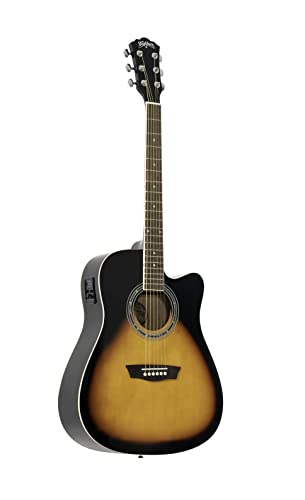
- Cutaway upper-fret access
- Built-in tuner and preamp
- Balanced dreadnought sound
Best For: Home, campfire, and amplified playing
Best Comfortable Electric-Style Feel
Yamaha APX600M Acoustic-Electric Guitar

- Slim cutaway body
- 25-inch scale with narrow spacing
- SRT pickup and SYSTEM65 preamp
Best For: Fingerstyle, lead playing, and live practice
Best Comfortable All-Arounder
Fender Redondo CE Acoustic Guitar

- Comfortable C-shaped neck
- Cutaway and built-in tuner
- Piezo acoustic-electric system
Best For: Comfortable practice and basic performance
Versatile Plug-In Choice

- Acoustic-electric design with undersaddle pickup
- Meranti construction with Nandu fingerboard
- Natural finish and 6-string configuration
Best For: Intermediate players needing an acoustic guitar that can plug in
Balanced Solid-Top Favorite

- Solid Sitka spruce top
- Rosewood back, sides, and fingerboard
- Dreadnought body with balanced sound profile
Best For: Intermediate players wanting a traditional, full-size acoustic
Stage-Ready Strumming Option

- Acoustic-electric dreadnought design
- Built-in preamp and 1/4-inch output
- Bold tone with strong low end
Best For: Intermediate strummers who need amplification for performances
Stage-Ready Comfort

- Fishman pickup and preamp enable amplification
- Solid spruce top with sapele back and sides
- Short scale and slim-taper neck promote comfort
Best For: Comfortable acoustic-electric playing and amplified performances
Complete Plug-In Package
Donner 41-Inch Acoustic-Electric

- Full-size cutaway design supports versatile playing
- Passive pickup offers volume and tone controls
- Includes amp, tuner, capo, cable, and accessories
Best For: Players wanting a ready-to-perform acoustic-electric bundle
Best Traditional Tone – Yamaha FG800 Solid Top Acoustic Guitar
The Yamaha FG800 is a straightforward choice for acoustic guitars for intermediate players who want a traditional dreadnought with an emphasis on unplugged playing. Its solid Sitka spruce top, nato back and sides, rosewood fingerboard, and adjustable truss rod provide a practical foundation for continued skill development.
Best For: Intermediate players focused on strumming, practice, and natural acoustic tone.
Pros:
- Solid Sitka spruce top for a resonant acoustic voice
- Dreadnought body supports full projection for strumming
- Adjustable truss rod allows neck relief adjustments
- Die-cast tuners and rosewood bridge and fingerboard
Cons:
- No pickup or onboard electronics for amplified performance
- Dreadnought size may feel less compact than a thin-body design
The FG800 keeps the feature set focused on core acoustic playing. Choose it if you do not need amplification and prefer a traditional full-size dreadnought format.
Best Stage-Ready Value – Washburn WA90CE Acoustic-Electric Guitar
Washburn Vintage Series 6 String Acoustic-Electric Guitar, Right, Tobacco Sunburst (WA90CEVSB)
Check Price On AmazonThe Washburn WA90CE is a versatile option among acoustic guitars for intermediate players who want one instrument for home practice, campfires, and amplified playing. Its dreadnought body, cutaway, and Barcus Berry LX4 preamp provide a practical combination of acoustic presence and stage-ready controls.
Best For: Players who want a balanced dreadnought with a cutaway, tuner, and onboard amplification.
Pros:
- Cutaway improves access to the uppermost frets
- Barcus Berry LX4 preamp includes tuner and 3-band EQ
- Balanced sound profile suits strumming, blues, and bluegrass flat picking
- Chrome die-cast tuners and adjustable bridge
Cons:
- Linden top and body materials are less focused on solid-top construction
- Dreadnought body may be larger than some players prefer
The WA90CE makes sense when flexibility matters more than a purely acoustic setup. The built-in tuner and tone controls reduce the need for extra stage equipment.
Best Comfortable Electric-Style Feel – Yamaha APX600M Acoustic-Electric Guitar
The Yamaha APX600M stands out among acoustic guitars for intermediate players who value comfort, lead access, and amplification. Its slim APX cutaway body, 25-inch scale, narrow string spacing, and SRT pickup system make it especially practical for extended practice and live use.
Best For: Players transitioning from electric guitar or prioritizing fingerstyle, upper-fret access, and plugged-in performance.
Pros:
- Thin-line cutaway body supports comfortable extended playing
- 25-inch scale and narrow 10 mm string spacing ease chord transitions
- SRT piezo pickup and SYSTEM65 preamp include tuner and EQ controls
- Deeper body design and non-scalloped X-bracing support projection
Cons:
- Thin body may provide less of the feel of a traditional dreadnought
- Back material is listed as ABS rather than a conventional wood back
The APX600M is a strong fit when playability and electronics are central to your decision. Its compact profile and control layout make it well suited to practice rooms and performance setups.
Best Comfortable All-Arounder – Fender Redondo CE Acoustic Guitar
The Fender California Debut Redondo CE is a practical choice among acoustic guitars for intermediate players seeking a comfortable acoustic-electric instrument with a familiar 25.5-inch scale. Its cutaway body, C-shaped neck, built-in tuner, and piezo pickup support both continued practice and basic performance use.
Best For: Players who want comfortable handling, easy tuning, and a durable all-laminate acoustic-electric design.
Pros:
- Cutaway body improves access to higher frets
- C-shaped neck and lightweight laminate body promote comfortable playing
- Built-in tuner and under-saddle piezo pickup simplify performance setup
- Includes a 30-day Fender Play subscription and two-year warranty
Cons:
- All-laminate construction may offer less solid-top character than the Yamaha FG800
- Supplied notes position it primarily as a starter-friendly instrument
The Redondo CE is appealing if ease of use and built-in performance features are higher priorities than a solid-top acoustic specification. The included learning subscription adds useful support for structured practice.
Versatile Plug-In Choice – Ibanez PF54CE
For players comparing acoustic guitars for intermediate players, the Ibanez PF54CE offers a practical acoustic-electric setup in a natural finish. Its Meranti construction, Nandu fingerboard, and built-in undersaddle pickup make it suited to both unplugged practice and amplified playing.
Best For: Intermediate players who want an acoustic-electric guitar for practice, performance, and straightforward amplification.
Pros:
- Built-in Ibanez undersaddle pickup for amplified use
- Meranti top, back, sides, and neck provide consistent material construction
- Nandu fingerboard and bridge complement the natural-finish design
- Relatively manageable 6.9-pound listed weight
Cons:
- Right-hand orientation only according to the supplied details
- Meranti construction may be less appealing to players specifically seeking a solid-wood top
The PF54CE is a sensible option when amplification matters as much as unplugged playing. Its feature set is focused and practical, making it a flexible choice for an intermediate guitarist who wants one instrument for home use and connected setups.
Balanced Solid-Top Favorite – Yamaha FG830
The Yamaha FG830 is a strong contender among acoustic guitars for intermediate players who prioritize traditional unplugged tone. It combines a solid Sitka spruce top with rosewood back and sides, a dreadnought body, and an adjustable truss rod for ongoing setup flexibility.
Best For: Intermediate players seeking a full-size dreadnought with a balanced sound profile and solid-top construction.
Pros:
- Solid Sitka spruce top
- Rosewood back, sides, fingerboard, and bridge
- Balanced sound profile in a dreadnought body
- Adjustable truss rod and diecast tuners
Cons:
- No acoustic-electric pickup is listed in the supplied specifications
- Dreadnought dimensions may feel substantial for players seeking a smaller body
- Listed for right-handed players
The FG830 focuses on core acoustic performance rather than onboard electronics. Its solid spruce top, balanced profile, and adjustable truss rod give advancing players a dependable platform for continued practice and development.
Stage-Ready Strumming Option – Takamine GD11MCE
For intermediate players shopping acoustic guitars for intermediate players, the Takamine GD11MCE combines a dreadnought body with acoustic-electric functionality. Its sapele construction and built-in preamp system support a bold strumming tone with strong low end, while the 1/4-inch jack is ready for connection to amplification.
Best For: Intermediate strummers who want a bold dreadnought voice and built-in electronics for amplified playing.
Pros:
- Built-in preamp system with a 1/4-inch output jack
- Sapele top, back, and sides for a consistent all-sapele body design
- Bold strumming tone with strong low end
- Mahogany neck and Indian laurel fingerboard
Cons:
- Right-hand orientation only according to the supplied details
- The strong low end may be less suited to players seeking a lighter, more balanced strumming character
- Dreadnought dimensions may not suit players who prefer compact bodies
The GD11MCE is oriented toward players who want a substantial strumming sound without giving up the convenience of onboard electronics. It makes the most sense for an intermediate guitarist who expects to move between practice sessions and amplified performances.
Travel-Ready Stability – Donner Rising-G1 Carbon X
For players comparing acoustic guitars for intermediate players, the Donner Rising-G1 stands out as a compact 38-inch option built for consistent use in changing conditions. Its carbon-fiber top and mahogany construction aim to combine tuning stability with a warm acoustic character, while the included accessories make it ready for practice or travel.
Best For: Intermediate players who want a portable guitar kit with weather-resistant construction and included essentials.
Pros:
- Carbon-fiber top is designed to provide stable performance across temperature and humidity changes.
- Mahogany back, sides, and neck support a warm, resonant sound.
- Compact 38-inch design includes a case, strap, strings, and picks.
- HPL fretboard and rounded, anti-oxidation frets are intended for comfortable playing.
Cons:
- Its 38-inch format may offer less projection than a full-size acoustic.
- Right-handed configuration limits suitability for left-handed players.
The Rising-G1 is a practical choice when portability and tuning stability matter as much as tone. Its included kit and comfortable appointments make it especially useful for intermediate players who regularly practice away from home.
Stage-Ready Comfort – Fender Malibu Player
The Fender Malibu Player is a strong contender among acoustic guitars for intermediate players who want a distinctive, compact body with built-in amplification. Its solid spruce top, short 24.1-inch scale, slim-taper neck, and Fishman preamp system make it suited to comfortable playing and plugged-in performance.
Best For: Intermediate players seeking a comfortable parlor-sized acoustic-electric guitar for home use, songwriting, and amplified playing.
Pros:
- Fender-exclusive Malibu body shape offers a distinctive parlor-sized format.
- Fishman pickup and preamp system supports amplified use through the 1/4-inch output.
- Solid spruce top with laminated sapele back and sides provides a traditional acoustic build.
- Slim-taper C-shaped neck and 24.1-inch scale can feel approachable for varied playing styles.
Cons:
- Its parlor-sized body may not deliver the same low-end presence as a larger full-size guitar.
- The listed configuration is right-handed only.
With its comfortable scale and onboard Fishman electronics, the Malibu Player balances easy handling with stage-friendly flexibility. It is a particularly appealing fit for players who want an acoustic that can move naturally from practice to amplification.
Complete Plug-In Package – Donner 41-Inch Acoustic-Electric
For intermediate players who need a full-size instrument and a complete performance setup, this Donner acoustic-electric guitar offers a practical all-in-one package. The 41-inch cutaway body combines a spruce-and-mahogany build with a built-in pickup, while the included amplifier and accessories reduce the need for separate purchases.
Best For: Intermediate players who want a full-size cutaway guitar with basic amplification and a broad accessory bundle.
Pros:
- Built-in passive pickup includes volume and tone controls for amplified use.
- Full-size 41-inch cutaway provides access to higher frets and a versatile playing format.
- Spruce top and mahogany construction are designed for a bright, balanced tone with full mids.
- Bundle includes an amplifier, tuner, capo, cable, strap, picks, strings, and wrench.
Cons:
- The 5,000-gram listed weight may make it less convenient to carry than a smaller guitar.
- The included passive pickup may offer less onboard flexibility than a more advanced preamp system.
- Color and wood-grain appearance may vary with lighting.
This Donner package is compelling for players who want one purchase to cover practice, accessories, and basic amplified performance. Its full-size cutaway design and balanced sound profile make it a versatile option for developing players.
How We Picked the Best Acoustic Guitars for Intermediate Players
We focused on instruments that offer a meaningful step up from basic starter guitars without making advanced features unnecessarily difficult to use. The selection includes solid-top models for fuller acoustic tone, acoustic-electric guitars for amplification, and a few value-oriented kits for players who need useful accessories included.
We also considered body comfort, neck accessibility, construction details, brand reputation, versatility, and the needs of players who practice at home, perform casually, record, or attend lessons. Because preferences vary, no single guitar is ideal for everyone.
Quick Comparison
| Best For | Recommended Type | What to Look For |
|---|---|---|
| Rich unplugged tone | Solid-top acoustic | Responsive top, comfortable neck, stable tuning |
| Live performance | Acoustic-electric | Reliable pickup, onboard controls, easy stage connection |
| Comfort and portability | Thin-body or smaller-body model | Reduced depth, balanced weight, accessible upper frets |
| Best overall value | Complete kit or versatile acoustic-electric | Useful accessories, dependable construction, upgrade potential |
Key Buying Factors for Acoustic Guitars for Intermediate Players
Body Shape and Comfort
Dreadnought guitars typically produce strong projection and pronounced bass, making them useful for strumming and vocal accompaniment. Smaller, thinner, or concert-style bodies can feel easier to hold and may offer a more balanced response for fingerstyle playing. Choose the shape that fits your posture and playing habits rather than judging tone alone.
Solid Top Versus Laminated Construction
A solid spruce or other solid-wood top often delivers greater dynamic response and can develop richer character over time. Laminated construction can still be durable, consistent, and practical, especially for travel or frequent use. Check the exact specifications because construction varies by model and finish.
Electronics and Performance Features
If you plan to play through an amplifier or PA, an acoustic-electric model saves you from adding an aftermarket pickup. Look for accessible volume and tone controls, a dependable tuner, and electronics that preserve the guitar’s natural sound. If you mostly play unplugged, prioritize acoustic tone and comfort instead.
Neck Feel, Setup, and Tuning Stability
Intermediate players are more likely to notice action, fret finish, intonation, and neck profile. A well-set-up guitar should have comfortable string height, clean fretting, and stable tuning. Even a good instrument may benefit from a professional setup after purchase, particularly if it has traveled through changing temperatures.
Who Should Buy Which Acoustic Guitars for Intermediate Players?
- Choose a Yamaha FG800 or FG830 if you want a traditional solid-top acoustic for practice, songwriting, and unplugged strumming.
- Choose the Washburn WA90CE, Ibanez PF54CE, or Takamine GD11MCE if you want acoustic-electric flexibility for rehearsals, open mics, or amplified performances.
- Choose the Yamaha APX600M if a thinner body and comfortable stage-friendly design matter more than maximum dreadnought projection.
- Choose a Fender Redondo CE or Malibu Player if you prefer distinctive styling, a modern feel, and broad versatility for strumming and performance.
- Choose a Donner kit if you need a complete, budget-conscious setup with accessories, while keeping expectations realistic about included components and long-term upgrade potential.
Before buying, confirm the right-handed or left-handed configuration, included accessories, return policy, and whether a case or gig bag is supplied. The best choice is the guitar you can hold comfortably, keep in tune, and enjoy playing often.