
Touring guitarists need more than a long effects list. The right processor should deliver dependable tones, fast patch changes, flexible routing, and connections that fit real-world stages.
We selected 10 options ranging from compact single-effect units to full amp-modeling rigs, helping you match your budget, workflow, and touring setup.
Best 10 Guitar Effects Processors for Touring Picks for 2026
Tour-Ready Tone Command Center

- Guitar, vocal, amp modeling, looper, and drum machine in one unit
- Neural Amp Modeler, Smart Amp Cloner, and 350+ IRs
- Gapless switching, stereo I/O, FX loop, MIDI, Wi-Fi, and USB audio
Best For: Touring players building a complete guitar-and-vocal performance rig
Compact Effect-Switching Specialist

- More than 250 effects from the HX family
- 128 preset slots in a compact format
- Optional expression pedal or two external footswitches
Best For: Adding versatile effects to an existing touring pedalboard
Flexible Full-Rig Value

- 240+ effects, 140 amp/cab simulations, and 100 stompbox effects
- 256 presets, 11 simultaneous blocks, looper, and drum rhythms
- FX loop, MIDI, XLR, USB-C audio, and third-party IR support
Best For: Multi-instrument touring rigs needing broad routing and preset capacity
Hands-On Stage Control
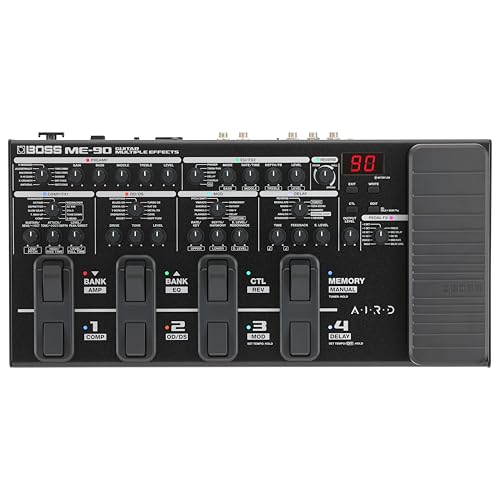
- Stompbox-style controls with eight footswitches and expression pedal
- 60 effects, 11 AIRD amps, IR loading, and effects loop
- Battery-powered design with 36 factory and 36 user patches
Best For: Performers wanting fast, hands-on tone control onstage
Budget Patch Builder

- 80 factory and 80 user patches
- 66 effects with assignable expression control
- Looper, drum machine, tuner, and line-out mode
Best For: Budget-conscious players building a versatile patch library
Compact Pro Control

- 32 amp types and 170 BOSS effects
- Up to 15 assignable routing blocks
- Color touch display and integrated expression pedal
Best For: Touring players needing compact professional processing
Battery Stage Rig

- Eight footswitches and CTRL mode for live control
- Nine-hour battery and balanced stereo XLR outputs
- 200 presets, 55 amp models, and spill-over switching
Best For: Direct-to-PA performers needing flexible stage control
Budget Practice Companion

- 71 effects and 13 amp models
- Expression pedal, looper, and rhythm patterns
- Battery-powered with headphone and aux support
Best For: Portable practice and simple live setups
Stage-Ready Workhorse

- 240+ effects and 140+ amp/cab models
- 256 patches, IR loading, and flexible routing
- Metal chassis, expression pedal, and gig bag
Best For: Full-featured touring rigs and live performance
Battery-Powered Modeling Hub

- 200+ effects with IR and NAM support
- Over six hours of rechargeable battery use
- USB audio, Bluetooth, MIDI, looper, and drum patterns
Best For: Mobile touring and advanced tone customization
Tour-Ready Tone Command Center – HeadRush Core
For guitar effects processors for touring, the HeadRush Core stands out as a full rig solution for players who want guitar and vocal processing, amp modeling, looping, and extensive connectivity in one durable unit. Its touchscreen, gapless preset switching, and tail spillover are especially useful when changing sounds onstage.
Best For: Touring guitarists who also need vocal effects, amp captures, looping, and flexible stage connections.
Pros:
- Combines guitar effects, amp modeling, vocal processing, Auto-Tune, looping, and a drum machine.
- Supports Neural Amp Modeler captures, Smart Amp Cloner, third-party IRs, and 350+ included impulse responses.
- Offers stereo outputs, an FX loop, MIDI, USB audio, Bluetooth, Wi-Fi, and combo microphone/instrument input.
- Gapless preset switching with reverb and delay spillover helps maintain smooth transitions during songs.
Cons:
- Its broad feature set and touchscreen workflow may require more setup time than a simpler pedal.
- At 3.9 kg, it is less lightweight than compact single-purpose effects units.
The Core is a strong choice when touring demands extend beyond guitar effects alone. Its connectivity and seamless preset changes suit complex rigs, while the capture, IR, looper, and vocal features provide room to build a complete performance setup.
Compact Effect-Switching Specialist – Line 6 HX One
Among guitar effects processors for touring, the Line 6 HX One is a compact option for adding HX-family effects to an existing pedalboard. Its straightforward controls, Flux Controller, adjustable input impedance, and support for external switching make it practical when space and simple operation matter.
Best For: Touring guitarists who want a compact, dedicated multi-effects addition to an established rig.
Pros:
- Includes more than 250 effects from the Line 6 HX family.
- Compact format helps add varied effects without replacing an entire pedalboard.
- Provides 128 preset slots for storing touring sounds.
- Supports an optional expression pedal or two external footswitches and offers adjustable input impedance.
Cons:
- It is an effects-focused unit rather than a complete amp-modeling, looper, or vocal-processing rig.
- External expression or footswitch control requires optional accessories.
The HX One makes the most sense for players who already have their core rig and need flexible effects in a small footprint. Its preset capacity and external-control options add touring convenience without committing to a larger all-in-one processor.
Flexible Full-Rig Value – Valeton GP-200
Valeton GP-200 Multi-Effects Processor for Guitar & Bass, Expression Pedal, MIDI, USB Interface
Check Price On AmazonThe Valeton GP-200 is one of the more feature-packed guitar effects processors for touring when you need guitar, bass, or acoustic compatibility and broad routing options. It combines amp and cabinet simulation, a configurable signal chain, an effects loop, multiple outputs, and a large preset library.
Best For: Touring musicians who need a versatile multi-instrument processor with extensive presets, routing, and direct-output options.
Pros:
- Includes 240+ effects, 140 amp and cabinet simulations, and 100 stompbox effects.
- Supports up to 11 simultaneous effect blocks and stores 256 presets.
- Provides an FX loop, MIDI, expression connections, line and XLR outputs, and headphone output.
- Includes 100 drum rhythms, a 180-second looper, USB-C audio, and support for 20 third-party IRs.
Cons:
- Its 4.3-inch display is smaller than the HeadRush Core’s 7-inch touchscreen.
- The listed warranty is a 90-day free-return period, which is shorter than many manufacturer warranties.
The GP-200 offers a strong feature-to-footprint balance for touring rigs that need direct connectivity and plenty of stored sounds. Its support for several instrument types and external gear makes it especially adaptable for players covering different stage setups.
Hands-On Stage Control – BOSS ME-90
BOSS ME-90 Guitar Multi-Effects Guitar Processor | All-In-One Guitar Processor
Check Price On AmazonThe BOSS ME-90 is a practical choice among guitar effects processors for touring if you prefer stompbox-style controls and quick adjustments during a performance. It pairs eight multifunction footswitches and a dedicated expression pedal with AIRD amp models, IR loading, an effects loop, and battery-powered operation.
Best For: Performing guitarists who prioritize immediate hands-on control and a familiar pedalboard-style workflow.
Pros:
- Offers 60 effects derived from the GT-1000 and 11 AIRD amp models.
- Eight multifunction footswitches and a redesigned expression pedal support direct stage control.
- Includes IR loading, an effects loop, USB-C, and battery-powered operation.
- Provides 36 ready-to-play patches and 36 user patches for storing setups.
Cons:
- Its preset memory is smaller than the Valeton GP-200’s 256 presets.
- Bluetooth audio and MIDI require an optional Bluetooth Audio MIDI Dual Adaptor.
The ME-90 suits touring players who would rather shape sounds with knobs and footswitches than rely on a touchscreen. Its dedicated controls, expression pedal, effects loop, and battery option make it a straightforward performance tool for varied live situations.
Budget Patch Builder – MOOER GE100
The MOOER GE100 is a straightforward option for guitarists comparing guitar effects processors for touring on a budget. Its 80 factory presets, 80 user patches, 66 effect types, and adjustable output mode make it flexible for rehearsals, direct playing, and smaller live setups.
Best For: Players who want broad effects coverage, simple patch saving, and useful practice features in a compact floor unit.
Pros:
- Offers 80 preset patches and 80 user patches for building a reusable sound library.
- Includes 66 effect types across eight modules, plus an assignable expression pedal.
- Provides line-out mode, a 180-second looper, drum machine, tuner, tap tempo, and headphone output.
Cons:
- Its control layout and feature set are less extensive than the more stage-focused processors here.
- The listed 9V adapter and four-AA-battery power options may require more preparation for extended touring.
The GE100 is a practical entry-level touring companion when patch capacity and built-in practice tools matter more than advanced live routing. It is especially appealing for players who need an affordable all-in-one unit with direct output capability.
Compact Pro Control – BOSS GX-10
The BOSS GX-10 is built for guitarists seeking guitar effects processors for touring in a compact, travel-ready format. It combines the GX-100 sound engine with a color touch display, 32 amplifier types, 170 BOSS effects, flexible routing, and a rugged metal chassis.
Best For: Touring guitarists and bassists who want professional processing, detailed signal routing, and compact foot control.
Pros:
- Delivers 24-bit AD, 32-bit DA, 32-bit floating-point processing, and 48 kHz sampling.
- Includes 32 amplifier types, 170 BOSS effects, speaker simulations, and WAV IR loading support.
- Provides up to 15 assignable blocks, three footswitches, flexible control modes, and an integrated expression pedal.
Cons:
- Its compact three-footswitch layout may require more preset planning for highly complex live control.
- The supplied notes do not specify battery operation, so touring users should plan around external power.
With its extensive sound library and routing flexibility, the GX-10 is a strong choice when dependable control and amp-like tones are priorities. Its compact chassis also makes it easier to fit into a travel-oriented touring rig.
Battery Stage Rig – MOOER GE150 Max Li
The MOOER GE150 Max Li is designed for guitarists who need guitar effects processors for touring with extensive hands-free control and flexible stage connectivity. Its eight footswitches, nine-hour integrated battery, stereo balanced XLR outputs, and spill-over switching target live performance directly.
Best For: Performers who need long battery life, direct XLR routing, extensive preset access, and detailed footswitch control on stage.
Pros:
- Provides 200 preset slots across 50 banks, 55 amp preamps, 26 cabinet simulations, and third-party IR loading.
- Eight multifunction footswitches and CTRL mode support granular live control within presets.
- Offers up to nine hours of battery life, stereo balanced XLR outputs, spill-over effect tails, and an integrated expression pedal.
Cons:
- At 3.8 pounds, it is heavier than the GE100 and may take more pedalboard space.
- Its large feature set may require more setup time before a tour.
The GE150 Max Li is the most stage-oriented option in this group. Long battery life, balanced XLR outputs, plentiful preset storage, and natural delay and reverb transitions make it well suited to direct-to-PA touring rigs.
Budget Practice Companion – Zoom G1X Four
The Zoom G1X Four is a compact, battery-powered option for guitarists seeking guitar effects processors for touring, rehearsals, or practice on the go. Its expression pedal, amp models, looper, and rhythm patterns provide a broad set of tools without requiring a large rig.
Best For: Players who want an affordable, portable processor for practice, experimentation, and smaller live setups.
Pros:
- Includes 71 effects and 13 amp models for varied tones.
- Built-in expression pedal, 30-second looper, tuner, and 68 rhythm patterns.
- Supports battery power, auxiliary audio, headphones, and USB-based patch editing.
Cons:
- The 30-second looper is less substantial than the 180-second loopers in the Valeton units.
- Its feature set is more practice-focused than stage-focused.
The G1X Four makes sense when portability and value matter most. Touring guitarists needing extensive preset storage, advanced routing, or professional connectivity may prefer a larger processor.
Stage-Ready Workhorse – Valeton GP-200
The Valeton GP-200 is built for players who need guitar effects processors for touring with substantial effects, amp modeling, routing, and connectivity. Its metal chassis, customizable footswitch layout, large display, and included gig bag suit regular transport and live operation.
Best For: Touring guitarists who need extensive presets, flexible signal chains, and a rugged all-in-one stage processor.
Pros:
- Offers over 240 effects, more than 140 amp and cabinet models, and up to 11 simultaneous modules.
- Provides 256 patch slots, 20 user cabinet IRs, a 180-second looper, and 100 drum patterns.
- Includes USB-C 6-in/4-out audio, flexible FX routing, a cast-metal chassis, expression pedal, and gig bag.
Cons:
- At 2.37 kg, it is considerably heavier than the compact Zoom unit.
- It requires corded power rather than offering built-in battery operation.
The GP-200 is the most conventional touring choice here for players who prioritize stage control and broad routing options. Its size and mains-powered design are trade-offs for the deeper live-performance feature set.
Battery-Powered Modeling Hub – Valeton GP-150
The Valeton GP-150 combines modern modeling, rechargeable power, and broad connectivity for guitarists comparing guitar effects processors for touring. It supports third-party IRs and NAM files while adding Bluetooth, MIDI, USB audio, and a flexible effects engine in a compact format.
Best For: Mobile performers and recording-focused guitarists who want advanced tone loading with battery-powered flexibility.
Pros:
- Provides more than 200 effects, 12 simultaneous modules, 200 patch slots, and flexible routing.
- Supports third-party IRs, up to 100 SnapTone/NAM files, and 20 IR files.
- Its 3000mAh battery offers over six hours of playtime, with USB-C or 9V DC charging.
Cons:
- It has only two footswitches plus the expression pedal, offering less apparent hands-on control than a larger stage unit.
- The supplied additional toppers are an accessory bundle rather than a broader protective touring package.
The GP-150 stands out for players who value rechargeable operation and deep amp-profile customization. It is especially attractive for mobile setups, though guitarists wanting maximum stage-floor controls may prefer the GP-200.
How We Picked the Best Guitar Effects Processors for Touring
We focused on features that matter beyond the practice room: usable amp and cabinet modeling, preset capacity, footswitch access, expression control, signal routing, output flexibility, and computer connectivity. We also considered whether each unit suits a specific touring role, such as a complete direct rig, a backup processor, an effects-only solution, or a compact pedalboard addition.
Reliability and ease of operation were equally important. A processor can offer hundreds of effects, but it is less useful onstage if menus are slow, patch levels vary, or essential controls are difficult to reach. Battery operation, MIDI, effects loops, XLR outputs, USB audio, and support for impulse responses or third-party captures can also make a meaningful difference depending on your setup.
Quick Comparison
| Touring Need | What to Prioritize | Best Fit |
|---|---|---|
| Complete direct rig | Amp modeling, IR support, flexible outputs, USB | HeadRush, BOSS, Line 6, or Valeton GP models |
| Effects-only expansion | Compact format, simple routing, MIDI or loop compatibility | Line 6 HX One |
| Maximum hands-on control | Multiple footswitches, expression pedal, assignable controls | BOSS ME-90, GX-10, or VALETON GP-200 |
| Budget backup or learning rig | Broad effect selection and straightforward presets | MOOER or Zoom models |
| Portable or battery-powered setup | Built-in battery, lightweight design, flexible outputs | MOOER GE150 Max or Valeton GP-150 |
Key Buying Factors for Guitar Effects Processors for Touring
Connectivity and Stage Integration
Check whether the processor has the outputs your venue setup requires. Stereo outputs are useful for wide effects, while balanced XLR connections can simplify direct runs to a mixer. An effects loop matters if you plan to combine the processor with a physical amplifier, and MIDI is valuable for synchronizing pedals, switching amplifiers, or controlling external devices.
Control Layout and Patch Changes
Consider how many sounds you need to access without bending down. Dedicated footswitches and assignable controls are preferable for complex set lists. Compact units may save space but require more tap dancing or an external controller.
Modeling, IR, and Monitoring
If you play directly into front-of-house or in-ear monitors, prioritize convincing amp and cabinet modeling, cabinet bypass options, and impulse-response support. For a traditional amplifier, effects quality and routing may matter more than the number of amp models.
Reliability, Power, and Backups
Touring exposes gear to transport, inconsistent power, and hurried changeovers. Choose a sturdy enclosure, secure connections, dependable power supply, and a backup plan for critical presets. Battery-powered models can be useful for rehearsals and emergency operation, but verify runtime and charging requirements before relying on them at a show.
Who Should Buy Which Guitar Effects Processors for Touring?
Choose a full-featured unit such as a HeadRush, BOSS, Line 6, or Valeton GP processor if you want one device to handle amp tones, effects, recording, and direct performance. Pick a compact processor like the HX One when your existing pedalboard needs a flexible programmable addition. BOSS and VALETON units with extensive switching are better suited to players who change sounds frequently during a set.
MOOER and Zoom options make practical choices for beginners, budget-conscious touring musicians, or anyone wanting a lightweight backup. Battery-equipped Valeton and MOOER models are especially appealing for mobile rigs and quick setups. Before buying, map your set list to the available switches, confirm every required connection, and test patch volume consistency at stage volume.