
Reliable proofing helps small bakeries produce more consistent loaves, rolls, and pizza dough across changing temperatures and production schedules. The right box can also make limited workspace easier to manage.
This roundup compares 10 bread proofing boxes for small bakeries, from folding temperature-controlled units to stackable containers designed for batch dough storage. Use the guide below to match capacity, control, and workflow needs.
Best 10 Bread Proofing Boxes for Small Bakeries Picks for 2026
Best All-in-One Proofer
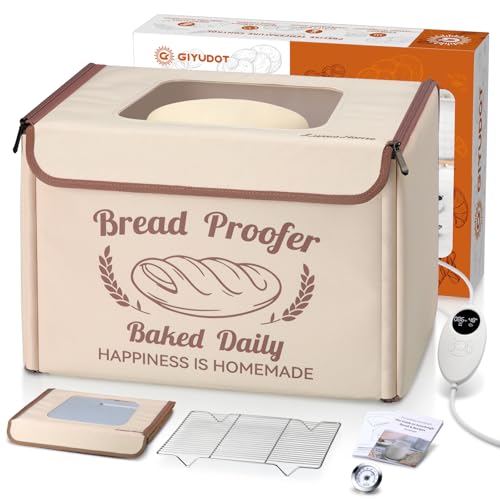
- 50–113°F control and up to 48-hour timer
- 36-liter foldable interior with viewing window
- Includes rack, humidor, and sourdough recipes
Best For: Small-batch bakers wanting controlled heat and humidity
Best for High-Volume Dough Prep

- Two large trays hold up to 10 dough balls each
- Stackable BPA-free polypropylene design
- FIFO label areas and dry-erase markers included
Best For: Organized batch storage in bakeries and pizzerias
Best Vintage-Style Option
Classic Bakery Folding Proofer
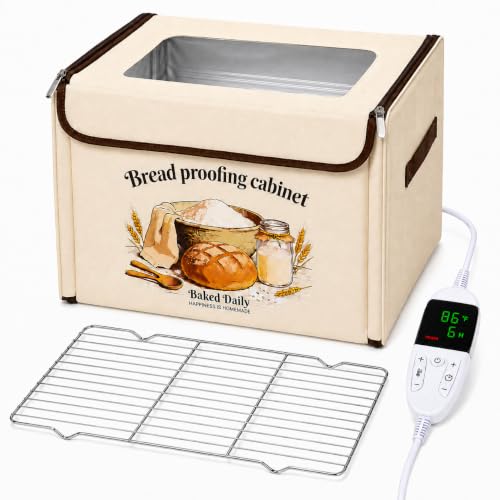
- 12 temperature settings from 86–141°F
- 1–12-hour timer with viewing window
- Folds down for cabinet or drawer storage
Best For: Compact kitchens wanting a decorative powered proofer
Best Simple Tray Set
Vababa 2-Pack Dough Proofing Boxes

- Two clear 16-liter containers for four to six dough balls each
- BPA-free plastic with clip-on lids
- Fits most household refrigerator shelves
Best For: Passive refrigerated dough proofing and storage
Best for Easy Setup
FOHERE Folding Bread Proofing Box

- 32–113°F temperature control
- 48-hour timer for long fermentation
- 34-liter collapsible capacity
Best For: Small bakeries needing flexible, multi-purpose fermentation control
Best Multi-Batch Tray Set
3-Pack Pizza Dough Proofing Boxes

- Three stackable food-grade containers
- Up to 6,000 grams per box
- Moisture-retaining vented lids
Best For: Batch pizza and bread dough organization
Best for Batch Tracking
Commercial Stackable Dough Proofing Box

- Fits up to six dough balls
- Includes label and two markers
- Dishwasher-safe BPA-free polypropylene
Best For: Food-service teams managing labeled dough batches
Best Value Stack
Zopnny 3-Pack Pizza Dough Proofing Box

- Three roomy, stackable proofing trays
- BPA-free food-grade plastic
- Vented lids help retain moisture
Best For: Small bakeries handling multiple pizza dough portions
Best for Measured Fermentation
Brod & Taylor 6L Proofing Containers

- Two 6-liter containers for large dough batches
- Volume markings simplify rise tracking
- Dishwasher safe and freezer friendly
Best For: Sourdough and bread workflows requiring precise monitoring
Best All-in-One Proofer – Folding Bread Proofing Box
For small bakeries needing controlled fermentation without a permanent appliance, this folding bread proofing box offers adjustable heat, a timer, and a 36-liter interior. Its compact foldable design suits kitchens where storage space matters, while the viewing window lets you monitor dough without opening the enclosure.
Best For: Small bakeries and serious home bakers that need temperature-controlled proofing for multiple batches, sourdough, pizza dough, or other fermentation projects.
Pros:
- 50–113°F temperature range with a timer programmable for up to 48 hours.
- Three heating zones, insulation, and a stainless steel rack support more even warming.
- Includes a humidor, recipes, and a transparent viewing window.
- Folds for more convenient storage in compact kitchens.
Cons:
- Its 16 × 12 × 12-inch interior may be limiting for very high-volume bakery production.
- The soft-sided construction may be less suitable for heavy commercial handling than rigid trays.
This is the most feature-rich option in the group for bakers who want active temperature and humidity management in a space-saving format. The 65-watt design and included accessories make it a practical controlled-proofing station for small-batch production.
Best for High-Volume Dough Prep – Commercial Proofing Box Set
For small bakeries focused on batch handling rather than powered heating, these bread proofing boxes for small bakeries provide a straightforward tray system. Each large container holds up to 10 dough balls, and the two-pack helps organize multiple batches in refrigerators, prep stations, or proofing areas.
Best For: Pizzerias, bakeries, restaurants, and commissary kitchens that need stackable dough storage and organized batch rotation.
Pros:
- Large 22.2 × 15.2 × 4-inch trays can hold up to 10 dough balls each.
- BPA-free polypropylene construction is dishwasher safe and designed for daily use.
- Stackable with or without lids to conserve refrigerator and prep-station space.
- Integrated FIFO label areas and two dry-erase markers simplify batch tracking.
Cons:
- These are passive containers and do not provide temperature control or heating.
- The intentionally non-airtight lids may not suit storage situations requiring a sealed container.
This set is a practical choice when the bakery already has a suitable temperature-controlled environment and needs more efficient dough organization. Its capacity, stackability, and labeling features are especially useful for repeat production.
Best Vintage-Style Option – Classic Bakery Folding Proofer
This classic bakery folding bread proofing box combines a decorative cream finish with adjustable temperature and timed operation. It creates a dedicated fermentation space for bread, sourdough, pizza dough, and yogurt while folding down for storage when a small bakery or home kitchen needs to reclaim counter space.
Best For: Small bakeries and home bakers who value a compact powered proofer with a vintage appearance, viewing window, and removable rack.
Pros:
- Offers 12 temperature settings from 86°F to 141°F.
- Includes a 1–12-hour timer plus a continuous mode for supervised use.
- Foldable soft-sided design stores in a cabinet or drawer.
- Viewing window and metal rack allow monitoring and elevated bowl placement.
Cons:
- The supplied temperature range starts at 86°F, offering less low-temperature flexibility than some proofers.
- Continuous operation requires active supervision, and the instructions advise switching it off and unplugging after use.
- Its 36-liter capacity may not meet the needs of high-volume commercial production.
The Classic Bakery model is appealing when presentation and storage convenience matter alongside basic fermentation control. It provides useful temperature and timer settings, but its safety guidance makes attentive operation important.
Best Simple Tray Set – Vababa 2-Pack Dough Proofing Boxes
For bakeries that need simple dough containment rather than powered temperature control, the Vababa two-pack offers clear, lidded trays sized for refrigerator storage. Each 16-liter box can accommodate approximately four to six dough balls, making this a practical option for small batches of pizza or bread dough.
Best For: Small bakeries and home pizza makers needing affordable, transparent containers for refrigerated dough proofing and storage.
Pros:
- Each box measures 16.45 × 11.65 × 5.7 inches and accommodates four to six dough balls.
- Clear BPA-free plastic makes contents easy to see.
- Clip-on lids are described as leakproof and tightly fastened.
- Suitable for dough, marinating, and general food storage.
Cons:
- There is no built-in heating, temperature adjustment, or timer.
- The 16-liter capacity per box is smaller than the larger commercial-style tray set.
- The notes list a recommendation for arts and crafts, so buyers should confirm intended food-use details before purchase.
This two-pack is a straightforward choice for refrigerated proofing and organized dough storage. It works best as a passive container solution, not as a replacement for a temperature-controlled bread proofer.
Best for Easy Setup – FOHERE Folding Bread Proofing Box
For small bakeries seeking bread proofing boxes for small bakeries with flexible temperature control, the FOHERE combines a 32–113°F range, convection heating, and a 0–48-hour timer. Its 34-liter collapsible design can accommodate multiple dough batches while remaining practical to store.
Best For: Small bakeries and serious bakers needing controlled, long-duration fermentation in a foldable unit.
Pros:
- Adjustable temperature range supports slow and higher-temperature fermentation.
- 48-hour timer suits long-fermented sourdough recipes.
- 34-liter capacity can hold one mixing bowl and four small jars simultaneously.
- Viewing window and waterproof liner simplify monitoring and cleanup.
Cons:
- Hand-wash care may require more effort than dishwasher-safe alternatives.
- The fabric-and-insulation construction may be less convenient to sanitize for intensive commercial use.
This is the most versatile option of the group, particularly when temperature precision, extended timing, and compact storage matter more than a rigid tray format.
Best Multi-Batch Tray Set – 3-Pack Pizza Dough Proofing Boxes
For bakeries comparing bread proofing boxes for small bakeries, this three-pack offers a straightforward tray-based setup for pizza and bread dough. Each 13-liter box measures 17.3 by 12.8 by 4.6 inches, supports stacking, and includes a lid designed to retain moisture while allowing gases to escape.
Best For: Small bakery or pizza operations that need multiple stackable containers for batch dough handling.
Pros:
- Three food-grade, non-toxic boxes support concurrent dough batches.
- Each box can hold up to 6,000 grams of dough, according to the supplied specifications.
- Stackable construction helps conserve refrigerator and kitchen space.
- Containers can also store cakes, produce, meat, and other foods.
Cons:
- Hand-wash care is less convenient for frequent production use.
- No integrated labeling system is included for batch tracking.
- The listing contains conflicting capacity descriptions, identifying the boxes as both 13L and 16L.
This set makes sense when quantity and stackability are the priorities. It is a practical, low-complexity choice for organizing several dough batches without adding powered temperature controls.
Best for Batch Tracking – Commercial Stackable Dough Proofing Box
This commercial-style container is a useful option among bread proofing boxes for small bakeries when organization and repeatable workflow matter. It fits up to six dough balls, stacks with or without its lid, and includes a label sticker plus two erasable markers for recording dough types or dates.
Best For: Pizzerias, bakeries, and food-service kitchens that need compact dough storage with simple FIFO labeling.
Pros:
- Accommodates up to six pizza dough balls in a 15.67-by-11.69-inch box.
- BPA-free polypropylene is food-grade, stain resistant, and designed for repeated use.
- Stacks securely with or without lids to maximize prep and refrigerator space.
- Included label sticker and two erasable markers support batch management.
Cons:
- The non-airtight lid may provide less moisture retention than a sealed container.
- Only one box is included, unlike the supplied three-pack alternative.
- Its low profile is designed for dough balls rather than large mixing bowls.
Choose this model when staff need quick visual batch identification and efficient stacking. Its intentionally vented lid favors airflow and fermentation management over airtight storage.
Best Value Stack – Zopnny 3-Pack Pizza Dough Proofing Box
For small bakeries seeking bread proofing boxes for small bakeries that can handle multiple dough portions, this three-container Zopnny set offers generous trays, stackable storage, and vented lids that help retain moisture without being airtight.
Best For: Small bakeries and pizza-focused operations that need multiple stackable proofing trays.
Pros:
- Three 17.32-by-12.63-by-4.56-inch trays provide room for pizza dough and other foods.
- Food-grade, BPA-free plastic is designed to resist impact, temperature changes, and wear.
- Vented snap-on lids help prevent dough from drying while allowing gases to escape.
- Containers stack when lids are removed, helping conserve storage space.
Cons:
- The lids are vented rather than airtight, so they may not suit storage requiring an airtight seal.
- The set is positioned for home use, which may limit fit for larger commercial batches.
This is a practical option when tray quantity and flexible food storage matter more than airtight sealing. Its broad footprint and stackable design make it especially useful for pizza prep and compact kitchen storage.
Best for Measured Fermentation – Brod & Taylor 6L Proofing Containers
For small bakeries needing bread proofing boxes for small bakeries with more precise rise monitoring, the Brod & Taylor two-pack combines translucent walls, volume markings, a moisture-sealing lid, and capacity for up to 3,000 grams of dough.
Best For: Bread and sourdough workflows where tracking rise and performing folds in the container are priorities.
Pros:
- Translucent walls and volume markings make it easier to monitor dough growth without opening the lid.
- Each 6-liter container holds up to 3,000 grams of dough and has a wide base for stretch-and-coil folds.
- Two low-profile containers stack with or without lids and fit the specified folding proofer dimensions.
- BPA-free polypropylene is dishwasher safe, freezer friendly, and designed to resist stains and odors.
Cons:
- The airtight lid may be less suitable for users specifically seeking vented proofing containers.
- The set costs storage space for two containers even when a single batch is being proofed.
With clear rise markings and a sealed environment, this set is well suited to repeatable fermentation routines. It is a strong fit for bakers who want to mix, fold, proof, and monitor dough in the same container.
Best Single-Tray Option – 5-Quart Large Dough Proofing Container
For small bakeries comparing bread proofing boxes for small bakeries on a single-container budget, this 5-quart polypropylene tray provides space for up to 6.6 pounds of dough, volume markings, and a lid for covered proofing.
Best For: Bakeries that need one large, space-efficient container for bread, sourdough, or pizza dough.
Pros:
- Holds up to 6.6 pounds of dough or up to six dough balls.
- Translucent walls and volume markings let you check the rise without removing the lid.
- Stackable design fits the specified folding proofing box and can help save refrigerator space.
- BPA-free polypropylene resists stains, odors, and sticky dough residue.
Cons:
- This is a one-pack, so additional containers are needed for simultaneous batches.
- Its 5-quart capacity may be limiting for very large production runs.
This container balances a large stated dough capacity with a compact, low-profile shape. It makes sense for a small bakery that wants measurable rise tracking and a dedicated tray without committing to a multi-pack.
How We Picked the Best Bread Proofing Boxes for Small Bakeries
We evaluated these options for the practical demands of small-bakery production: usable capacity, temperature control, timer functions, food-safe construction, stackability, portability, and ease of cleaning. The selection includes both active proofing boxes with heating controls and passive containers for bakeries that already have a suitable warm environment.
We also considered whether each design supports common workflows, including sourdough fermentation, pizza-ball storage, overnight proofing, and repeated daily batches. Product descriptions and stated specifications were prioritized, but buyers should confirm exact dimensions and capacity before ordering.
Quick Comparison
| Type | Best for | Main advantage | Potential limitation |
|---|---|---|---|
| Temperature-controlled folding box | Sourdough and bread schedules | More consistent warmth and timed proofing | Uses counter or storage space and power |
| Stackable dough container | Pizza balls and batch production | Efficient organization and easy portioning | Does not actively regulate temperature |
| Large lidded tray | Mixed dough or larger batches | Flexible capacity with simple handling | Requires a stable ambient proofing area |
Key Buying Factors for Bread Proofing Boxes for Small Bakeries
Capacity and Footprint
Estimate the number and weight of dough pieces you proof at one time, then check internal dimensions rather than relying only on a labeled quart or liter capacity. Pizza dough balls need room to expand, while larger bread doughs may require deeper containers. Stackable designs are particularly useful when floor and counter space are limited.
Temperature and Timer Control
A powered proofer can provide more repeatable results when the bakery is cold or production runs extend overnight. Look for a useful temperature range, clear controls, a dependable sensor, and a timer that fits your process. Passive boxes may be the better value if your kitchen already maintains stable proofing conditions.
Materials, Lids, and Cleanup
Choose food-contact materials that are easy to wash and resistant to odors or staining. Secure lids help prevent skin formation, while transparent or clearly labeled containers make batch tracking easier. Confirm whether racks, trays, and accessories are removable before buying.
Workflow and Storage
Folding units are easier to store between production cycles, whereas rigid containers are often faster for repetitive pizza operations. Consider how the box moves from mixing to refrigeration to shaping, and leave enough clearance for ventilation or electrical connections.
Who Should Buy Which Bread Proofing Boxes for Small Bakeries?
Choose a temperature-controlled folding box if your bakery needs repeatable sourdough or bread proofing through seasonal temperature changes. Select stackable lidded containers for high-volume pizza production, portioned dough balls, and efficient refrigerator organization. A larger single tray suits mixed batches or bakers who want simple, flexible storage without powered controls. For a growing bakery, combining one controlled proofer with several passive containers can provide both consistency and capacity without overbuying equipment.