
If you work on engines, hoses, EV systems, or hidden chassis areas, the right borescope can save time and prevent guesswork. The best inspection camera for auto mechanics shows what your eyes can’t reach.
Below, we focus on practical features that matter in the shop: image clarity, probe control, cable length, durability, and screen usability.
Best 10 Inspection Camera for Auto Mechanics Picks for 2026
Best Dual-Lens View
DEPSTECH DS300 1080P Borescope
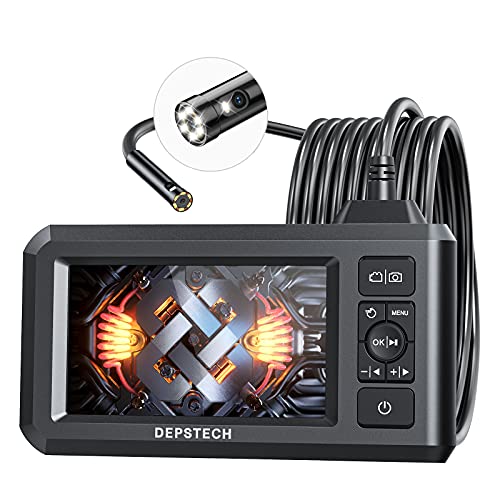
- Dual-lens front/side viewing with split-screen mode
- 4.3-inch IPS screen with crisp 1080P video
- 16.5-foot semi-rigid, IP67 waterproof cable
Best For: Mechanics who want a built-in-screen borescope for fast checks in tight automotive spaces.
Best for Tight Engine Access
Ralcam 3.9mm Two-Way Articulating Borescope

- 3.9mm probe for narrow automotive gaps
- Two-way articulation for precise aiming
- 5-inch HD screen for standalone viewing
Best For: Mechanics who need a slim, maneuverable scope for tight engine and automotive access.
Best for Screen-Only Use
Daxiongmao 4.3" 1080P Borescope Camera

- Built-in 4.3-inch LCD for instant viewing
- 8 LED lights and 8mm probe for dark engine spaces
- IP67 waterproof for dirty or wet inspection jobs
Best For: Mechanics who want a simple, phone-free borescope for quick automotive inspections.
Best for Small Spaces
Ralcam 3mm Articulating Borescope

- Ultra-slim 3mm probe fits very tight spaces
- 210° two-way articulation for better steering
- 5-inch HD screen with adjustable LED lighting
Best For: Auto mechanics inspecting cramped engine areas and narrow mechanical spaces.
Best for Multi-Angle Inspections
DEPSTECH Triple-Lens 5" Borescope

- Triple-lens probe switches angles without constant repositioning
- 5-inch IPS screen with 1080P capture and 32GB storage
- 16.5-foot semi-rigid cable reaches deep engine and chassis areas
Best For: Mechanics and DIYers who want a versatile borescope for faster, multi-angle inspections.
Best for Everyday Use
Ralcam 360° Articulating Borescope

- 4-way steering probe locks into position
- Slim 6.2mm camera suits cramped engine bays
- 1080P video with 6 LEDs and 32GB storage
Best For: Mechanics and DIYers inspecting narrow, hard-to-reach automotive spaces.
Best for Long Reach
Teslong 16.5ft Endoscope Borescope

- 16.5-foot semi-rigid cable for deep access
- 8 LED lights with 78° viewing angle
- Records photos and videos for inspection notes
Best For: Mechanics and DIY users who need extra reach for automotive inspections and other hard-to-access spaces.
Best for Dual-Lens Viewing
5" Dual-Lens HD Inspection Borescope

- Switches between front and side views
- 1080P clarity with close-focus detail
- 16.4 ft semi-rigid probe for tight spaces
Best For: Mechanics and DIYers who want an easy handheld borescope for engine and vehicle inspections.
Best for Tight Access
7'' Two-Way Articulating Borescope

- 210° two-way articulating head for tight angles
- 7-inch IPS screen with 1080p viewing
- Slim 6.2mm probe for narrow automotive spaces
Best For: Mechanics and DIY users who need a screen-based borescope for tight engine and cylinder inspections.
Best Simple Pick
Teslong Two-Way Articulating Borescope

- Two-way articulation for precise steering
- 4.5-inch IPS screen with no app needed
- Built-in LEDs for dark engine spaces
Best For: Mechanics and DIYers working in cramped automotive areas.
Best Dual-Lens View – DEPSTECH DS300 1080P Borescope
If you need an inspection camera for auto mechanics that makes it easier to switch between front and side views, the DEPSTECH DS300 is a practical shop-ready option. Its dual-lens design, 4.3-inch IPS screen, and 16.5-foot semi-rigid cable help you inspect tight engine bays, undercarriages, and hidden components without extra accessories.
Best For: Mechanics who want a dual-lens borescope with a built-in screen for fast, flexible inspections in narrow automotive spaces.
Pros:
- Dual-lens setup with split-screen and quick front/side switching
- 1080P image quality on a bright 4.3-inch IPS display
- Long 16.5-foot semi-rigid cable reaches deep into vehicle areas
- IP67 waterproof design and included hook/magnet accessories
Cons:
- Does not include a TF card for saving media
- Best results depend on staying within the stated focal range
- Screen-based design is less flexible than app-connected models
This is a strong inspection camera for auto mechanics if your priority is visibility and speed over app features. The dual camera angles and built-in display make it especially useful for checking engine internals, hoses, and hard-to-reach hardware during routine diagnostics.
Best for Tight Engine Access – Ralcam 3.9mm Two-Way Articulating Borescope
If you need an inspection camera for auto mechanics that can snake into cramped engine bays and around awkward bends, this Ralcam borescope is built for the job. Its slim 3.9mm probe and two-way articulating tip make it easier to line up with valves, spark plug tubes, and other hard-to-reach spots without pulling major parts apart.
Best For: Mechanics and DIYers who want precise viewing in tight automotive spaces, especially when working around complex engine internals.
Pros:
- 3.9mm probe fits into narrow automotive openings
- Two-way articulation helps aim the camera where straight scopes can’t
- 5-inch HD screen offers a practical standalone viewing setup
- Useful light helps illuminate dark engine and undercarriage areas
Cons:
- Articulating controls may take a little practice to master
- Smaller probe can be less rugged-feeling than thicker models
- Not the simplest pick if you only need occasional basic inspections
Overall, this is a strong inspection camera for auto mechanics who value reach and maneuverability over simplicity. It stands out most when the problem is access, making it a smart choice for detailed diagnostic work in tight, confined areas.
Best for Screen-Only Use – Daxiongmao 4.3" 1080P Borescope Camera
If you want an inspection camera for auto mechanics that works straight out of the box, this Daxiongmao borescope keeps things simple with a built-in 4.3-inch LCD screen and no phone app or Wi-Fi pairing. The 8mm probe, adjustable LED lighting, and IP67 waterproof rating make it a practical pick for engine bays, spark plug holes, and other messy or low-light jobs.
Best For: Mechanics and DIY repair users who want a straightforward, phone-free inspection camera for quick under-the-hood checks.
Pros:
- 4.3-inch color display shows live images without needing a smartphone
- 8 LED lights help brighten dark engine and pipe inspection areas
- 8mm probe fits common automotive access points like spark plug holes
- IP67 waterproof design suits wet, dirty, and outdoor job sites
Cons:
- Cannot record photos or video
- Screen-only design is less flexible than app-connected models for sharing images
- Fixed display size may feel small for users who prefer larger handheld monitors
For an inspection camera for auto mechanics, this model stands out for convenience and low setup friction rather than advanced documentation features. It is a solid everyday tool if you mainly need fast visual confirmation inside engines, vents, pipes, or walls.
Best for Small Spaces – Ralcam 3mm Articulating Borescope
The Ralcam is a practical inspection camera for auto mechanics when you need to get into very tight engine bays, small ports, and cramped mechanical spaces. Its ultra-slim 3mm probe, two-way articulation, and 5-inch HD screen make it easier to see what’s happening without constantly repositioning the scope.
Best For: Mechanics who need a compact borescope for narrow automotive spaces, dark cavities, and detailed close-up inspections.
Pros:
- 3mm probe reaches narrow areas that larger scopes can’t fit into
- 210° two-way articulation helps you steer around bends and obstacles
- 5-inch HD IPS display with adjustable LED lighting for clearer viewing
- IP67 waterproof probe and stainless steel cable add durability in shop use
Cons:
- Two-way articulation is useful, but not as flexible as full 4-way systems
- Small probe can be more delicate than thicker mechanic-focused cameras
- Best results depend on having enough room to guide the cable smoothly
Overall, this Ralcam stands out as an inspection camera for auto mechanics who care most about reaching ultra-tight spaces and getting a clear live view. It’s a strong fit for engine diagnostics, hidden leak checks, and other detailed inspections where probe size matters more than extra features.
Best for Multi-Angle Inspections – DEPSTECH Triple-Lens 5" Borescope
If you want an inspection camera for auto mechanics that makes it easier to see around bends, inside housings, and behind engine components, this DEPSTECH triple-lens borescope is built for that job. The 5-inch IPS screen, 1080P image quality, and long semi-rigid cable make it a practical shop tool for faster diagnostics and cleaner documentation.
Best For: Mechanics, DIYers, and technicians who need a versatile borescope for routine under-hood inspections, engine troubleshooting, and other hard-to-reach checks.
Pros:
- Triple-lens camera lets you switch angles without constantly repositioning the probe
- 5-inch IPS display and 1080P capture provide clear real-time viewing and saved footage
- 16.5-foot semi-rigid cable and IP67 probe handle tight, dark, or damp spaces well
- Includes a 32GB TF card plus hook and magnet accessories for added utility
Cons:
- Bulkier than phone-connected scopes, so it is less compact for pocket carry
- Not the cheapest option if you only need a basic occasional-use camera
For buyers comparing an inspection camera for auto mechanics, the big advantage here is efficiency: the triple-lens setup reduces repositioning and helps you inspect more of an area in less time. It is a strong pick if you value visibility, built-in recording, and tool-like simplicity over app-based features.
Best for Everyday Use – Ralcam 360° Articulating Borescope
If you need an inspection camera for auto mechanics that can snake into cramped engine bays and lock onto the right angle, the Ralcam 360° articulating borescope is built for that job. Its 4-way steering probe, slim 6.2mm head, and joystick control make it easier to inspect hoses, cylinders, and hidden components without constantly fighting the cable.
Best For: Mechanics and DIYers who want precise, one-handed control for viewing tight automotive spaces.
Pros:
- 4-way 360° articulating probe reaches around bends and holds position
- 6.2mm slim camera fits narrow automotive and HVAC openings
- 1080P image quality plus 6 LEDs for clearer viewing in dark areas
- Built-in 32GB microSD card means no phone, app, or Wi-Fi setup
Cons:
- 3.3 ft tube is shorter than some longer-shop alternatives
- Articulating heads can take a little practice to steer smoothly
For technicians who value control over convenience, this is a strong inspection camera for auto mechanics because it combines a narrow probe with true directional steering. It’s especially useful when you need to document a fault or confirm a repair in places a basic straight borescope can’t easily reach.
Best for Long Reach – Teslong 16.5ft Endoscope Borescope
If you need an inspection camera for auto mechanics that can reach deep into engine bays, underdash areas, and other cramped service spaces, this Teslong borescope is a practical pick. The 16.5-foot semi-rigid cable, bright 8-LED lighting, and 4.3-inch screen make it easier to spot leaks, wiring issues, and hidden damage without guessing.
Best For: Mechanics and DIY users who need extra reach for automotive inspections and other hard-to-access spaces.
Pros:
- 16.5-foot semi-rigid cable gives you plenty of reach and positioning control
- 8 adjustable LEDs and a 78° view help brighten and widen dark inspection areas
- Records photos and videos for easy documentation and follow-up
- IP67 waterproof probe is suited to automotive, plumbing, and HVAC work
Cons:
- 4.3-inch display is functional, but smaller than some premium screen-based scopes
- SD card is not included for saving media
- Focused setup is less advanced than app-connected inspection cameras
For an inspection camera for auto mechanics, this model stands out most for reach and all-around utility rather than fancy extras. It’s a solid choice if you want a ready-to-use tool for routine diagnostics, visual checks, and documenting what you find.
Best for Dual-Lens Viewing – 5" Dual-Lens HD Inspection Borescope
This inspection camera for auto mechanics is built for quick visual checks in tight engine bays, under dashboards, and around hard-to-reach components. The dual-lens design makes it easier to switch between front and side views, while the handheld screen keeps setup simple for shop or garage use.
Best For: Mechanics, DIYers, and technicians who want a straightforward borescope for engine diagnostics and general vehicle inspections.
Pros:
- Dual-lens camera lets you toggle between front and side views for better visibility.
- 1080P image quality and close focus help spot cracks, corrosion, and leaks.
- 16.4 ft semi-rigid probe reaches deep into hoses, ducts, and engine compartments.
- No app or Wi-Fi needed, so it’s quick to power on and use.
Cons:
- It cannot take photos or videos.
- The 4.3-inch screen is smaller than a tablet-based borescope setup.
- Best suited for inspection, not advanced documentation workflows.
For buyers who want a simple, portable inspection camera for auto mechanics, this model stands out for its dual-lens flexibility and easy handheld operation. It’s a practical pick when you care more about fast diagnosis than app connectivity or recording features.
Best for Tight Access – 7'' Two-Way Articulating Borescope
If you need an inspection camera for auto mechanics that can actually reach awkward engine bays and narrow service areas, this two-way articulating borescope is built for the job. The 7-inch IPS display, 1080p image quality, and slim 6.2mm probe make it easier to spot issues without constantly repositioning the tool.
Best For: Mechanics and DIY users who need a screen-based borescope for spark plug tubes, cylinders, and other tight automotive spaces.
Pros:
- Two-way 210° articulating head helps you steer around corners without twisting the cable
- Large 7-inch IPS screen gives a clear live view with no app or phone setup required
- 6.2mm slim probe fits narrow openings better than bulkier inspection cameras
- 120° wide-angle lens captures more of the area in one pass
Cons:
- 5.3 ft cable is useful for close work, but not as long as some shop-focused borescopes
- At 3.45 lb, it is less pocketable than smaller handheld inspection tools
- Designed more for viewing than advanced diagnostic features like recording workflows or app sharing
This is a practical inspection camera for auto mechanics who want better maneuverability in tight spaces and prefer a built-in screen over phone-based setups. It stands out most when access is the challenge and you need a straightforward way to inspect hard-to-see areas quickly.
Best Simple Pick – Teslong Two-Way Articulating Borescope
If you need an inspection camera for auto mechanics that can snake into cramped engine bays, this Teslong borescope is a practical pick. The two-way articulating probe and 5-foot semi-rigid cable make it easier to aim around bends, while the built-in screen keeps setup simple with no app required.
Best For: Mechanics and DIYers who need controlled viewing in tight, hard-to-reach automotive spaces.
Pros:
- Two-way articulation helps steer the camera into awkward engine and chassis areas.
- 4.5-inch IPS display offers clear viewing without relying on a phone.
- Built-in LED lighting improves visibility in dark compartments.
- Comfortable one-handed joystick control makes inspection work easier.
Cons:
- 5-foot cable may feel short for some larger vehicles or deeper runs.
- Not ideal if you prefer a wireless app-based workflow.
Overall, this is a solid inspection camera for auto mechanics who value direct control, fast setup, and a screen-first design for routine diagnostic work.
How We Picked the Best Inspection Camera for Auto Mechanics
We prioritized models that make shop inspections faster and more reliable: clear video, useful lighting, flexible probes, solid build quality, and controls that are easy to use with greasy hands. For an Inspection Camera for Auto Mechanics, we also looked at whether the camera can handle cramped engine bays, dark cavities, and frequent repositioning without feeling awkward.
Quick Comparison
In general, fixed dual-lens borescopes are best for broad viewing and simple diagnostics, while articulating models are better when you need to aim the tip around bends, behind components, or into narrow passages. Larger screens improve visibility in the garage, while slimmer probes help access tighter openings. Cable length matters too: longer cables are useful under dashboards and along chassis areas, but shorter, stiffer setups can feel easier to control in close quarters.
Key Buying Factors for an Inspection Camera for Auto Mechanics
Image Quality and Lighting
Look for at least 1080p if you want readable detail on seals, fasteners, carbon buildup, or fluid leaks. Adjustable LED lighting is important because reflective metal surfaces can wash out an image if the brightness is too harsh.
Probe Size and Articulation
A slimmer probe is easier to feed through spark plug holes, intake passages, and small access ports. Two-way or multi-way articulation helps you inspect valves, turbo areas, and behind brackets without constantly removing the camera.
Screen and Controls
Built-in screens are convenient because they keep the setup self-contained. Choose a display that is large enough to view details at arm’s length, with controls that are straightforward enough to adjust quickly during a diagnostic job.
Durability and Weather Resistance
Automotive work can involve oil, coolant, dust, and moisture, so water resistance and rugged construction are worth paying attention to. A tougher cable and probe can also reduce wear from repeated bends and contact with engine parts.
Power and Portability
Rechargeable units are best for mobile mechanics and quick inspections. If you work long shop hours, battery life and charging convenience may matter more than extra features you won’t use often.
Who Should Buy Which Inspection Camera for Auto Mechanics?
Choose a simple fixed-view model if you want an affordable Inspection Camera for Auto Mechanics for routine checks like hose routing, leak finding, and general visual confirmation. Pick an articulating borescope if you regularly diagnose hard-to-see areas such as cylinder walls, valves, and deep engine compartments. If you want maximum convenience and visibility, a larger-screen model with a longer cable is the most comfortable choice for shop use. For the tightest access points, prioritize the slimmest probe you can find.