
The best cajons combine responsive playing surfaces, clear bass tones, and comfortable designs in a compact instrument you can take almost anywhere. Whether you are accompanying acoustic music, practicing at home, or performing live, the right box drum should suit your sound and playing position.
We selected 10 cajons spanning beginner-friendly, compact, bass-focused, snare-equipped, and pickup-ready designs. Use the guide below to compare construction, features, portability, and value before choosing.
Best 10 Cajons Picks for 2026
Compact Handcrafted Pick
Pyle Stringed Jam Wooden Cajon

- Birch-wood handcrafted body
- Internal guitar strings for smooth rhythm
- Compact, lightweight design with rubber feet
Best For: Beginners, families, and portable jam sessions
Genre-Style Value Pick
Pearl Primero Crate-Style Cajon

- MDF body with meranti faceplate
- Built-in rear bass port
- Two sets of fixed curly snare wires
Best For: Casual players wanting distinctive styling and basic bass-and-snare tones
Portable All-Level Favorite
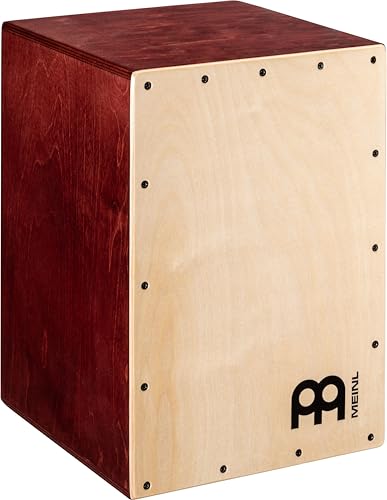
- European-made Baltic birch construction
- Punchy bass and crisp fixed snares
- Six-pound body with rear sound port
Best For: All skill levels, acoustic shows, worship, and portable practice
Street Performance Option
Latin Percussion Street Box Wire Cajon

- Eco-board body with tone-wood soundboard
- Distinct bass and snare response
- High-quality snare wires and natural faceplate
Best For: Players wanting clear bass-and-snare contrast for street-style playing
Best Ergonomic Design

- Lap-based position eases forward leaning
- Walnut surface separates bass and snare tones
- Forward bass port supports audience projection
Best For: Comfort-focused players and acoustic performers
Best Budget-Friendly Starter

- Birch construction offers warm, clear tones
- Adjustable internal strings provide tone control
- Includes a seat cushion and silicone feet
Best For: Beginners and casual home players
Best Deep Bass
Meinl Jumbo Bass Subwoofer Cajon

- Jumbo body delivers powerful low-end thump
- Bass-reflex channels support deeper projection
- Fixed steel snares retain crisp high tones
Best For: Acoustic performers who want prominent bass
Best Amplified Option

- Three passive pickups for PA or amp use
- Onboard volume and tone controls
- Baltic birch body with fixed steel snares
Best For: Performers who need amplified cajon sound
Best With Included Bag

- Full-size Baltic birch cajon
- Includes padded gig bag
- Fixed steel snares and silicone feet
Best For: Beginners and portable acoustic playing
Best Straightforward Acoustic Pick

- Full-size European-made acoustic cajon
- Baltic birch body with crisp fixed snares
- Includes bag, rear sound port, and silicone feet
Best For: Practice, jams, and casual acoustic performances
Compact Handcrafted Pick – Pyle Stringed Jam Wooden Cajon
For shoppers comparing cajons, the Pyle String Jam offers a compact, lightweight design with internal guitar strings for a smooth rhythmic sound. Its birch-wood construction, rubber-capped feet, and all-ages design make it a practical option for casual playing and portable percussion.
Best For: Beginners, families, and players who want a lightweight cajon for practice or informal jam sessions.
Pros:
- Handcrafted birch-wood body in a traditional box style
- Internal guitar strings provide a smooth rhythmic sound
- Compact 12 x 12 x 18-inch size and 10.9-pound weight
- Rubber-capped feet help reduce unwanted vibration
Cons:
- Its compact design may offer less projection than larger cajons
- Sound preferences may vary because the internal strings create a specific tonal character
The Pyle is a sensible entry-level choice when portability and ease of use matter most. It combines a manageable size with string-enhanced tone and stable feet, making it suitable for a broad range of ages and playing environments.
Genre-Style Value Pick – Pearl Primero Crate-Style Cajon
The Pearl Primero is a crate-style option for cajon buyers who want a straightforward instrument with a distinctive music-genre faceplate. Its MDF body, meranti faceplate, rear bass port, and fixed snare wires are designed to provide both bass response and snare articulation.
Best For: Players seeking a visually distinctive cajon for basic rhythm practice, casual performance, or music-themed setups.
Pros:
- Built with an MDF body and meranti faceplate
- Patented built-in rear bass port supports bass projection
- Two sets of fixed curly snare wires add snare response
- Silkscreened music-genre design gives the faceplate a distinctive look
Cons:
- Fixed snare wires provide less adjustment flexibility
- Engineered-wood construction may appeal less to buyers seeking solid wood
The Primero focuses on accessible features and a recognizable design rather than extensive adjustability. Its rear port and dual fixed snare sets make it a practical choice for players who want varied cajon tones in a crate-style format.
Portable All-Level Favorite – Meinl Jam Cajon
The Meinl Jam Cajon is a portable choice for anyone comparing cajons for lessons, acoustic shows, worship teams, or home practice. Made in Europe from Baltic birch, it combines fixed steel snares, a rear sound port, silicone feet, and a lightweight six-pound body.
Best For: Beginners and experienced players who need a compact cajon with punchy bass and crisp snare tones.
Pros:
- Made in Europe from 100% Baltic birch
- Two fixed sets of steel snare wires produce crisp, snappy tones
- Rear sound port strengthens projection and can support microphone placement
- Six-pound design with silicone feet for portability and stability
Cons:
- Fixed snares offer limited tonal adjustment
- Its compact dimensions may not suit players seeking a larger playing surface
With its approachable sit-and-play design, durable birch construction, and clearly defined bass and snare profile, the Meinl is one of the more versatile cajons in this group. It is especially well suited to players who regularly move between practice, jamming, and live acoustic settings.
Street Performance Option – Latin Percussion Street Box Wire Cajon
Latin Percussion Street Box- Wire Cajon with Natural Faceplate, Gray Back and Sides (LP1428NYG)
Check Price On AmazonThe Latin Percussion Street Box is a practical pick for cajon shoppers seeking distinct bass and snare sounds in a straightforward wire-cajon design. It pairs an eco-board body with a premium tone-wood soundboard, high-quality snare wires, and a natural faceplate.
Best For: Players who want a street-oriented cajon with a natural soundboard and clearly separated bass and snare tones.
Pros:
- Eco-board body paired with a premium tone-wood soundboard
- High-quality snare wires contribute to the snare response
- Designed for distinct bass tones and snare sound
- 19-inch height provides a substantial playing format
Cons:
- At 12 pounds, it is heavier than the Meinl Jam Cajon
- Engineered-wood body may not satisfy buyers seeking an all-solid-wood build
The Street Box emphasizes core cajon sounds and a durable, functional construction. Its natural faceplate and wire snare setup make it a strong consideration for players prioritizing distinct rhythmic contrast over ultra-light portability.
Best Ergonomic Design – Meinl Turbo Slaptop Cajon
Among cajons, the Meinl Turbo Slaptop stands out for its lap-based playing position. The walnut surface places the bass and snare zones directly in front of you, making it a practical option if leaning over a traditional box drum causes discomfort.
Best For: Players who want an ergonomic cajon for acoustic shows, worship bands, studio work, or outdoor jams.
Pros:
- Lap-friendly design helps reduce the need to lean forward.
- Walnut playing surface produces distinct bass and snare tones.
- Forward-facing bass port projects sound toward the audience.
- Includes silicone feet, a modern composite body, and a two-year warranty.
Cons:
- Its slaptop format differs from the seating position of a standard cajon.
- At about 8 pounds, it is not the lightest compact percussion option.
The Turbo Slaptop is a strong fit for players who prioritize comfort and clear note separation. Its large size and forward projection also make it suitable for performing in a range of settings.
Best Budget-Friendly Starter – VEVOR Birch Wood Cajon
This VEVOR cajon offers a straightforward entry point for beginners while retaining useful performance features. Its birch construction, internal snare wires, adjustable strings, and included seat cushion give players practical control without requiring prior experience.
Best For: Beginners and casual players seeking a compact, adjustable cajon for practice or informal performances.
Pros:
- Birch playing surface delivers warm bass and clear highs.
- Internal snare wires respond to different playing styles.
- Bottom adjustment lets you change string tension with the included hex wrench.
- Silicone feet provide stability and help protect surfaces.
Cons:
- No warranty is listed in the supplied specifications.
- Its sound profile is balanced with only a slight bass emphasis, rather than strongly bass-forward.
With a 6.4-pound build and included seat cushion, this VEVOR is easy to approach and relatively portable. Adjustable snare tension adds flexibility as your playing develops.
Best Deep Bass – Meinl Jumbo Bass Subwoofer Cajon
For cajons with substantial low-end presence, the Meinl Jumbo Bass Subwoofer Cajon uses a large body and internal bass-reflex channels to produce deep, controlled thump. Its walnut playing surface and fixed snare wires keep the sound versatile rather than bass-only.
Best For: Performers who need pronounced bass for acoustic sets, worship music, outdoor jams, or recording.
Pros:
- Jumbo body produces deeper bass than a traditional cajon.
- Forward-facing ports project the low end toward the audience.
- Two fixed steel snare sets add crisp, snappy tones.
- Silicone feet help stabilize the 17-pound body and reduce vibration.
Cons:
- The jumbo design is heavier and less compact than smaller cajons.
- Fixed snare wires offer less adjustment than an adjustable-string design.
This model is best when low-end impact is a priority. Its larger seating area and controlled forward projection make it particularly suitable for ensemble playing where the cajon needs to carry the groove.
Best Amplified Option – Meinl Pickup Snarecraft Cajon
For cajons that need to keep up with a larger ensemble, the Meinl Pickup Snarecraft adds built-in amplification to a full-size Baltic birch design. Its three passive Piezo pickups capture the snare and bass zones, while onboard controls let you adjust volume and tone through an amplifier or PA.
Best For: Players performing with bands, worship teams, or in venues where an acoustic cajon needs extra volume.
Pros:
- Three factory-installed pickups provide separate coverage for snare and bass areas.
- Volume and tone dials make it easier to shape the amplified sound.
- European-made Baltic birch construction and fixed steel snares offer a durable, crisp-sounding instrument.
- Pickup system requires no batteries and includes a link output for compatible Meinl instruments.
Cons:
- A quarter-inch cable is not included.
- The pickup system adds complexity compared with a basic acoustic cajon.
- Amplification requires an external amp or PA.
This is the most performance-focused choice in the group. Choose it when direct connection and sound control matter more than keeping the setup completely acoustic.
Best With Included Bag – Meinl Cafe Cajon Bundle
Among cajons for beginners and casual performers, the Meinl Cafe Cajon stands out for combining a full-size Baltic birch body with a travel bag. Fixed steel snares provide crisp accents, while the rear sound port and silicone feet support a balanced, stable playing experience.
Best For: Beginners, acoustic players, teachers, worship teams, and anyone who wants a portable cajon with basic accessories included.
Pros:
- Simple sit-on design is approachable for players with no prior experience.
- Includes a padded 600D polyester gig bag with reinforced handles.
- European-made 100% Baltic birch construction delivers punchy bass and crisp snare tones.
- Silicone feet help stabilize the cajon and reduce unwanted vibration on different surfaces.
Cons:
- Fixed snare wires do not offer adjustable snare tension.
- It does not include built-in pickups for amplified performance.
- The included bag is described as lightly padded rather than heavily protective.
For a straightforward all-purpose cajon, this bundle is practical and easy to transport. It is especially appealing if you want to start playing immediately without buying a separate bag.
Best Straightforward Acoustic Pick – Meinl Cafe Cajon
For shoppers comparing cajons for home practice, jams, or acoustic sessions, this Meinl Cafe model keeps the design simple. It uses a full-size Baltic birch body, fixed steel snare wires, a rear sound port, and a supplied bag for a ready-to-play setup.
Best For: All-skill-level players seeking a durable acoustic cajon for practice, casual performances, teaching, or group rhythm sessions.
Pros:
- Easy hand-played format produces bass and snare sounds without complicated technique.
- 100% Baltic birch construction is designed for a solid, durable feel.
- Included gig bag makes transport more convenient.
- Silicone feet help protect surfaces and limit vibration.
Cons:
- No internal pickup system is provided for direct connection to a PA or amplifier.
- Fixed snare wires offer less adjustability than a cajon with adjustable hardware.
- Its 17.25-inch height may not suit every player’s preferred seating position.
This version is a sensible acoustic choice when you want the core cajon experience without electronics. Its familiar full-size format and included bag make it well suited to regular practice and informal playing.
How We Picked the Best Cajons
We focused on the features that most affect playability and sound: cabinet construction, playing-surface material, internal snare or string systems, bass response, comfort, stability, portability, and useful stage features. The selection includes traditional sit-on box drums as well as specialized designs with pickups, forward-facing sound ports, or stronger low-end projection.
Build quality also matters. Birch and other hardwood cabinets can provide a dependable balance of resonance and durability, while features such as silicone or rubber feet help prevent slipping and protect floors. We also considered whether each cajon appears better suited to beginners, casual acoustic sessions, recording, or live performance.
Quick Comparison
| Best For | Features to Look For | Ideal Choice Type |
|---|---|---|
| Beginners and casual players | Simple controls, stable feet, comfortable size | Compact or standard cajon |
| Snare-style rhythms | Internal snares or guitar-string systems | Snare cajon |
| Deep bass tones | Larger cabinet and bass-focused design | Bass cajon |
| Live performance | Pickup, strong projection, durable construction | Pickup or stage-oriented cajon |
| Travel and portability | Lightweight body and compact dimensions | Compact cajon |
Key Buying Factors for Cajons
Sound and Internal Design
Decide whether you want a dry traditional tone, a sharper snare response, or a fuller bass sound. Internal snares and strings add buzz and articulation, while bass-oriented cabinets emphasize low frequencies. If you play with guitars or other acoustic instruments, a balanced cajon is usually the most versatile choice.
Construction and Playing Surface
The faceplate strongly influences attack and sensitivity, while the cabinet determines resonance and projection. Hardwood and birch designs are common durable choices. Check the playing surface for even response across the center and edges, and look for secure feet that keep the instrument steady during harder playing.
Size, Comfort, and Portability
Because you sit on a cajon, dimensions and seat comfort are as important as tone. A compact model is easier to carry but may provide less bass resonance. Taller or broader designs can feel more comfortable for longer sessions, though they add weight and take up more space.
Pickup and Performance Features
A built-in pickup can simplify amplification for rehearsals and gigs, but it is unnecessary for unplugged playing. Sound ports aimed toward the audience may improve projection onstage. If you mainly play at home, prioritize tone, stability, and comfort over electronics.
Who Should Buy Which Cajons?
Beginners: Choose a stable, straightforward model with a balanced snare-and-bass response. Traveling musicians: Look for a lightweight compact cajon with protective feet and a durable cabinet. Players who want prominent snare articulation: Select a design with internal snares or strings. Bass-focused players: Consider a larger bass cajon for deeper low frequencies. Performers and recording musicians: A pickup-equipped or strongly projecting model can provide more flexibility when connecting to a sound system.
Before buying, confirm the cajon’s dimensions, weight, seating height, warranty, and included accessories. The best choice is the one that matches your playing environment and preferred tone—not simply the model with the most features.