
The right bench supply makes electronics testing safer, faster, and more repeatable. These 10 picks cover practical single-output models, USB-equipped supplies, and advanced multi-channel instruments for demanding laboratory work.
When comparing them, focus on output accuracy, current control, protection features, noise, connectivity, and how well the supply matches your projects—not just the maximum voltage and amperage.
Best 10 Bench Power Supplies for Electronics Picks for 2026
Compact Charging Specialist

- 0–32V and 0–10A adjustable output
- 20W USB-A and USB-C quick charging
- Automatic intelligent battery-charging mode
Best For: Compact DIY, repair, and battery-charging benches
Programmable Three-Channel Workhorse
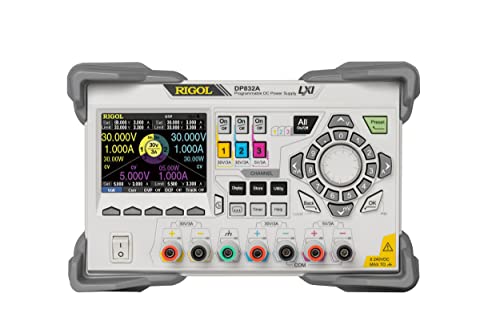
- Three outputs with 195W total power
- Low ripple and noise for demanding tests
- USB, LAN, RS232, and GPIB connectivity
Best For: Professional labs and automated multi-rail testing
Flexible Triple-Output Platform
Siglent SPD3303X-E Triple Output
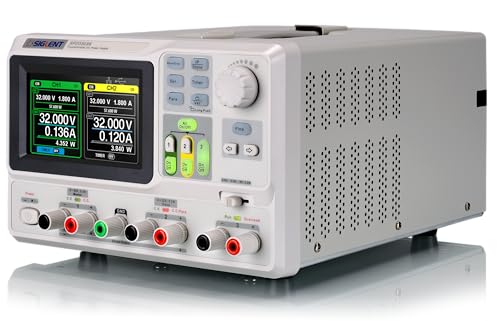
- Three isolated, independently controlled outputs
- 220W total output power
- Independent, series, and parallel modes
Best For: Multi-rail prototyping and laboratory development
Value-Focused USB Charging Supply

- 0–30V and 0–10A adjustable output
- 5V/3.6A USB and Type-C charging
- Short-circuit alarm and multiple protections
Best For: Everyday repair, DIY, and teaching benches
Compact High-Output Pick

- 0–30V and 0–10A adjustment within a 150W limit
- Compact design weighs under 1 kg
- Encoder controls and automatic fan cooling
Best For: Compact electronics benches and DIY projects
Workflow-Friendly Lab Pick

- Three memory presets speed up repeated testing
- OCP, output switch, and key lock add control
- Four-digit display and USB charging port
Best For: Repair benches and repetitive laboratory testing
Fine-Adjustment Charging Pick

- 0–32V and 0–10A output with coarse/fine encoders
- 20W USB-A and USB-C quick charging
- Output switch, OCP, and temperature-regulated fan
Best For: DIY electronics and projects using USB-powered modules
Compact Charging Bench

- Intelligent charging stops when the battery is full.
- OCP alarm helps protect against shorts and overcurrent.
- Compact design with 18W USB charging.
Best For: Compact electronics benches, repairs, and battery charging.
Precision Display Pick
Jesverty SPS-3010 30V 10A Supply

- Four-digit display shows voltage, current, and power.
- Automatic CV/CC switching responds to load changes.
- Compact body includes coarse and fine adjustment.
Best For: Testing and projects requiring clear, detailed output readings.
Fine-Control Workbench
HANGELL HPS3010 30V 10A Supply

- Encoder provides coarse and fine adjustment control.
- Output switch helps prevent accidental energizing.
- Adds 18W USB and Type-C quick charging.
Best For: Repair and development benches needing precise, convenient controls.
Compact Charging Specialist – Jesverty SPS-3010C
For electronics work that benefits from precise adjustments and convenient device charging, the Jesverty SPS-3010C is a compact option among bench power supplies for electronics. Its 0–32V, 0–10A output, encoder controls, USB charging ports, and battery-charging mode make it versatile for repair benches, DIY projects, and educational setups.
Best For: Electronics hobbyists, repair work, battery charging, and space-conscious workbenches.
Pros:
- Coarse and fine encoder knobs provide 0.01V and 0.001A setting resolution.
- USB-A and USB-C ports support 20W quick charging.
- Intelligent battery charging can stop automatically when the battery is full.
- Compact 2.5-pound design includes output control and multiple protection features.
Cons:
- The plastic enclosure may be less substantial than heavier professional instruments.
- Its 20W USB charging output is separate from the main adjustable output.
The SPS-3010C stands out when bench space, fine control, and charging convenience matter more than advanced remote-instrumentation features.
Programmable Three-Channel Workhorse – Rigol DP832A 3-Channel Supply
The Rigol DP832A is a strong choice for engineers who need multiple outputs and measurement-oriented features from bench power supplies for electronics. It combines three channels, up to 195W total power, low ripple and noise, a color display, and connectivity options suited to more structured testing.
Best For: Engineering labs, multi-rail prototypes, production testing, and computer-controlled power experiments.
Pros:
- Three outputs include two 30V/3A channels and one 5V/3A channel.
- Supports up to 195W total power with low output ripple and noise.
- Built-in voltage, current, and wattage measurements plus waveform display.
- Includes USB, LAN, RS232, and GPIB connectivity, along with OVP, OCP, and OTP protection.
Cons:
- At 9.15 kg, it is considerably heavier than compact switching supplies.
- The feature set and three-channel design may be more than needed for simple bench repairs.
Choose the DP832A when channel count, low-noise operation, display-based measurements, and automation interfaces justify a larger professional instrument.
Flexible Triple-Output Platform – Siglent SPD3303X-E Triple Output
The Siglent SPD3303X-E offers three independently controlled and isolated outputs, making it a flexible candidate among bench power supplies for electronics. With 220W total power and independent, series, and parallel operating modes, it can adapt to projects requiring multiple rails or higher combined output capability.
Best For: Prototyping, laboratory development, and circuits needing isolated, series, or parallel supply configurations.
Pros:
- Provides two 32V/3.2A outputs plus a selectable 2.5V/3.3V/5V/3.2A output.
- Three outputs are independently controlled and isolated.
- Independent, series, and parallel modes expand configuration flexibility.
- Includes timing output and trending-graph functions.
Cons:
- Its 17.6-pound weight makes it less portable than compact supplies.
- The listed specifications do not identify the same broad interface set found on some more automation-focused models.
The SPD3303X-E is appealing when flexible output arrangements and 220W capacity are more important than minimizing the instrument’s footprint.
Value-Focused USB Charging Supply – WANPTEK POWER DPS3010U
The WANPTEK POWER DPS3010U combines 0–30V, 0–10A adjustable output with practical USB and Type-C charging. For shoppers comparing bench power supplies for electronics, its coarse and fine encoder knobs, four-digit display, short-circuit alarm, and automatic 110V/220V input detection offer useful everyday features at a compact 2.6-pound size.
Best For: Electronics repair, DIY projects, teaching environments, and users who want integrated device charging.
Pros:
- Adjustable 0–30V and 0–10A output delivers up to 300W according to the supplied specifications.
- Coarse and fine encoder knobs simplify voltage and current adjustments.
- USB and Type-C charging ports provide 5V/3.6A charging capability.
- Includes short-circuit alarm, OCP, overheat, leakage, and overload protection.
Cons:
- The supplied warranty description lists one year.
- The compact switching design has fewer advanced multi-channel features than larger laboratory supplies.
The DPS3010U is a practical general-purpose pick for bench work where strong single-output capacity, safety alerts, and charging ports are priorities.
Compact High-Output Pick – NICE-POWER SPS-E3010
For shoppers comparing bench power supplies for electronics, the NICE-POWER SPS-E3010 stands out when bench space and portability matter. It provides adjustable 0–30V and 0–10A output within a 150W limit, with automatic fan cooling and encoder-based adjustment.
Best For: Compact electronics benches, DIY projects, electroplating, and users who need flexible voltage and current ranges.
Pros:
- Switchable 15V/10A or 30V/5A operating range within the 150W maximum.
- Compact, lightweight design measuring 10 × 18.5 × 8 cm and weighing under 1 kg.
- Encoder controls provide 0.1V voltage and 0.01A current adjustment.
- 100–240V AC input supports use in many regions without a transformer.
Cons:
- The 150W limit restricts simultaneous high-voltage, high-current output.
- The included three-digit display is less detailed than four-digit alternatives.
- Users should stop operation and allow the unit to cool if it becomes too hot.
This is a practical choice when you want broad adjustment range in a very small enclosure. Its power ceiling is clear, but the compact footprint and precise encoder controls make it well suited to everyday low- to medium-power electronics work.
Workflow-Friendly Lab Pick – WANPTEK TPS-C3010B
The WANPTEK TPS-C3010B is a strong option among bench power supplies for electronics when repeatable testing and built-in safeguards are priorities. Its regulated 0–30V, 0–10A output is paired with memory presets, output switching, over-current protection, and a key lock.
Best For: Electronics repair, circuit diagnostics, laboratory testing, and repetitive bench workflows.
Pros:
- Three memory presets quickly recall frequently used voltage and current settings.
- Output ON/OFF control helps prevent sparks during wiring changes.
- Over-current protection cuts off during a short circuit and resumes after it is cleared.
- Four-digit LED display, USB charging port, and compact horizontal design add convenience.
Cons:
- The included test leads are intended as a giveaway and are not recommended for prolonged high-current use.
- The rear input selector must be set to 115V for use in the United States.
- Its 300W rating is higher than the supplied product description’s 0–30V, 0–10A operating range requires at maximum output.
Choose this model if you value efficient setup and repeatable procedures more than the simplest controls. The presets, protection features, and output switch are especially useful for repair stations handling multiple similar tests.
Fine-Adjustment Charging Pick – Jesverty SPS-3010V
For bench power supplies for electronics that also support modern devices, the Jesverty SPS-3010V combines 0–32V, 0–10A output with coarse and fine encoder controls and USB-A/USB-C quick charging. Its output switch and compact footprint make it convenient for hands-on bench work.
Best For: Arduino, Raspberry Pi, educational, repair, DIY, and electronics work that benefits from fine adjustment and USB charging.
Pros:
- Coarse and fine encoder knobs provide 0.01V and 0.001A setting resolution.
- USB-A and USB-C ports support 20W quick charging.
- Output ON/OFF button lets users change settings without removing the load.
- Includes selectable 115V/230V input, over-current protection, and temperature-regulated fan cooling.
Cons:
- The supplied test leads are not recommended for long-term high-current use.
- Power-cord and AC-input configurations vary by destination and may require checking before use.
- Its compact controls may take some practice compared with simpler potentiometer designs.
This model is particularly appealing for mixed electronics work where a bench supply and device charging ports are useful together. The coarse/fine encoder layout offers highly granular settings, while the compact body helps preserve valuable workspace.
Compact Charging Bench – 30V 10A Kungber Power Supply
For shoppers comparing bench power supplies for electronics, the Kungber SPS3010B combines a 0–30V, 0–10A adjustable output with intelligent charging features in a compact enclosure. Its safety detection and USB charging port make it a practical option for home workbenches, repairs, and battery-related projects.
Best For: Compact electronics benches, battery charging, repairs, and DIY projects.
Pros:
- Intelligent charging mode displays charging power and stops charging when the battery is full.
- OCP detection can alarm and stop output during short circuits or overcurrent conditions.
- Compact 2.3-pound design with a 300W maximum output and 18W USB port.
- Includes thermal, overload, leakage, grounding, and short-circuit protections.
Cons:
- The enclosure is made from plastic.
- The display resolution and adjustment controls are not specified in the supplied notes.
This model stands out when portability and charging safeguards matter as much as adjustable output. It is a straightforward fit for general-purpose bench work rather than a feature-heavy laboratory setup.
Precision Display Pick – Jesverty SPS-3010 30V 10A Supply
The Jesverty SPS-3010 is a useful choice among bench power supplies for electronics when readable measurements and controlled adjustments are priorities. Its four-digit LED display shows voltage, current, and power in real time, while coarse and fine adjustment support more deliberate setup.
Best For: Electronics testing, educational workbenches, and projects needing clear real-time readings.
Pros:
- Four-digit display shows V/A/W with resolutions down to 0.01V, 0.001A, and 0.1W.
- Automatically switches between constant-voltage and constant-current modes as the load changes.
- Compact, lightweight body measures about 7.1 by 3.35 by 6.1 inches and weighs about 2.5 pounds.
- Includes short-circuit, overload, grounding, and temperature-regulated fan protections.
Cons:
- The included test leads are described as giveaways and may not suit long-term high-current use.
- The USB port is rated at 5V/2A, below the faster charging output of some alternatives.
Choose this unit if measurement visibility and a compact footprint are central to your workflow. Plan to use higher-capacity test leads for sustained high-current applications.
Fine-Control Workbench – HANGELL HPS3010 30V 10A Supply
For bench power supplies for electronics that emphasize hands-on control, the HANGELL HPS3010 offers an encoder knob with coarse and fine adjustment plus a dedicated output switch. Its four-digit display, short-circuit alarm, and USB/Type-C charging ports add convenience for lab, repair, and development work.
Best For: Users who want precise knob control, output switching, and modern charging ports.
Pros:
- Encoder knob supports coarse and fine adjustment and lets users switch digit positions.
- Output switch allows settings to be changed while output is off, helping prevent accidental energizing.
- Four-digit display provides 0.01V and 0.001A resolution with automatic CV/CC switching.
- Includes 18W USB and Type-C quick-charge outputs plus multiple protection functions.
Cons:
- The unit weighs about 1.2 kg, making it less lightweight than some compact alternatives.
- The supplied notes do not specify the output ratings of the USB and Type-C ports individually.
The HANGELL is a strong fit for repeated adjustments and setups where an output-enable button is valuable. Its controls and alarm features make it especially practical for repair and development benches.
How We Picked the Best Bench Power Supplies for Electronics
We selected supplies across several common workbench needs, including circuit prototyping, battery-related projects, embedded development, repair, education, and laboratory testing. The comparison considers adjustable voltage and current ranges, display readability, coarse and fine adjustment controls, output count, protection features, USB charging ports, memory presets, and computer interfaces.
We also considered whether each model’s feature set is appropriate for its likely user. A compact 30V, 10A switching supply may be excellent for general projects, while a higher-end multi-output instrument can be a better fit for synchronized or digitally controlled testing.
Quick Comparison
| Type | Best suited to | Features to prioritize |
|---|---|---|
| Basic single-output supply | Beginners, hobbyists, and repairs | Clear display, stable adjustment, OVP/OCP |
| USB-equipped supply | Embedded and portable-device projects | USB-A or USB-C output, charging modes, current limits |
| Preset-enabled supply | Repeated bench workflows | Memory channels, output lock, dependable controls |
| Multi-output laboratory supply | Advanced testing and automation | Independent channels, low noise, GPIB or LAN control |
Key Buying Factors for Bench Power Supplies for Electronics
Voltage, Current, and Power Capacity
Choose a range that leaves useful headroom above your normal requirements. A 30V, 10A supply offers broad flexibility, but its maximum power rating and thermal behavior still matter. Verify whether the advertised current is continuous and whether output power is limited at higher voltages.
Regulation, Accuracy, and Ripple
Switching supplies are efficient and often compact, but sensitive analog or measurement work may benefit from a lower-noise, higher-precision design. Look for separate voltage and current resolution, load regulation specifications, and ripple figures rather than relying only on digit count.
Controls and Display
Encoder controls, coarse and fine adjustment, bright displays, and output-lock keys improve daily usability. Presets are especially valuable when you repeatedly switch between known test voltages.
Protection and Connectivity
Overvoltage protection, overcurrent protection, short-circuit handling, and thermal protection help prevent damaged circuits. LAN, GPIB, or USB connectivity is worthwhile if you need automated testing, data logging, or remote operation.
Who Should Buy Which Bench Power Supplies for Electronics?
Choose an affordable single-output model for breadboarding, repairs, Arduino or microcontroller projects, and general hobby use. Choose a USB-equipped model if your bench regularly includes phones, development boards, or USB-powered devices. Choose a preset or lock-equipped supply for production-like workflows where repeatable settings reduce mistakes. Choose a Rigol or Siglent multi-output instrument when you need multiple rails, more precise measurements, or computer-controlled laboratory testing.
Before buying, confirm the included leads, connector style, cooling method, physical dimensions, input voltage compatibility, and warranty. The best supply is the one that provides adequate capacity and protection while keeping its controls and measurement performance appropriate for your actual work.