
Aftertouch can turn a MIDI controller from a basic note-entry device into a more expressive performance instrument. By pressing into a held key or pad, you can control vibrato, filter movement, volume, effects, and other mapped parameters without reaching for a knob.
This roundup covers 10 MIDI controllers with aftertouch, including compact pad controllers, portable keyboards, performance-focused sequencers, and full-size weighted master keyboards. The right choice depends on the type of aftertouch, key or pad feel, sequencing needs, software integration, and how much space you have available.
Best 10 Midi Controllers with Aftertouch Picks for 2026
Best All-in-One Setup

- 37-key aftertouch keyboard with velocity-sensitive Slimkeys
- Polyphonic sequencer, arpeggiator, chord mode, and Scenes mode
- MIDI, USB, CV, Gate, drum Gate, clock, and pedal connections
Best For: Hardware-based performances and complex live sequencing
Best Portable Pad Controller

- 16 velocity-sensitive pads with polyphonic aftertouch
- Ultra-thin aluminum design for mobile production
- 48 scene presets, 18 assignable knobs, and broad OS compatibility
Best For: Mobile beat-making and expressive finger drumming
Best Compact Keyboard Sequencer
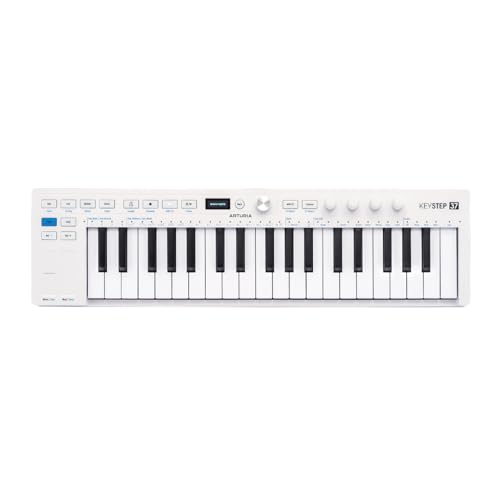
- 37-note Slimkey keyboard with velocity sensitivity and aftertouch
- Generative arpeggiator, 64-step sequencer, Chord, Scale, and Mutate modes
- USB-C MIDI, MIDI DIN, sync, pedal, and configurable CV outputs
Best For: Expressive songwriting and compact hardware/software setups
Best Weighted Keyboard
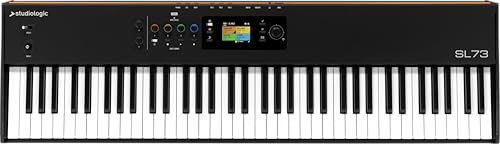
- 73 weighted hammer-action keys with aftertouch
- Color display, UX Logic, and dedicated DAW transport controls
- USB-C audio interface, MIDI 2.0, and Numa Player integration
Best For: Piano-style studio performance and expressive master-keyboard use
Sequencing Powerhouse

- Two melodic sequencers plus a 16-track drum sequencer
- Pressure-sensitive pads and hands-on performance controls
- MIDI, USB, CV/gate, clock, and drum gate connectivity
Best For: Hybrid hardware setups and pattern-based live performance
Keyboard Command Center

- 49 semi-weighted keys with 16 polyphonic-aftertouch pads
- Nine faders, OLED display, pitch/mod wheels, and USB-C
- Scale, Chord, Arp, DAW integration, and NKS support
Best For: Keyboard players producing and performing in a DAW
Portable Wireless Pad
Mini MIDI Controller with Aftertouch

- 16 RGB velocity-sensitive pads with aftertouch
- Bluetooth and USB MIDI with up to 15-hour battery life
- Expandable 48-pad layout with app customization
Best For: Portable beat making, DJ sets, and mobile music production
Best All-Around Choice

- 49 keys with aftertouch
- 12 pressure-sensitive pads
- Nine assignable encoders and pedal inputs
Best For: Full-featured studio control
Best Portable Option

- 37 full-size keys with polyphonic aftertouch
- Ultra-thin aluminum body under 2 pounds
- Supports computers and mobile platforms
Best For: Traveling and mobile musicians
Best for Beat Production

- 49 velocity-sensitive full-size keys
- 16 pads with Note Repeat
- Eight knobs and nine assignable faders
Best For: Beat making and DAW control; verify aftertouch
Best All-in-One Setup – Arturia KeyStep Pro
The Arturia KeyStep Pro is a strong choice among midi controllers with aftertouch if you want one compact unit for keyboard performance, sequencing, arpeggiation, and hardware integration. Its 37 velocity-sensitive Slimkeys, polyphonic sequencing, and broad MIDI, CV, Gate, and drum connectivity make it suited to complex live or studio setups.
Best For: Performers and producers building hardware-focused arrangements, Eurorack systems, or detailed live sequences.
Pros:
- Combines a keyboard, sequencer, arpeggiator, chord mode, and performance controls.
- Offers four CV, Gate, and Mod outputs plus eight dedicated drum Gate outputs.
- Supports polyphonic sequencing, 16-pattern chaining, Scenes mode, and dedicated drum sequencing.
Cons:
- Its extensive feature set may take time to learn.
- Slimkeys may not suit players seeking full-size piano-style keys.
The KeyStep Pro stands out when sequencing and connectivity matter as much as expressive keyboard control. It is less focused on traditional piano playability, but its aftertouch and extensive performance features give it considerable flexibility.
Best Portable Pad Controller – Xjam Mobile Studio
The Xjam Mobile Studio is a compact option among midi controllers with aftertouch, using 16 velocity-sensitive pads with polyphonic aftertouch instead of a conventional keyboard. Its aluminum body, programmable controls, scene presets, and broad device compatibility make it practical for mobile beat-making and finger drumming.
Best For: Mobile producers, beat-makers, and finger drummers who want a lightweight pad-based controller.
Pros:
- Includes 16 sensitive pads with adjustable sensitivity and polyphonic aftertouch.
- Stores up to 48 assignable pads across user-programmable scene presets.
- Works with macOS, iOS, Windows, Android, Linux, Chrome OS, and major music software.
Cons:
- Its pad layout is not a substitute for a traditional keyboard.
- Mini TRS connections may require compatible cables or adapters for some setups.
Choose the Xjam when portability and expressive pad control are more important than piano-style playing. The included software bundle and plug-and-play USB-C operation add value for sketching ideas across multiple devices.
Best Compact Keyboard Sequencer – Arturia KeyStep mk2
The Arturia KeyStep mk2 is a compact keyboard choice among midi controllers with aftertouch, pairing a 37-note Slimkey keyboard with chord and scale modes, a generative arpeggiator, and a polyphonic sequencer. USB-C MIDI, MIDI DIN, sync, pedal input, and configurable CV outputs support both software and hardware workflows.
Best For: Producers who want expressive keyboard control with idea-generation tools and modular connectivity.
Pros:
- Provides a velocity-sensitive 37-note keyboard with aftertouch and touch pitch and mod controls.
- Includes a 16-mode arpeggiator, polyphonic 64-step sequencer, chord and scale modes, and Mutate.
- Offers USB-C MIDI, MIDI DIN, sync I/O, pedal input, and four configurable CV outputs.
Cons:
- The 37-key Slimkey format is more compact than a full-size keyboard.
- Its many generative and sequencing functions may be more than a simple controller user needs.
The KeyStep mk2 is particularly appealing if you want to turn musical sketches into evolving patterns quickly. It balances a small footprint with expressive control and connections for both computer-based and modular systems.
Best Weighted Keyboard – Studiologic SL73 MK2
The Studiologic SL73 MK2 brings weighted hammer-action playing to the midi controllers with aftertouch category. Its 73 full-sized keys, TP/110 action, color display, DAW transport controls, USB-C connectivity, and integrated audio interface make it a substantial choice for expressive keyboard performance.
Best For: Keyboardists who prioritize piano-style feel, broad range, aftertouch, and direct DAW integration.
Pros:
- Offers 73 weighted keys with TP/110 premium hammer action and aftertouch.
- Includes a color display and UX Logic interface for zones and parameter management.
- Provides USB-C, MIDI 2.0 compatibility, DAW transport controls, Numa Player integration, and an audio interface.
Cons:
- Its weighted 73-key design is considerably larger and heavier than compact controllers.
- The product weighs 11.2 kg, making frequent transport less convenient.
The SL73 MK2 is the strongest fit here for players who do not want to compromise on key feel. It is better suited to a dedicated studio or performance space than a highly portable setup, but its controls and connectivity broaden its role beyond a conventional master keyboard.
Sequencing Powerhouse – Arturia BeatStep Pro
For producers seeking MIDI controllers with aftertouch plus deep sequencing control, the Arturia BeatStep Pro combines two melodic step sequencers, a 16-track drum sequencer, pressure-sensitive pads, and hands-on performance controls. Its MIDI, CV/gate, clock, and USB connections make it especially adaptable to hybrid setups.
Best For: Producers and performers who want an expressive sequencer for MIDI hardware, modular gear, drum machines, and DAW instruments.
Pros:
- Includes two independent melodic sequencers and a 16-track drum sequencer.
- Pressure-sensitive pads and sensitive knobs support expressive performance control.
- Offers MIDI, USB, CV/gate, drum gate, and clock connections.
- Includes Ableton Live Lite, Analog Lab Intro, and MIDI Control Center.
Cons:
- Its 3.1-pound, 17-inch design is less compact than a basic pad controller.
- The extensive sequencing and connection options may be more than beginners need.
The BeatStep Pro is a strong choice when aftertouch-style pressure control is only part of the requirement and advanced sequencing is equally important. Choose it over a keyboard-focused controller when hardware integration and pattern-based performance are priorities.
Keyboard Command Center – Novation Launchkey 49 MK4
The Novation Launchkey 49 MK4 is a full-size keyboard controller for musicians who want MIDI controllers with aftertouch in a DAW-oriented format. It pairs 49 semi-weighted keys with 16 pads featuring polyphonic aftertouch, plus faders, pitch and mod wheels, an OLED display, and integrated creative modes.
Best For: Keyboard players and DAW users who need expressive pads, broad software compatibility, and a 49-key playing surface.
Pros:
- Provides 49 semi-weighted keys and 16 pads with polyphonic aftertouch.
- Includes nine faders, pitch and mod wheels, and an OLED display.
- Offers Scale, Chord, and Arpeggiator modes for faster musical idea generation.
- Works with major DAWs and is NKS-ready for Native Instruments software.
Cons:
- The 31.69-inch width and 9-pound weight require substantial desk space.
- It connects through USB, so it is less focused on standalone wireless use.
With its combination of keys, polyphonic-aftertouch pads, and DAW controls, the Launchkey 49 MK4 is the most keyboard-centric option here. It is a practical fit for arranging, playing virtual instruments, and launching clips without giving up expressive pad control.
Portable Wireless Pad – Mini MIDI Controller with Aftertouch
This mini pad controller is a portable option for shoppers comparing MIDI controllers with aftertouch for beat making and mobile production. It offers 16 RGB velocity-sensitive aftertouch pads, Bluetooth and USB MIDI, a rechargeable battery rated for up to 15 hours, and app-based customization.
Best For: Mobile producers, DJs, and beginners who want a lightweight wireless controller for finger drumming, sample triggering, and live remixing.
Pros:
- Supports both Bluetooth MIDI and USB MIDI with computers, tablets, and smartphones.
- Sixteen RGB velocity-sensitive pads include aftertouch for expressive control.
- Built-in battery provides up to 15 hours of continuous working time.
- Three pad banks can expand the layout to 48 pads, with remapping through the app.
Cons:
- Its pad-focused layout does not provide piano keys, faders, or wheels.
- Customization depends on the companion app or desktop software.
- Wireless performance requires a compatible Bluetooth MIDI setup.
The compact wireless design makes this controller the easiest of the three to take on the road. It is best suited to rhythm-focused workflows and portable triggering rather than melodic keyboard performance or complex hardware sequencing.
Best All-Around Choice – Arturia KeyLab mk3 49-Key
The Arturia KeyLab mk3 is a versatile option for shoppers comparing midi controllers with aftertouch. Its 49-key layout combines expressive keys with 12 pressure-sensitive performance pads, nine assignable encoders, and pedal inputs for a hands-on studio setup.
Best For: Producers who want a full-featured 49-key controller for keyboard performance, pads, knobs, and pedal control.
Pros:
- 49 keys with aftertouch for more expressive playing.
- Includes 12 pressure-sensitive performance pads and nine assignable encoders.
- Offers sustain and auxiliary pedal inputs plus USB-C connectivity.
- Includes a software suite.
Cons:
- Its 49-key format and 6.2 kg weight are less suited to highly portable setups.
- Listed platform support centers on Windows devices.
Choose the KeyLab mk3 if you want aftertouch alongside substantial hands-on control. It is a strong fit for a permanent or semi-permanent production workspace rather than minimalist mobile use.
Best Portable Option – Xkey 37 USB Limited Edition
The Xkey 37 USB Limited Edition stands out among midi controllers with aftertouch for its ultra-thin, lightweight design. It provides 37 full-size velocity-sensitive keys with configurable polyphonic aftertouch and works with major computer and mobile platforms.
Best For: Mobile musicians who prioritize portability, full-size keys, and polyphonic aftertouch.
Pros:
- 37 full-size velocity-sensitive keys with polyphonic aftertouch.
- Ultra-thin aluminum design weighs less than 2 pounds.
- Works with Windows, macOS, iOS, Linux, and Android without drivers.
- Includes Xkey Plus software for mapping to DAWs, instruments, and plugins.
Cons:
- It has fewer keys and physical controls than larger studio controllers.
- The Xcable is not included.
- Its single USB port may limit connection flexibility.
The Xkey 37 is the practical pick when portability matters more than pads, faders, or extensive knob control. Its polyphonic aftertouch and broad device compatibility make it especially adaptable for travel and mobile production.
Best for Beat Production – M-AUDIO Oxygen 49 MKV
The M-AUDIO Oxygen 49 MKV is a production-focused controller for shoppers seeking midi controllers with aftertouch alongside beat-making tools. Its 49 velocity-sensitive keys are paired with drum pads, knobs, faders, pitch and mod wheels, and bundled software.
Best For: Producers who need keys, beat pads, mixer-style controls, and software integration in one USB-powered controller.
Pros:
- 49 full-size velocity-sensitive piano-style keys.
- Includes two banks of eight backlit velocity-sensitive pads with Note Repeat.
- Provides eight assignable knobs and nine assignable faders.
- Supports NKS integration and includes bundled recording software.
Cons:
- The supplied notes do not specify aftertouch support, so verify this feature before buying.
- Its 32.04-inch width and 6.7-pound weight may be cumbersome for compact setups.
- The listed warranty is one year.
The Oxygen 49 MKV is compelling for beat production and DAW control, but it is not the safest choice if aftertouch is your primary requirement. Confirm the exact key-expression specifications before selecting it for an aftertouch-focused setup.
How We Picked These Midi Controllers with Aftertouch
We focused on controllers that offer aftertouch or are specifically designed for expressive performance, then compared their playing surfaces, connectivity, portability, sequencing features, software control, and intended use. The selection includes keyboard controllers, pad-based devices, compact wireless options, and larger weighted instruments so different production and performance setups are represented.
We also considered whether a controller is best suited to synth programming, beat making, live sequencing, DAW control, or traditional piano-style playing. Because aftertouch implementation varies, buyers should confirm whether a model uses channel aftertouch or polyphonic aftertouch and check that their instruments or plugins support it.
Quick Comparison
- Best for hardware sequencing: Arturia KeyStep Pro and BeatStep Pro.
- Best for portable pad performance: Xjam and the compact 16-pad wireless controller.
- Best for expressive keyboard playing: StudioLogic SL73 MK2 and Arturia KeyLab mk3.
- Best for compact melodic control: Arturia KeyStep, Xkey 37, and M-Audio Oxygen 49 MKV.
- Best for integrated modern DAW control: Novation Launchkey 49 MK4.
Key Buying Factors for Midi Controllers with Aftertouch
Aftertouch Type and Compatibility
Channel aftertouch sends one pressure value for the whole keyboard, while polyphonic aftertouch lets individual notes or pads respond independently. Polyphonic aftertouch is more precise for layered synth parts, but it requires compatible software or hardware to produce separate per-note effects.
Keys, Pads, and Playing Feel
Choose keys for melodies, chords, and sustained lines; pads for finger drumming, clip launching, and compact performance setups. Key action ranges from slim and portable to weighted hammer action, so consider whether you prioritize piano realism, synth response, or portability.
Connectivity and Workflow
USB is useful for computer-based production, while standard MIDI, CV, and gate connections matter when controlling hardware synthesizers or modular equipment. Bluetooth can simplify mobile setups, but wired connections are generally preferable for the most dependable live performance.
Controls, Sequencing, and Software Integration
Dedicated knobs, faders, transport buttons, scales, arpeggiators, and onboard sequencers can reduce mouse use and make a controller more effective on stage. If you work mainly in a DAW, check for native mappings and compatibility with your preferred software before buying.
Who Should Buy Which Midi Controllers with Aftertouch?
Choose a keyboard-focused model if you write melodies, play chords, or want aftertouch to shape sustained synth sounds. A 49-key controller is a practical middle ground for most studio desks, while a 73-key weighted model is better for piano-style performance and detailed dynamics.
Pick a pad controller if portability, beat making, or clip launching matters more than traditional keyboard technique. For hardware-focused musicians, a model with multiple sequencers and broader MIDI or CV connectivity can become the center of a performance rig. Beginners and general-purpose producers should prioritize comfortable controls, reliable DAW integration, and a size they will actually keep connected and use.